

More news on this day
Edinburgh has gained a high-profile new link to the United States as American Airlines launches a seasonal nonstop service to New York John F. Kennedy International Airport, deploying its latest Airbus A321XLR aircraft on the route in a move expected to strengthen tourism, business travel and connectivity on both sides of the Atlantic.
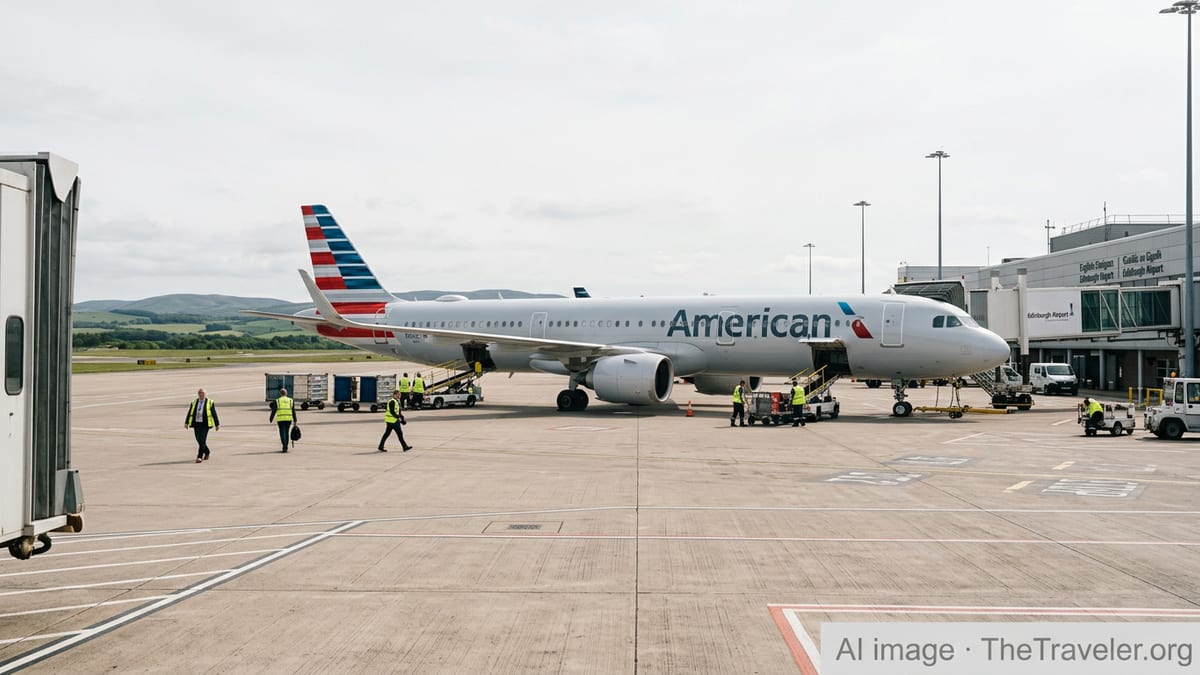
Inaugural Flight Marks Milestone for Edinburgh Airport
American Airlines operated its first Edinburgh to New York JFK service over the weekend, marking the official start of the carrier’s expanded presence at Scotland’s busiest airport. The route will run as a summer seasonal service, operating through the peak transatlantic travel months and giving Scottish passengers a new nonstop option to one of the world’s most important aviation hubs.
Airport executives welcomed the development as a significant boost to Edinburgh’s international profile. The link to JFK adds capacity on one of the most in-demand transatlantic corridors and complements existing services to the New York area. With passengers able to connect onwards across the United States, Canada, the Caribbean and Latin America, the new service is expected to generate fresh inbound tourism and export opportunities for Scottish businesses.
The New York route builds on American Airlines’ earlier success from Edinburgh, where the carrier has already seen strong demand on its seasonal Philadelphia service. That performance helped underpin the decision to introduce the JFK flight, positioning Edinburgh as a key part of American’s growing North Atlantic strategy.
Airbus A321XLR Debuts on First International Route
The launch also marks an aircraft milestone. Edinburgh has become the first international destination for American Airlines’ Airbus A321XLR, the long-range narrowbody that is central to the airline’s next-generation transatlantic network. After debuting on domestic services between New York JFK and Los Angeles in late 2025, the aircraft has now crossed the Atlantic with paying passengers for the first time.
Configured with 155 seats across three cabins, the A321XLR brings American’s latest long-haul interior to a city pair that might previously have been considered too thin for widebody operations. The aircraft features the airline’s new Flagship Suite business class, a dedicated premium economy cabin and an updated main cabin, aiming to narrow the comfort gap between single-aisle and twin-aisle jets on overnight and medium-haul crossings.
Airline planners say the extended range and fuel efficiency of the A321XLR make routes like New York JFK to Edinburgh more economically sustainable. By pairing a smaller gauge with long-haul amenities, American can maintain frequency and year-on-year continuity on seasonal services while keeping operating costs and emissions per seat in check.
Boost for Scottish Tourism, Trade and Connectivity
Scottish tourism bodies are already highlighting the potential benefits of the new service. Direct access from New York is expected to attract more high-spending visitors to Edinburgh and beyond, particularly from the United States’ densely populated East Coast. The timing of the route, aligned with the spring, summer and early autumn travel peak, will support major cultural events including the Edinburgh festivals and the golf season.
Business groups also see advantages in the direct transatlantic link. Quicker same-day access to New York’s financial and corporate sectors is likely to appeal to firms based in Edinburgh’s growing financial services and tech clusters. With JFK functioning as a major onward hub, the route opens additional one-stop connections for Scottish exporters and investors targeting markets across North America.
For local communities, increased connectivity brings indirect benefits through job creation and airport-driven economic activity. Edinburgh Airport has been working to rebuild and diversify its long-haul network, and the arrival of American’s A321XLR is viewed as a vote of confidence in the region’s long-term demand profile.
A321XLR Strategy Reshapes American’s Transatlantic Network
The Edinburgh link is part of a broader strategic shift at American Airlines as the carrier integrates the A321XLR into its fleet. The long-range narrowbody is being deployed to open new “long and thin” transatlantic routes and to extend the operating seasons of existing services that would be less viable with larger widebody aircraft.
Industry analysts note that American is using the aircraft from its East Coast hubs, particularly New York JFK and Philadelphia, to sharpen its competitive edge in markets where demand is strong but not always sufficient to fill a larger twin-aisle jet year-round. By matching capacity more closely to demand, the airline aims to offer more nonstops to secondary European cities while maintaining schedule flexibility.
The introduction of the A321XLR also aligns with environmental and cost objectives. The aircraft’s improved fuel burn per seat and modern engines support American’s efforts to lower emissions intensity across its network. At the same time, a more efficient platform helps the airline withstand fuel price volatility and economic cycles, especially on discretionary travel routes such as leisure-focused transatlantic services.
Passenger Experience on a New-Generation Narrowbody
For travelers, the most visible change on the Edinburgh to New York JFK route will be the onboard experience. Despite its single-aisle layout, the A321XLR cabin is designed to offer a long-haul feel, with lie-flat business class suites, upgraded seating in premium economy and new in-flight entertainment and connectivity options throughout the aircraft.
American has emphasized details such as more privacy in the premium cabins, improved storage, and power outlets and USB ports at every seat. In the main cabin, updated lighting, quieter engines and a refreshed interior design are intended to make overnight and medium-haul flights more comfortable than on older narrowbody types that previously handled many transatlantic crossings via intermediate stops.
While some passengers may still associate long-haul comfort with widebody aircraft, airlines are increasingly betting that the latest generation of single-aisle jets can deliver a comparable experience with added benefits such as more point-to-point routes and better schedule options. The Edinburgh to New York JFK service will serve as a high-profile test of how travelers respond to that trade-off on one of Scotland’s most important long-haul links.