

More news on this day
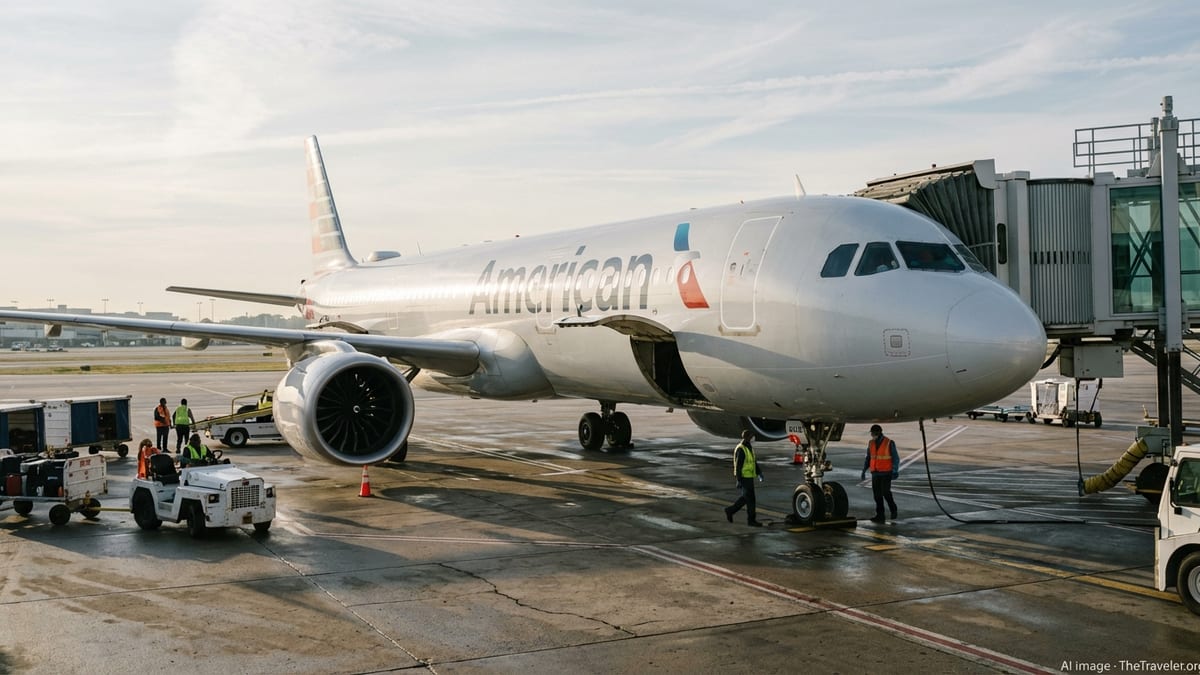
American Airlines has cemented CFM International’s LEAP-1A engines as the powerplant of choice for its future Airbus A321neo deliveries, a decision that reinforces a decades-long partnership while promising quieter, more fuel-efficient travel for millions of passengers across the carrier’s U.S. and international network.
Building on a Long-Running Transatlantic Partnership
Announced on February 19, 2026, the engine selection confirms that American’s next wave of A321neo jets, part of a blockbuster 2024 narrowbody order, will continue to rely on CFM’s LEAP-1A. The choice extends a relationship that already sees American operating more CFM and GE Aerospace powered aircraft than any other airline, and aligns the carrier’s latest fleet investments with a consistent technology strategy.
The engines will be installed on Airbus A321neos ordered two years ago, as American moves to refresh and grow its narrowbody fleet through 2032. With 84 A321neos already in service and five long-range A321XLRs now flying, all powered by LEAP-1A engines, the new agreement keeps the airline’s Airbus single-aisle operations firmly centered on a single engine family.
Executives at both companies framed the deal as a natural next step rather than a sharp pivot. American’s leadership highlighted nearly a century of flying with GE technology, while CFM’s parent companies, GE Aerospace and Safran Aircraft Engines, underscored the airline’s role as a flagship customer for their latest-generation narrowbody engine platform.
The renewed commitment also reinforces CFM’s position in a fiercely competitive segment where it goes head-to-head with Pratt & Whitney’s geared turbofan family. For American, the decision signals continuity and stability at a time when airlines worldwide are reassessing engine risk and reliability as they plan capacity and route networks for the next decade.
How LEAP-1A Technology Aims to Deliver Smarter Travel
At the core of American’s engine choice is the LEAP-1A’s promise of better fuel efficiency and lower emissions compared with the previous-generation CFM56 engines that powered much of the global single-aisle fleet over the last three decades. CFM promotes the LEAP family as delivering around 15 percent lower fuel burn and carbon emissions relative to its predecessors, a margin that can translate into substantial cost savings and environmental gains across hundreds of daily flights.
The LEAP-1A’s performance rests on a suite of advanced materials and design choices, including composite fan blades, lightweight fan cases and ceramic matrix composites in hot-section components. These innovations allow the engine to run at higher temperatures and pressures while maintaining durability, helping airlines like American squeeze more efficiency out of each gallon of fuel burned.
For travelers, the technology story ultimately shows up in the travel experience: engines that are designed to be quieter on takeoff and landing, and aircraft that are better positioned to operate long stage lengths efficiently. On key domestic trunk routes and transcontinental services where the A321neo and A321XLR are increasingly deployed, the LEAP-1A’s efficiency can help support competitive fares and higher frequencies while keeping a lid on operating costs.
As carriers face growing expectations from customers and regulators to decarbonize, engine choice has become a central pillar in sustainability strategies. American has publicly committed to reducing its environmental footprint over time, and standardizing on a new-generation engine family across its Airbus narrowbody fleet gives it a technical platform that can also integrate higher shares of sustainable aviation fuel as supply scales up.
Fleet Strategy: Standardization for Reliability and Cost Control
American’s decision to keep the LEAP-1A at the heart of its Airbus narrowbody growth reflects a broader industry trend toward engine commonality within fleet sub-fleets. Operating a single engine type on the A321neo family simplifies maintenance planning, spare parts inventories and pilot and mechanic training, all of which feed into lower unit costs and more reliable daily operations.
The airline’s order book, which includes an additional 120 A321neos and 35 A321XLRs scheduled to arrive through 2032, now comes with the assurance that these aircraft will share a common engine architecture. American also holds options for up to 116 more A320 family aircraft which, if exercised, would likewise be outfitted with LEAP-1A engines, further deepening the standardization effect.
On the Boeing side of the ledger, American has been a LEAP customer for years, having first selected the LEAP-1B engine for its 737 MAX fleet in 2011. With 93 737 MAX aircraft already in service and more on order, the carrier is effectively building a dual-platform narrowbody strategy where both Airbus and Boeing mainline single-aisle fleets are powered by CFM products.
This kind of tight alignment is particularly relevant in an era marked by supply chain shocks and isolated technical issues that can ground aircraft unexpectedly. Concentrating on one engine family across large parts of the fleet lets American negotiate comprehensive maintenance agreements, forecast spare engine needs more accurately and respond more nimbly when disruption does occur.
Maintenance Deals Designed to Reduce Disruption
The engine selection is paired with an expanded long-term maintenance agreement under which CFM will continue to provide servicing for American’s LEAP-1A engines well into the future. These agreements, often structured around fixed-rate or rate-per-flight-hour models, are designed to give airlines predictable maintenance costs while transferring a degree of technical risk back to the manufacturer.
For passengers, the implications are subtle but significant. Robust maintenance support can reduce the likelihood of unexpected engine-related groundings, which in turn supports better on-time performance and fewer last-minute aircraft swaps. In a competitive U.S. domestic market where travelers have grown more sensitive to delays and cancellations, reliability is now a key differentiator every bit as important as onboard amenities.
GE Aerospace and Safran, through their CFM joint venture, have built out a global maintenance, repair and overhaul network to support the LEAP engine family. For a carrier with the geographic reach of American, that network coverage is central to keeping aircraft in service, particularly on high-utilization narrowbody routes where aircraft turn times are tight and schedule recovery windows are narrow.
American’s executives have framed the CFM deal as a long-horizon investment, pointing to lifecycle economics rather than just upfront acquisition price. By locking in maintenance support as part of the broader agreement, the airline aims to smooth out cost volatility, create clearer visibility for investors and underpin the reliability that frequent flyers and corporate travel buyers increasingly demand.
Passenger Experience on A321neos and A321XLRs
American’s A321neo and A321XLR aircraft have become standard bearers for its upgraded onboard experience, particularly on longer domestic and transcontinental flights. The airline’s newest A321XLRs, introduced into service in late 2025, feature the carrier’s Flagship Suite in premium cabins, refreshed premium economy seating and a reimagined main cabin, all supported by high-speed Wi-Fi and seatback entertainment with Bluetooth connectivity.
Engine choice may not be the first thing leisure or business travelers think about when booking a fare, but it underpins many aspects of the cabin experience. The LEAP-1A’s quieter performance contributes to a more comfortable soundscape, especially during climb and descent, while its fuel efficiency gives airlines more flexibility in configuring cabins and operating longer segments without compromising economics.
On high-demand routes from American’s hubs in Dallas-Fort Worth, Charlotte, Miami and Phoenix, the A321neo’s blend of range, capacity and efficiency has made it a backbone aircraft for both domestic and near-international routes. As more LEAP-powered A321neos join the fleet, travelers can expect to see the type deployed on a widening mix of city pairs, including some secondary markets that benefit from the aircraft’s lower trip costs.
The A321XLR, with its extended range, opens further possibilities for point-to-point flying, including thinner transcontinental and transatlantic routes that were previously difficult to serve profitably with larger widebody aircraft. In those markets, the combination of premium-heavy cabin layouts and efficient engines positions American to compete aggressively for high-yield corporate and premium leisure business.
Sustainability Pressures and the Push for Cleaner Skies
The move to double down on LEAP-1A technology also speaks to mounting environmental and regulatory pressures that are reshaping airline decision-making worldwide. While no current engine fully solves the challenge of aviation emissions, each incremental gain in fuel efficiency has an outsized impact when multiplied across thousands of annual flights.
CFM promotes the LEAP series as a step change in emissions performance compared with previous generations, citing reductions not only in carbon output but also in nitrogen oxides and noise footprint. For airlines like American, these improvements contribute to meeting corporate sustainability targets and complying with evolving schemes such as the Carbon Offsetting and Reduction Scheme for International Aviation and more stringent local noise and emissions regulations at major airports.
Engine standardization can also make it easier to integrate sustainable aviation fuels into day-to-day operations, since airlines are able to validate fuel performance and supply chains across a more uniform technical base. As SAF production scales and supply becomes more consistent at key hubs, American’s large fleet of LEAP-powered narrowbodies will be a natural proving ground for greener fuel blends.
Travelers, meanwhile, are becoming more climate-conscious in their booking decisions. While price and schedule still dominate, surveys increasingly show that frequent flyers value transparent emissions information and are more inclined to choose airlines that can demonstrate concrete steps toward decarbonization. American’s CFM deal offers a tangible, technology-driven narrative it can point to when communicating its environmental progress.
What the Deal Signals for the Engine Market
American’s renewed vote of confidence in CFM lands at a critical moment in the global engine market. Both engine manufacturers and airlines have been grappling with supply chain bottlenecks, labor shortages and isolated technical issues on some next-generation powerplants, all of which have tested relationships and forced hard choices about fleet planning.
By sticking with LEAP-1A for the next wave of A321neos, American sends a clear signal about where it sees the best balance of efficiency, reliability and support. For CFM, the deal helps cement its footprint on Airbus’s most popular single-aisle family with one of the world’s largest airlines, reinforcing its competitive standing against rival engine makers in crucial North American and transatlantic markets.
The agreement also underscores how closely aligned engine strategy has become with airline brand positioning. In public comments, American’s procurement leaders emphasized that their evaluation weighed not only direct operating costs, but also sustainability metrics and long-term reliability. That framing will likely resonate with investors who increasingly scrutinize airlines’ environmental and operational resilience alongside more traditional financial indicators.
For travelers, the headline may simply read as an engine selection, but the implications reach into network planning, ticket pricing, schedule reliability and the overall quality of the onboard experience. As American continues to roll out new LEAP-powered A321neos and A321XLRs over the coming years, passengers will see the effects most clearly in the routes they can fly, the comfort of the cabins they sit in and the dependability of the schedules they rely on.