

More news on this day
American Airlines has secured U.S. government approval to restart nonstop flights between Miami and the Venezuelan cities of Caracas and Maracaibo, a landmark move that positions the carrier as the first U.S. airline to reenter the troubled but strategically vital market since flights were halted in 2019 and raising expectations of a long-awaited tourism revival for visitors and Venezuelans alike.
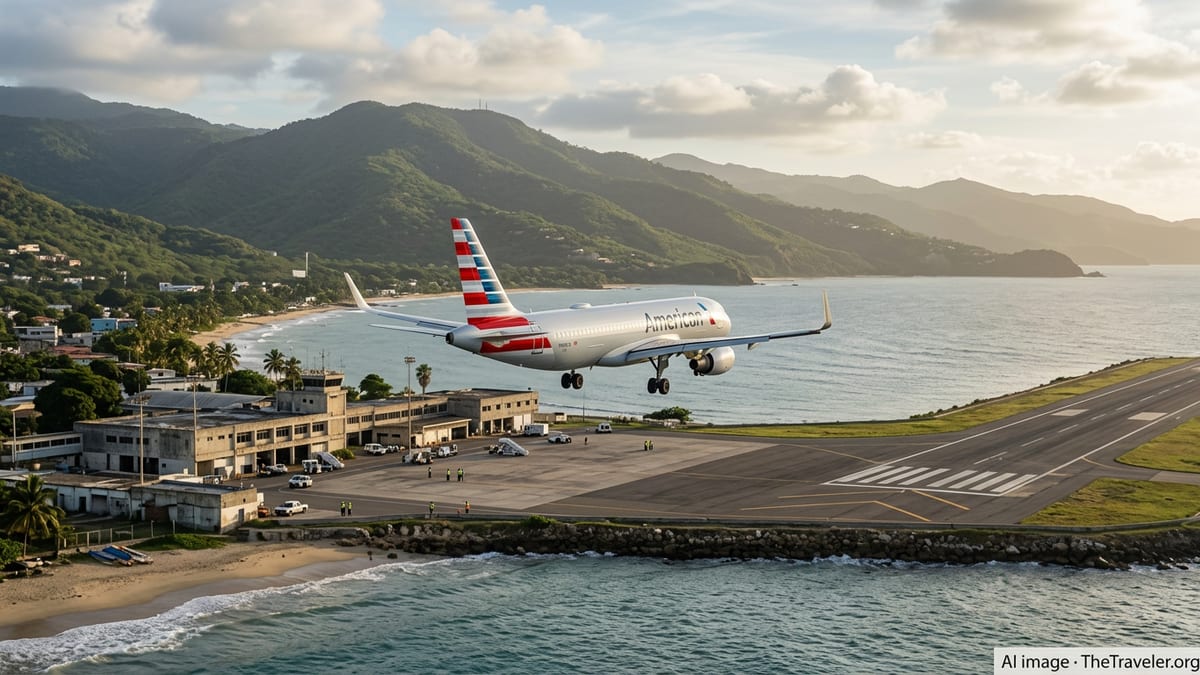
A Historic Reconnection After Years of Isolation
The approval granted this week by the U.S. Department of Transportation clears American Airlines to operate daily nonstop services from Miami International Airport to Caracas’s Simón Bolívar International Airport and Maracaibo’s La Chinita International Airport. The routes will be operated by Envoy Air, American’s regional subsidiary, under the American brand, restoring direct U.S. carrier access that vanished nearly seven years ago amid deep political and security concerns.
American Airlines was the last U.S. airline to leave the Venezuelan market in 2019, when Washington barred U.S. carriers from serving the country over safety, security and geopolitical risks. Since then, travelers have relied on convoluted connections through third countries or regional carriers, adding cost and complexity to even routine family visits. The green light for American’s return follows a broader reopening of Venezuelan airspace this year and a reassessment of airport security procedures by U.S. authorities.
Industry analysts say the move is symbolically significant, signaling a tentative thaw in U.S. relations with Caracas and a renewed willingness by U.S. regulators to permit commercial activity after years of political standoff. For American, which first entered Venezuela in 1987 and once held the largest U.S. market share there, the comeback is also a bid to reclaim a profitable Latin American corridor centered on Miami, its principal gateway to the region.
While the State Department continues to urge travelers to carefully review safety conditions, the restoration of scheduled flights is being widely interpreted in both countries as a turning point, one that could gradually normalize travel patterns that have been severely disrupted since the late 2010s.
Tourism Prospects Brighten for U.S. Visitors and Venezuelans
Tourism officials and tour operators on both sides of the Caribbean are already banking on a rebound in visitor numbers once tickets go on sale and flights begin. Before the suspension of services, Miami to Caracas was a busy trunk route for U.S. sun seekers, business travelers and members of the large Venezuelan diaspora in South Florida. The return of a major U.S. carrier is expected to stimulate demand for packages that pair beach escapes with cultural city stays, particularly around Caracas and Venezuela’s Caribbean coastline.
For American tourists, the revived connection promises easier access to the country’s marquee attractions, from Caribbean islands such as Margarita and Los Roques to the Andean city of Mérida and the vast wilderness of the Gran Sabana. Travel consultants say demand is likely to emerge first from seasoned adventurers and diaspora families, followed by a wider leisure market if political stability holds and on-the-ground services improve.
Venezuelan travelers will also see immediate benefits, gaining a direct link to Miami’s vast network of onward connections across the United States and beyond. The restored flights are poised to facilitate everything from family reunions and medical travel to cruise departures from South Florida, where Miami and nearby Fort Lauderdale serve as global cruise capitals.
Local hospitality businesses in Venezuela, many of which have endured years of depressed international arrivals, are cautiously optimistic. Hoteliers and guesthouse owners expect the visibility of a large U.S. brand to help reassure would-be visitors and to encourage new investment in lodging, tour operations and supporting services in key gateway cities.
Economic Ripple Effects for Local Communities
Beyond tourism, American’s return is projected to generate broader economic benefits in both Venezuela and South Florida. Direct flights typically drive growth in trade, conference travel and small business activity, particularly in sectors such as food imports, textiles and professional services that historically linked Miami and western Venezuela.
In Caracas and Maracaibo, airport authorities anticipate new jobs related to ground handling, maintenance, security and customer services as daily American-branded flights ramp up. Ancillary businesses including airport hotels, transport providers and catering firms are also expected to capture new revenue from both passengers and airline crews.
Travel economists note that after years of isolation, even a modest increase in visitor spending can have an outsized impact in local communities. A steady stream of U.S. travelers staying in city hotels, hiring guides, dining in restaurants and using domestic flights to reach other parts of the country could inject much-needed foreign currency into Venezuela’s strained economy.
Miami, meanwhile, stands to consolidate its role as the primary hub for traffic to and from Venezuela. American already commands a dominant position at Miami International Airport, and the new Venezuela flights will feed additional passengers into its North American and European networks. Airport data in recent years has shown robust Latin American demand through Miami even during periods of political turbulence, suggesting strong underlying appetite for restored connectivity.
Security Reviews, Timetables and Traveler Caution
Although the Department of Transportation and the Transportation Security Administration have now cleared American’s application, final details on launch dates and flight schedules are still being refined. The approval covers daily flights from Miami to both Caracas and Maracaibo for an initial two-year period, allowing regulators to monitor conditions and adjust if necessary.
American has indicated that it will phase in services after completing internal security assessments and crew training specific to Venezuelan operations. Aviation observers expect the Miami to Caracas route to commence first, with Maracaibo following shortly afterward if initial operations proceed smoothly and demand materializes as forecast.
Travel advisers are urging prospective passengers to remain attentive to official travel advisories, which can evolve quickly. While the reopening of airspace and the return of a major U.S. carrier mark a clear shift from the blanket restrictions of past years, both governments still emphasize that travelers should stay informed about security, health and political developments.
For many in the Venezuelan diaspora, however, the overriding sentiment is relief. The ability to book a single, same-day flight from Miami on a familiar U.S. airline removes years of logistical hurdles and uncertainty, restoring a sense of normalcy to family visits that had become complicated multi-stop odysseys.
A Test Case for Venezuela’s Tourism Future
Industry watchers see American Airlines’ move as a test case for Venezuela’s broader reintegration into regional travel networks. If the new flights prove successful and incident free, they could encourage other carriers to revisit suspended routes or expand existing services via third countries, widening the options available to tourists and business travelers.
The country’s tourism potential has long been recognized but underexploited, constrained by political turmoil, infrastructure challenges and safety concerns. The arrival of a major U.S. airline again at Caracas and Maracaibo is being closely watched by hotel groups, cruise lines and adventure operators who have been evaluating whether and when to reenter the market.
For now, expectations are measured rather than exuberant. Airlines have become increasingly cautious about high-risk destinations, and Venezuela’s recovery as a tourism destination will depend on sustained improvements in governance, services and security. Yet the symbolic power of an American Airlines jet returning to Venezuelan skies is undeniable, signaling a new chapter in connectivity that many hope will translate into tangible gains for travelers and local communities alike.
If those gains materialize, American’s bold bet on Venezuela could spark a wider tourism boom, restoring the country to the travel maps of U.S. visitors and giving Venezuelans renewed access to the wider world through one of the busiest hubs in the Americas.