

More news on this day
American Airlines is working through one of the most turbulent stretches of the spring travel season after a series of powerful storm systems and resulting Federal Aviation Administration ground stops pushed its combined delays and cancellations into four-digit territory across several March travel days.
Get the latest news straight to your inbox!
Multiple Storm Systems Converge on Key American Hubs
Publicly available flight tracking data for March shows a succession of severe weather events sweeping across the Midwest, Mid-Atlantic, and East Coast, creating repeated chokepoints for American Airlines operations. Storms around March 7 brought snow and high winds to Denver and the central U.S., while later systems around March 16 and March 22 to 27 pushed lines of thunderstorms and winter weather through Chicago, Washington, and New York airspace just as spring break traffic intensified.
According to aggregated FlightAware and aviation analytics figures cited in recent media coverage, those storm clusters produced nationwide totals in the tens of thousands for delays and cancellations, with American among the hardest hit large carriers on several days. At various points in March, major American hubs including Chicago O’Hare, Dallas Fort Worth, Charlotte Douglas, Miami International, and New York’s LaGuardia and JFK all appeared on disruption leaderboards as weather cells moved from the Plains toward the Atlantic.
Reports indicate that the impact was cumulative. Aircraft and crews displaced by one storm system reduced flexibility when the next line of severe weather arrived, setting the stage for day-over-day schedule instability. By late March, travel outlets and flight disruption trackers were describing some days as among the most challenging for U.S. aviation since at least 2024, with American’s share of the disruptions rising into four-digit territory across cancellations and delays combined.
Meteorologists and aviation specialists quoted in recent coverage have pointed to an unusually active late winter and early spring pattern, with fast-moving low-pressure systems producing sharp air-mass contrasts. That environment has favored both heavy snow in northern states and strong thunderstorms farther south, a combination that typically forces airlines to repeatedly slow or halt operations as fronts pass over key airports.
FAA Ground Stops Amplify Operational Strain
The Federal Aviation Administration’s use of ground stops and ground delay programs played a central role in how the disruption unfolded for American and other carriers. Ground stops temporarily prevent flights bound for a specific airport from taking off when conditions such as severe storms, low visibility, or congestion make it unsafe or impractical to accept additional arrivals. Ground delay programs meter traffic into saturated airspace by assigning controlled departure times.
During the March storms, publicly available FAA status information and flight tracking dashboards showed stops or delay programs at several of American’s key markets. These included intermittent measures at Chicago O’Hare and Charlotte, along with constraints at Washington Reagan National and other East Coast airports when convective weather moved along the Interstate 95 corridor. Even relatively short ground stops, such as those reported for late afternoon periods at Washington and Baltimore, had outsized ripple effects as they collided with peak departure banks.
Each time the FAA implemented a stop or heavy flow control, American’s banked hub-and-spoke schedule came under strain. Aircraft waiting on the ground at origins missed their planned arrival windows, crews bumped up against federally mandated duty time limits, and tight connection banks at hubs began to fray. Analysts note that when this pattern repeats across multiple hubs in a short period, the result is a rapid climb into four-digit disruption tallies for a single carrier, even if outright cancellations remain below headline-grabbing levels.
Aviation policy observers have emphasized that these FAA interventions are a safety tool rather than a discretionary airline decision. However, the timing and duration of ground stops can significantly influence how quickly an airline like American can recover once a storm band has passed, especially when storms track along the same high-density routes used by multiple carriers.
American Airlines Waives Fees and Rebooks Impacted Travelers
In response to the rolling disruptions, American Airlines has been updating its travel alerts page with a series of flexible rebooking options for affected passengers. Recent advisories for late March travel outline change-fee waivers for customers scheduled to fly through impacted cities during specific storm windows, allowing them to shift trips within a limited date range without additional penalties, subject to seat availability.
Publicly available information on American’s website indicates that waivers have covered travel dates such as March 25 to 28 for certain routes, reflecting the carrier’s effort to thin peak schedules and create room to re-accommodate displaced travelers. By encouraging some passengers to move itineraries ahead of major storm days, the airline can reduce the number of people stranded when conditions deteriorate and ground stops take effect.
Reports from consumer travel outlets describe a familiar playbook: automatic rebooking where possible, email and app notifications with new itineraries, and options to request refunds when flights are canceled or significantly changed. Passengers whose trips involved multiple disrupted segments often found themselves re-routed through alternative hubs or shifted to next-day departures, particularly when storms lingered over key hubs or when overnight crew rest requirements limited late-evening rescue flights.
Travel advocates have stressed the importance of travelers monitoring their reservations through the American Airlines mobile app and airport displays rather than relying solely on early-morning schedules. During dynamic weather events, departure and arrival times can change repeatedly as the carrier adjusts to evolving FAA flow restrictions and rapidly changing radar images.
Passenger Experience: Long Lines, Limited Options, and Crowded Hubs
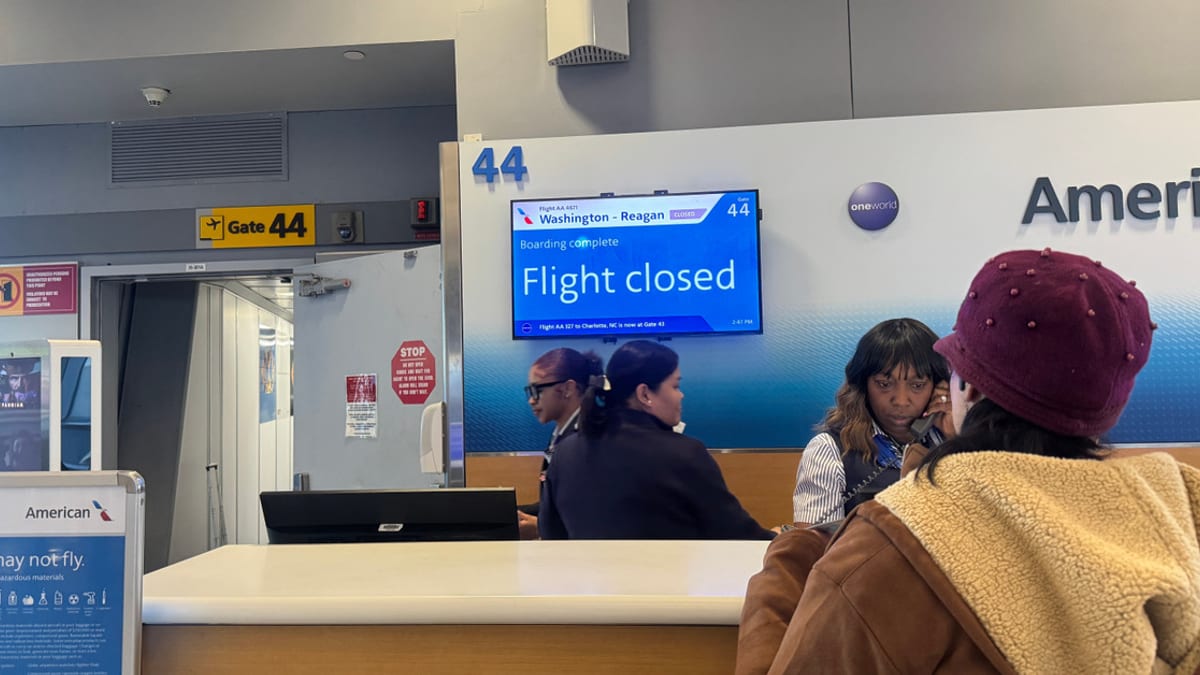
For passengers, the four-digit disruption totals translated into familiar but still frustrating scenes at airports across the country. Media images and on-the-ground accounts from the March storms depict long check-in and customer service lines at American’s hub cities, with travelers clustered around gate podiums seeking alternative routings after missed connections or sudden cancellations.
Airports such as Chicago O’Hare, Dallas Fort Worth, and Charlotte reported congested concourses and stretched amenities as thousands of travelers waited out rolling delays. With many flights fully booked due to spring break demand, same-day re-accommodation was often challenging, leaving some American customers facing overnight stays and lengthy standby lists. In hub cities where multiple carriers were equally affected by FAA ground measures, demand for hotel rooms and ground transportation spiked as evening curfews approached.
Industry observers note that disruptions on this scale can also strain baggage systems. When passengers are rebooked at short notice or miss tight connections, checked bags may not follow them onto new flights, leading to delayed luggage deliveries that extend the impact of the storm experience beyond the airport. American, like its competitors, typically relies on tracking tools and delivery contractors to reunite travelers with bags in the days after major operational events.
Consumer advocates have urged affected travelers to retain receipts for necessary expenses such as meals, lodging, and ground transportation when disruptions are within an airline’s control, and to familiarize themselves with American’s published customer service commitments. Weather and FAA-ordered ground stops generally fall into the category of events outside the carrier’s control, but operational decisions made on top of those constraints can influence what forms of goodwill compensation may be offered in practice.
What the Disruptions Signal for the Rest of the Spring Travel Season
As American Airlines works to reset its network following the March storms, analysts are watching closely for signs of how resilient U.S. aviation will be during the remainder of the spring and into the busy summer peak. The combination of strong demand, tight capacity, and increasingly volatile weather has raised concerns that even routine thunderstorms could trigger outsized operational consequences if they intersect with already stretched hub schedules.
Recent industry commentary highlights American’s efforts to build more recovery time into its schedules, adjust aircraft routing, and pre-cancel select flights when forecasts point to high-impact weather. Those strategies can keep disruption tallies from climbing even higher but may also translate into earlier notifications of cancellations as the airline attempts to manage expectations and avoid last-minute airport chaos.
Aviation experts suggest that passengers traveling with American in the coming weeks consider flexible itineraries where possible, including early-day departures that leave room for rebooking, and connections with more generous layover times through historically storm-prone hubs. For international travelers connecting onto American’s domestic network, aligning arrival times to avoid late-afternoon and evening thunderstorm windows could also reduce the risk of misconnecting when FAA ground stops materialize.
For now, the March storms have underscored how quickly multiple weather systems and FAA traffic management tools can push a single airline’s disruption metrics into four-digit territory, even in an era of advanced forecasting and sophisticated scheduling software. American’s experience this season will likely inform not only its own operational playbook, but also how airports, regulators, and travelers prepare for the next round of severe weather bearing down on the national airspace system.