

More news on this day
Direct commercial air links between the United States and Venezuela are set to return as American Airlines prepares to resume daily nonstop flights between Miami and Caracas from April 30, following U.S. government approval to restart scheduled service after a six year suspension.
Get the latest news straight to your inbox!
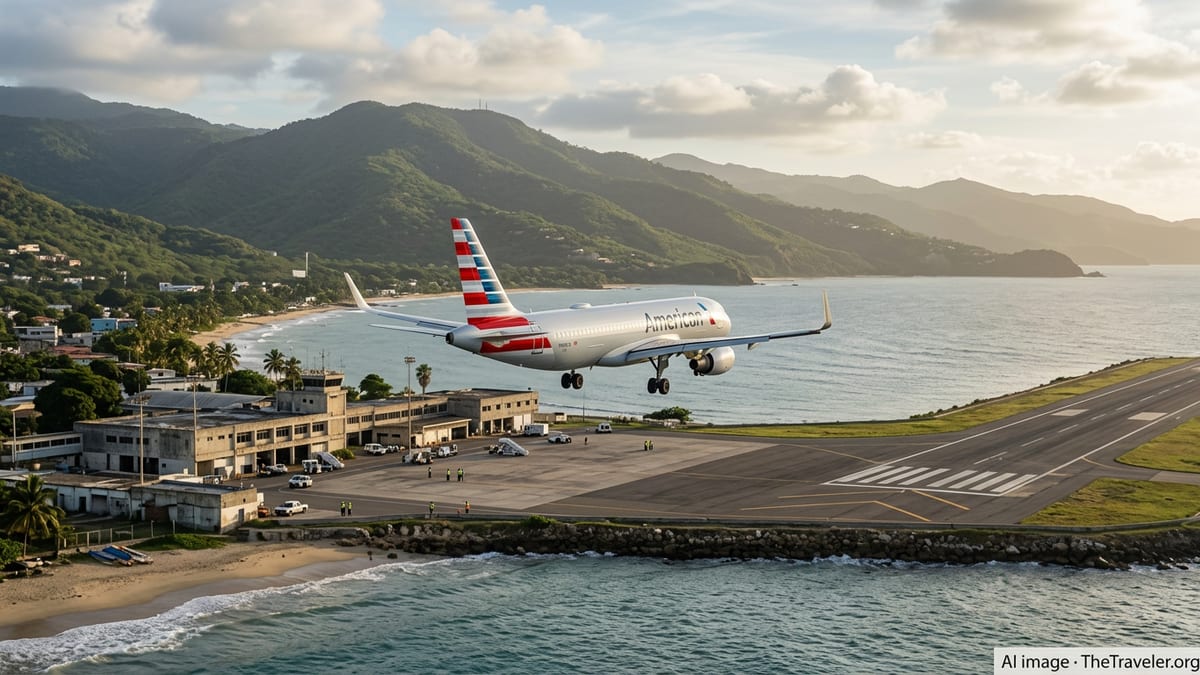
First U.S. Airline Back in Venezuelan Skies
American Airlines is positioned to become the first U.S. carrier to restore scheduled passenger service to Venezuela since flights were halted in 2019. Publicly available information shows that the airline has secured authorization from the U.S. Department of Transportation to operate daily Miami–Caracas flights, with operations expected to begin as soon as April 30, 2026, once remaining security checks and bilateral clearances are completed.
The carrier had been the largest U.S. airline in the Venezuelan market before suspending its routes amid deteriorating security conditions, airspace restrictions, and financial challenges tied to trapped local revenues. Industry coverage indicates that American has been working for months with U.S. and Venezuelan aviation and security agencies to clear the final hurdles for a return to Simón Bolívar International Airport, which serves Caracas.
Reports from specialized aviation outlets describe the restart as a symbolic step in the gradual normalization of air connectivity between the two countries, following a period marked by political tensions, temporary airspace bans, and a complete halt of direct U.S. commercial flights to Venezuela.
The resumption of the Miami–Caracas link is being closely watched across Latin America’s aviation sector, where carriers and airport operators view the U.S. decision to allow a phased return to Venezuelan routes as a sign that risk assessments and regulatory positions are shifting after years of caution.
Route Details, Schedule and Aircraft
According to published coverage of the airline’s plans, American intends to operate the Miami–Caracas service on a daily basis, offering one nonstop roundtrip every day between Miami International Airport and Caracas’ Simón Bolívar International Airport in Maiquetía. The planned launch date of April 30 places the restart just ahead of the busy Northern Hemisphere summer travel season.
The flights are set to be operated by Envoy Air, American’s wholly owned regional subsidiary, under the American Eagle brand. Multiple industry reports indicate that Embraer 175 jets will be used on the route, a type commonly configured by U.S. airlines with around 76 seats in a mix of premium and economy cabins, suitable for high-frequency regional and medium-haul international services.
American has not publicly detailed final flight times or fare levels, but travel trade reporting suggests that the carrier is planning an early afternoon departure from Miami to provide onward connectivity to and from other cities in the United States and beyond. In the opposite direction, the Caracas departure is expected to be timed to feed evening bank connections in Miami.
Travel industry analysts note that the choice of a regional jet and a single daily frequency reflects a cautious relaunch strategy that can be scaled up if demand proves consistently strong, while allowing the airline to control costs and operational risk in a still-recovering market.
Regulatory Green Light After Years of Restrictions
The restart of Miami–Caracas flights follows a series of regulatory moves in Washington that have gradually cleared the way for U.S. carriers to return to Venezuela. Publicly available documents and media reports show that the U.S. Department of Transportation approved American’s request to operate services to Caracas and Maracaibo in early March, reversing a long standing prohibition on U.S. airlines serving the country.
Those earlier restrictions grew out of a 2019 decision that effectively cut off direct commercial flights due to security concerns and political instability. Since then, route proposals involving Venezuela have required explicit regulatory approval, and aviation authorities have relied on updated security assessments, airport inspections, and diplomatic developments before considering any resumption of service.
Coverage by international and U.S. outlets indicates that transportation and security agencies conducted on site reviews at Caracas’ main airport in recent weeks. These included evaluations of passenger and baggage screening, perimeter security, and coordination with local authorities, steps that are typically required before allowing U.S. carriers to operate to higher risk destinations.
The regulatory shift aligns with a broader, though cautious, thaw in relations between Washington and Caracas in early 2026, including moves to reopen diplomatic channels and adjust travel advisories. Nonetheless, official notices continue to flag Venezuela as a challenging environment, and U.S. travelers are being advised through public channels to carefully review safety guidance before booking trips.
What the Return Means for Travelers and Diaspora Communities
For travelers, the return of nonstop U.S.–Venezuela flights promises shorter journey times, more predictable schedules, and an alternative to the multi stop itineraries that have become common since 2019. Many passengers have had to route through hubs such as Panama City, Bogotá, or Santo Domingo, often facing long layovers and higher total trip costs.
Travel media coverage suggests that the new daily Miami–Caracas option is expected to be particularly significant for the large Venezuelan diaspora in South Florida and other parts of the United States. Direct service can simplify family visits, improve access for business travelers, and support humanitarian and civil society exchanges that depend on reliable air links.
Industry observers also point out that added capacity on a high demand city pair can place competitive pressure on fares that rose sharply during the years of restricted access. While ticket prices for the relaunched route have not yet been widely publicized, analysts anticipate that the presence of a major U.S. carrier could gradually moderate some of the highest one way and connecting fares in the market.
At the same time, the lingering security and infrastructure challenges in Venezuela mean that some travelers will likely continue to favor connecting itineraries or postpone discretionary trips. Publicly available advisories continue to highlight concerns about crime, limited medical resources, and potential disruptions in essential services, factors that will influence how quickly demand recovers to pre suspension levels.
Strategic Move in a Shifting Aviation and Political Landscape
American’s planned return to Caracas also carries strategic weight within the broader Latin American network. Before the suspension, the carrier leveraged Miami as a gateway for traffic between North America and northern South America, with Venezuela playing a key role in its regional connectivity. Restoring the route helps to reinsert Caracas into that network, even if only at a modest initial scale.
According to sector analyses, the decision to commit to daily service rather than a limited trial period signals the airline’s belief that there is sustainable demand from both point to point and connecting passengers. It also positions American ahead of other U.S. carriers that may seek to re enter the Venezuelan market as regulatory and security conditions stabilize.
The move comes amid a period of realignment in global aviation, with airlines reevaluating route networks after pandemic related upheaval, geopolitical tensions, and shifting economic conditions. For Venezuela, the reintroduction of direct flights from the United States is viewed in regional media as a step toward reintegration into conventional commercial air corridors after years of isolation.
How quickly other U.S. and international airlines follow will depend on ongoing assessments of profitability, currency stability, and operational reliability in the country. For now, the focus is on whether American’s April 30 launch proceeds as planned and how the new Miami–Caracas service performs in its crucial first months back in the skies.