

More news on this day
American Airlines is reshaping its long-haul network for the Northern Winter 2026 season, rolling out aircraft upgrades, seasonal extensions, and route changes that will alter how U.S. travelers reach key cities across Europe, Asia, and South America.
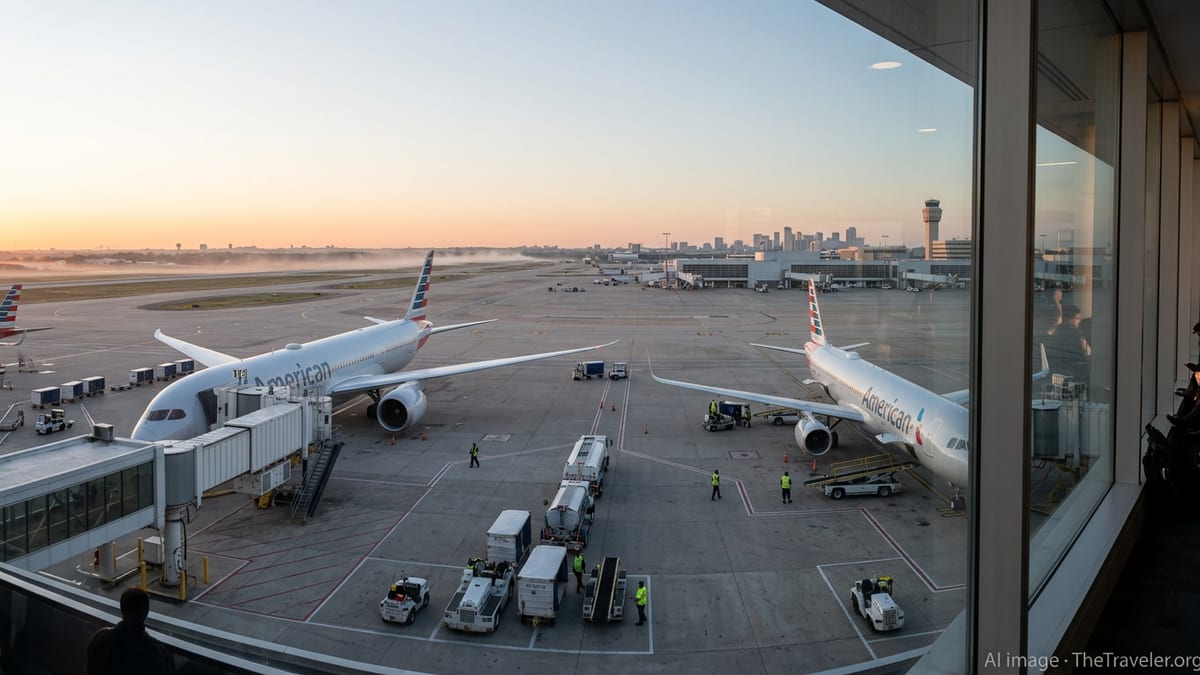
Widebody Upgrades Reshape Transatlantic Market
Fresh schedule filings for the Northern Winter 2026 to 2027 season show American Airlines leaning harder into premium-focused widebodies on major European routes, particularly from its New York and Philadelphia hubs. Industry schedule analysts report that the airline has begun swapping previously scheduled Boeing 777-200ER aircraft for a mix of Boeing 787 Dreamliners and Airbus A321XLR narrowbodies on select transatlantic services, a move aimed at matching capacity more precisely to winter demand while preserving network breadth.
On trunk routes such as New York to Madrid and Philadelphia to key European capitals, the Dreamliner deployments add newer cabins, improved fuel efficiency, and more consistent lie-flat seating in business class. At the same time, the introduction of long-range narrowbodies like the A321XLR on thinner, secondary markets allows American to keep nonstop links that might otherwise be paused for winter, extending shoulder-season and holiday connectivity that would have historically disappeared after summer.
The strategy follows several seasons of winter cuts in Europe, when American suspended multiple routes in response to softer demand. Now, with more efficient aircraft and a portfolio of newly announced 2026 summer launches, the carrier is using the upcoming winter to transition aircraft and fine-tune capacity in preparation for a more diversified transatlantic network.
For passengers, the shift means greater variability in aircraft types across the Atlantic, but also the likelihood of newer cabins, more premium seats, and fewer outright route cancellations on secondary European city pairs.
New European Links Temper Earlier Winter Cuts
American’s Winter 2026 overhaul is closely tied to its previously announced 2026 long-haul expansion, which includes six new routes to Europe and South America from hubs such as Philadelphia, Dallas Fort Worth, Miami, and New York. Earlier moves to pause select transatlantic routes in the 2024 to 2025 and 2025 to 2026 winters signaled a tactical retreat from marginal seasonal flying, but the latest filings indicate that the airline now intends to return with a more sustainable mix of destinations and aircraft.
Philadelphia is the most visible beneficiary on the Europe side. The hub is being positioned as a key gateway to Central and Eastern Europe, with new seasonal routes to cities such as Prague and Budapest slated for the 2026 high season. While those flights will remain summer-focused, the Winter 2026 schedule is being used to adjust aircraft rotations and free up widebodies for higher-yielding transatlantic and South American sectors, while taking advantage of the A321XLR to extend select European services further into the colder months.
Elsewhere in Europe, American is doubling down on already successful leisure markets from hubs like Dallas Fort Worth and Miami, including Milan and Athens, by planning longer operating seasons on routes that once shut down promptly after summer. Industry chatter also points to more flexible capacity management on routes to Zurich and other financial centers, where business travel remains resilient even during the winter lull.
The combined effect is a more modular European network, where American can toggle between widebody and long-range narrowbody aircraft, extend or reduce seasonal flying by weeks rather than whole months, and keep a greater number of city pairs available to U.S. travelers through the holidays.
Asia Sees Premium Focus and Targeted Capacity Shifts
Across the Pacific, American’s Winter 2026 schedule changes are more about product and capacity than brand-new destinations. The carrier has been gradually upgrading its Asia offering with enhanced premium cabins and improved onboard amenities, including more lie-flat seats, refined business class bedding, and an emphasis on faster connectivity and entertainment on long-haul flights to Japan and other key markets.
Winter 2026 schedules point to continued consolidation of Asian flying through core hubs such as Dallas Fort Worth and, to a lesser extent, Los Angeles, where American can feed long-haul departures with a dense domestic network. Rather than adding entirely new Asian cities for the winter, the airline is focusing on reinforcing existing routes with more consistent aircraft types and upgraded interiors, particularly on Tokyo services where regulatory constraints limit the number of new slot pairs available.
The use of efficient Dreamliners on many Asia services enables American to maintain year-round operations with a better balance between premium and economy capacity. Analysts note that aircraft assignment changes filed for the winter season will help the airline preserve its presence on marquee Asia routes even as it redirects some long-haul capacity toward growth opportunities in Europe and South America during peak periods.
For travelers, the result is a more predictable Asia schedule anchored around a smaller number of high-profile gateways, but with a noticeably stronger focus on comfort, especially in the front cabins where business travelers and high-spend leisure passengers are driving revenue recovery.
South America Gains From Extended Seasons and Upgauges
American Airlines is also using the Winter 2026 schedule update to reinforce its already dominant position between the United States and South America, particularly from Miami and Dallas Fort Worth. Recent announcements extending what were once winter-only services to Buenos Aires into the 2026 summer underscore growing demand on northbound and southbound flows, especially from corporate and premium leisure travelers.
By the time the Northern Winter 2026 season begins, American plans to operate an expanded pattern of flights to major South American gateways such as Buenos Aires, Sao Paulo, Santiago, and Lima, many of them on Boeing 787 aircraft. Earlier filings for the 2025 to 2026 period already highlighted additional capacity on six key South American routes, and the new winter rework continues that trajectory, with more widebody flying and denser schedules on city pairs where demand has remained resilient.
Miami remains the centerpiece, with aircraft upgrades and extra frequencies designed to cement its role as a connecting hub for travelers from across the United States seeking warmer-weather destinations in the Southern Hemisphere during the northern winter. Dallas Fort Worth, meanwhile, is gaining a more prominent role as a secondary South American gateway, especially on routes where American has opted to extend service into the off-peak months rather than retreat entirely.
The emphasis on South America within the Winter 2026 plan reflects a broader industry trend of shifting capacity toward markets with counter-seasonal demand, offering American a way to keep expensive long-haul aircraft productive while smoothing out the traditional transatlantic winter slowdown.
What the Winter 2026 Shake-Up Means for Travelers
For passengers planning trips in late 2026 and early 2027, American’s schedule overhaul will translate into a more dynamic, and sometimes more complex, set of options across three continents. Travelers may find that routes they once associated strictly with summer holidays now operate deeper into the year on smaller long-range aircraft, while traditional trunk routes increasingly feature modern widebodies with upgraded cabins and enhanced premium services.
The airline’s use of aircraft like the A321XLR to support thinner European routes in the shoulder and winter seasons, paired with a stronger widebody presence on South American and key Asian flights, signals a move toward finely tuned capacity management rather than broad seasonal pullbacks. That could mean fewer abrupt cancellations, more gradual schedule transitions, and a wider array of one-stop connections through hubs such as Philadelphia, Dallas Fort Worth, Miami, and New York.
Industry experts caution that schedules filed this far ahead remain subject to change, particularly as fuel prices, global demand, and competitive dynamics evolve. Even so, the pattern emerging in American’s Winter 2026 plans points to a carrier intent on leveraging new aircraft technology and upgraded cabins to sustain a truly global network year-round, instead of treating winter as a prolonged off-season.
For now, the main takeaway for travelers is clear: by Winter 2026, American Airlines expects to offer a more premium-heavy, hub-focused network spanning Europe, Asia, and South America, with aircraft assignments and route choices calibrated more tightly to where and when flyers actually want to travel.