

More news on this day
American Airlines is expanding its digital platform with new disruption-management tools designed to give travelers clearer explanations for flight delays and cancellations, while offering self-service options to rebook, track bags, and access vouchers directly in the mobile app.
Get the latest news straight to your inbox!
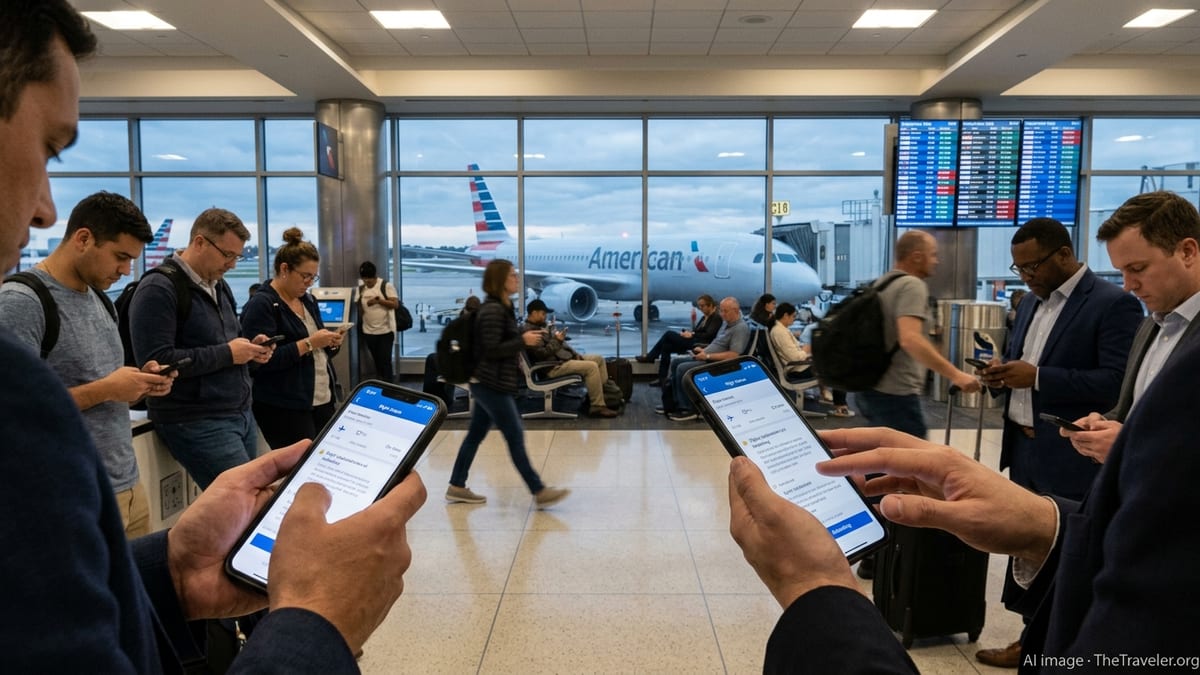
New Digital Platform Targets Disruption Pain Points
American Airlines is introducing an updated digital experience that focuses on one of the most frustrating parts of air travel: what happens when flights are delayed or canceled. According to published coverage and information on the airline’s customer service pages, the refreshed platform brings together real-time flight status, disruption notifications, and self-service recovery tools inside a single app workflow.
Recent newsroom materials and industry reports indicate that the latest enhancements are built on a modernized back-end platform that allows the airline to push updates and new features more quickly to its app and website. This upgraded infrastructure underpins new disruption tools that surface delay causes, suggested next steps, and alternative travel options without requiring travelers to stand in line at an airport counter.
The move comes as travelers increasingly rely on smartphones as their primary source for flight information. External analyses and consumer surveys frequently show that a large share of American passengers now expect digital tools to provide not only status updates, but also practical guidance and remedies when their journey goes off schedule.
By consolidating disruption-related features into a more intuitive interface, the airline is positioning the app as the first place customers turn when operations are interrupted, rather than as a secondary check after gate announcements or call centers.
Clearer Explanations for Delays and Cancellations
A central focus of the new experience is clarity around why flights are delayed or canceled. Publicly available descriptions of the platform explain that flight status screens now use more prominent visual indicators and plain-language summaries to show what is happening, why it is happening, and what options are available to the traveler.
Instead of generic status lines, customers are increasingly shown context about the underlying cause, such as weather, air traffic control, crew availability, or maintenance. Published coverage notes that this information is tied to the airline’s operations systems so that the explanation on the app more closely tracks the data used internally to manage the flight, addressing long-standing complaints about vague or conflicting messages at the gate.
Reports also indicate that the digital tools are being developed with regulatory changes in mind. Recent summaries of evolving U.S. rules on refunds and significant delays highlight the need for carriers to distinguish between controllable and uncontrollable disruptions. Clearer on-screen explanations may help travelers understand when they are eligible for refunds or accommodations, and when delays are driven by factors such as severe weather that limit compensation but still require timely communication.
For travelers, this translates to less guesswork and fewer trips back and forth between the departure board, gate podium, and customer service desks simply to understand the reason their plans have changed.
Self-Service Rebooking and Voucher Access in the App
The latest app enhancements go beyond explanations by allowing customers to respond to disruptions directly from their phones. Industry reporting on the rollout describes a guided self-service flow that appears when a flight is significantly delayed or canceled, presenting booking-specific options such as alternative flights, standby choices, and updated routing proposals.
The same interface is designed to surface digital vouchers where applicable. According to product descriptions and travel trade coverage, eligible customers may be able to access hotel, meal, and ground transportation vouchers issued during disruptions, with the vouchers stored and managed inside the app. Some reports note that these benefits can include digital cards usable at airport restaurants or for ride-hailing services, reducing the need for paper coupons or in-person processing.
Rebooking functionality is intended to mirror what travelers might receive from an airport agent, but with less waiting. Public information about the app’s capabilities indicates that customers are automatically rebooked in many cancellation scenarios, and can then view and change the proposed itinerary within the app if better options are available.
This approach aligns American more closely with digital disruption tools already present at some competing U.S. carriers, narrowing what analysts have described as a previous technology gap in handling irregular operations through mobile self-service.
AI-Powered Assistance and Real-Time Support
Alongside the expanded disruption hub, American Airlines has been testing a generative AI chat assistant embedded in its digital channels. Travel technology coverage explains that this assistant is designed to help customers rebook during delays and cancellations, answer common questions about trip options, and guide them through the use of vouchers and policy rules.
Reports describe the chat feature as particularly useful in high-volume disruption events, when traditional phone lines and airport counters can become overwhelmed. Instead of waiting on hold or queuing at a desk, customers can use the assistant to explore alternative flights, check same-day options, and confirm updated connections, all from the same device that displays their boarding pass.
The digital platform also integrates more conventional monitoring tools, such as push notifications and in-app alerts, which inform travelers of gate changes, rolling delays, or cancellations. Publicly available information on the airline’s customer service pages continues to encourage passengers to enroll in notifications and keep contact details updated so that the app and messaging tools can function as primary communication channels during disruptions.
Combined, these elements are intended to create an ecosystem in which customers are informed earlier, guided more clearly, and empowered to take action when travel plans start to shift.
Addressing Past Criticism and Rising Traveler Expectations
The timing of American’s digital overhaul reflects both competitive pressures and past operational challenges. Travel media and user discussions have previously highlighted instances where severe weather, infrastructure outages, or large-scale schedule changes overwhelmed the airline’s systems, leaving customers with limited digital support during long disruptions.
Analysts note that those episodes underscored how quickly passenger sentiment can deteriorate when mobile tools lag behind real-world events. Inconsistent flight status information, delayed notifications, and limited rebooking options have been frequent sources of criticism not just for American, but across the industry.
By rolling out a more robust disruption hub and clearer delay explanations, American is responding to a broader shift in traveler expectations. Public surveys and independent reliability rankings increasingly place weight on how airlines communicate during irregular operations, not only on raw on-time performance metrics.
For American, the success of the new platform will likely be judged less by the announcement of new features and more by performance during the next major weather system or network disruption. If the tools deliver faster, clearer, and more actionable information when it matters most, the airline could regain ground with frequent travelers who have grown accustomed to managing every stage of their journey from a single screen.