

More news on this day
American Airlines is preparing to showcase its roadmap for future growth, financial discipline and network expansion when it takes the stage at the 2026 J.P. Morgan Industrials Conference on March 17 in Washington, D.C., a closely watched forum for global investors focused on the next phase of the carrier’s recovery.
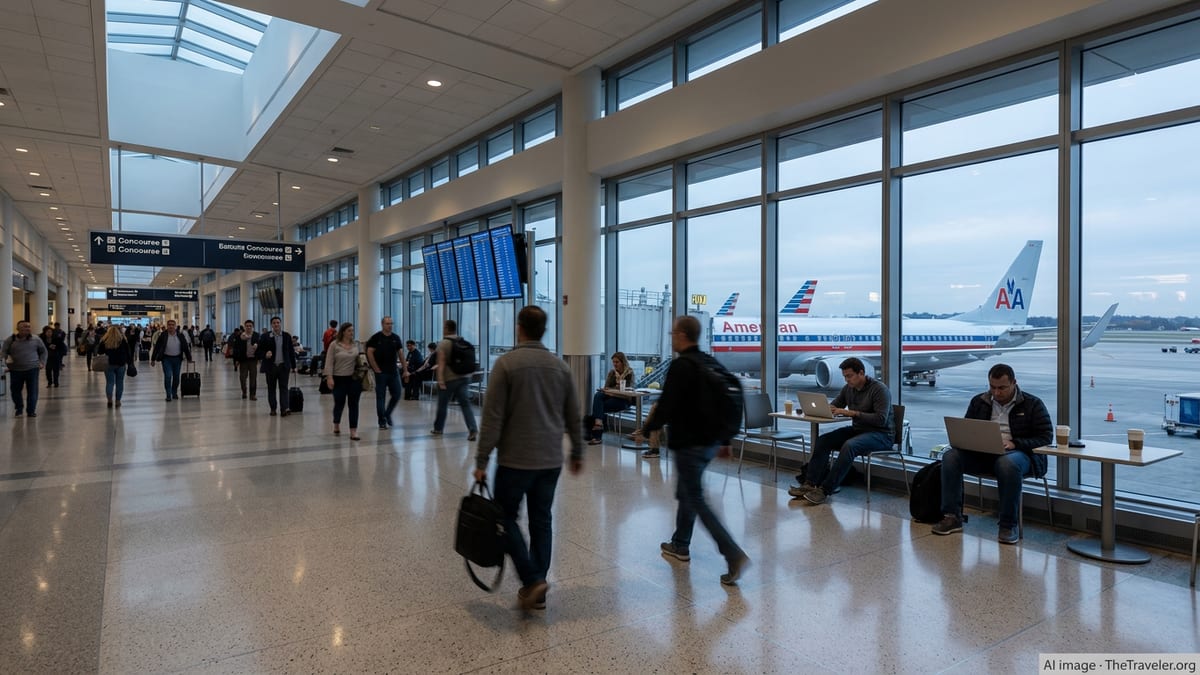
High-Profile Spotlight for a Century-Old Carrier
American Airlines Group Inc. is scheduled to present at 8:10 a.m. Eastern on March 17, giving senior executives a prime early slot at one of the most influential industrials gatherings of the year. The J.P. Morgan Industrials Conference routinely draws portfolio managers, analysts and corporate chiefs looking for signals on capital spending, demand trends and balance sheet health across transportation, manufacturing and infrastructure sectors.
For American, the event arrives at a symbolic moment. The airline is marking its centennial in 2026 after evolving from a small Midwestern air mail operator into what it describes as a premium global carrier that connects more U.S. gateways to the world than any rival. The company now operates more than 6,000 daily flights to over 350 destinations in more than 60 countries, supported by a workforce of about 130,000 employees.
The conference stage offers American a timely platform to reinforce its message of being “Forever Forward,” a company mantra tied to its history of firsts in air cargo, lounges and loyalty programs. Investors will be listening for how that narrative translates into hard numbers on revenue growth, cost control and shareholder returns over the next several years.
Executives are also expected to use the meeting to update Wall Street on how American is positioning itself within the broader oneworld alliance, whose members collectively serve more than 900 destinations. Network cooperation and joint ventures have become powerful tools in the competition for high-yield corporate and premium leisure travelers.
Balancing Growth Ambitions With Heavy Debt
The key tension hanging over American’s appearance is how the company plans to balance aggressive growth ambitions with one of the industry’s heaviest debt loads. After borrowing heavily during the pandemic, American has made debt reduction a central pillar of its investor story, trimming obligations by more than 15 billion dollars from the peak and cutting a further 2.1 billion dollars in 2025 alone, according to recent analyst and media estimates.
Even with that progress, the airline ended 2025 with gross debt in the mid 30 billion dollar range and a leverage profile that remains higher than many peers. Research from firms such as Zacks has highlighted American’s elevated debt-to-capitalization ratio as a persistent overhang, even as improving travel demand and higher yields lift revenue. That has kept investors highly focused on free cash flow generation and the pace of further deleveraging.
At the same time, American is signaling confidence about its earnings power in 2026 and beyond. Recent commentary from market observers points to guidance for adjusted earnings per share in a range that suggests a step change in profitability if demand holds up and costs can be contained. The J.P. Morgan appearance is likely to feature updated color on targets for operating margins, cash flow and net leverage over the medium term.
How candid executives choose to be about the trade-offs between investing for growth and paying down debt could shape sentiment around the stock. Many institutional investors will be looking for a clear framework that prioritizes balance sheet repair without starving the network and product investments needed to compete with Delta Air Lines and United Airlines.
Demand Tailwinds and Network Expansion Plans
On the operational side, American comes into the conference with solid demand fundamentals. Recent research coverage has noted that passenger revenue growth continues to benefit from resilient leisure travel and a gradual recovery in corporate and long-haul international demand. For early 2026, analysts expect mid to high single digit revenue growth versus the prior year, underpinned by firm pricing and fuller premium cabins.
American is also leaning into its role as a connector across U.S. hubs and secondary cities. The airline has mapped out plans to add around 15 new routes for the summer 2026 season, with a focus on strengthening domestic connectivity and feeding long-haul services. Additional flying into key coastal gateways and sun destinations is intended to capture high-yield travelers and loyalty members seeking more nonstop options.
Network decisions are being made in an environment of rising labor and non-fuel costs. Industry data show salaries, wages and benefits at American growing at a mid single digit rate in recent years, while non-fuel unit costs are projected to rise again in the first quarter of 2026. Executives at the conference will be pressed on how they plan to offset this cost creep through productivity gains, better aircraft utilization and continued densification of cabins.
Investors will also watch for commentary on fleet strategy, including any refinements to narrowbody and widebody order books in light of changing demand patterns. Choices around aircraft retirement, retrofits and potential new orders carry implications for capital expenditure, fuel efficiency and customer experience over the next decade.
Investor Sentiment at an Inflection Point
The 2026 J.P. Morgan Industrials Conference arrives as opinion on American’s stock appears to be at an inflection point. While the shares have lagged some peers over the past year, recent trading has shown bursts of optimism, helped by improving guidance and renewed interest from high-profile investors. Hedge fund disclosures in early 2026 have revealed increased positions in American, a vote of confidence in the airline’s ability to turn financial momentum into shareholder value.
Equity research houses remain divided, with a mix of buy and hold ratings reflecting both upside potential and persistent risks. Bulls point to robust free cash flow projections, ongoing debt reduction and a powerful loyalty franchise anchored by the AAdvantage program and co-branded credit card partnerships that generate high-margin revenue. Bears remain concerned about macroeconomic headwinds, labor relations and the risk that any demand shock could slow deleveraging.
The J.P. Morgan platform provides American a chance to address those competing narratives directly. Clearer detail on capital allocation priorities, including any future thoughts on share buybacks or dividends once leverage targets are met, could help solidify the investment case. Conversely, any sign of wavering on debt commitments or cost control could reinforce doubts among more cautious holders.
Given the prominence of the conference, even subtle shifts in tone from management on revenue quality, unit costs or competitive dynamics are likely to be parsed closely by traders and long-term investors alike. The presentation and subsequent question-and-answer session could set the tone for how the stock trades into the busy summer travel season.
Labor Relations and Operational Reliability Under Scrutiny
Behind the financial metrics, American’s relationship with its workforce and its operational track record will be another area of focus. The company has placed renewed emphasis on reliability and on-time performance since Robert Isom became chief executive in 2022, framing operational excellence as a prerequisite for sustainable profitability and customer loyalty.
Progress has been uneven. While American has improved completion factors and reduced some bottlenecks, it continues to face pressure from unions representing pilots, flight attendants and ground staff. In early 2026, flight attendants staged a high-profile vote of no confidence in management, highlighting frustrations over compensation, scheduling and contract negotiations. Though operations have not been severely disrupted, the episode underscored the delicate balance between cost discipline and frontline morale.
Conference attendees will be eager for signals on whether American can secure durable labor agreements that support both reliability and financial goals. Stable labor deals are critical to keeping non-fuel costs predictable and avoiding the kind of disruptions that can quickly erode revenue and brand reputation.
Operational performance will also be scrutinized against a backdrop of increasingly frequent weather and air traffic disruptions across the United States. Investors will want to hear how American is investing in technology, crew planning and airport infrastructure to minimize the impact of such events, and how these initiatives fit into its broader capital spending plan.