

More news on this day
American Airlines has escalated a long‑simmering turf war at Chicago O’Hare International Airport, accusing rival United Airlines of overscheduling flights so aggressively that federal regulators now plan to clamp down on operations at one of the world’s busiest hubs.
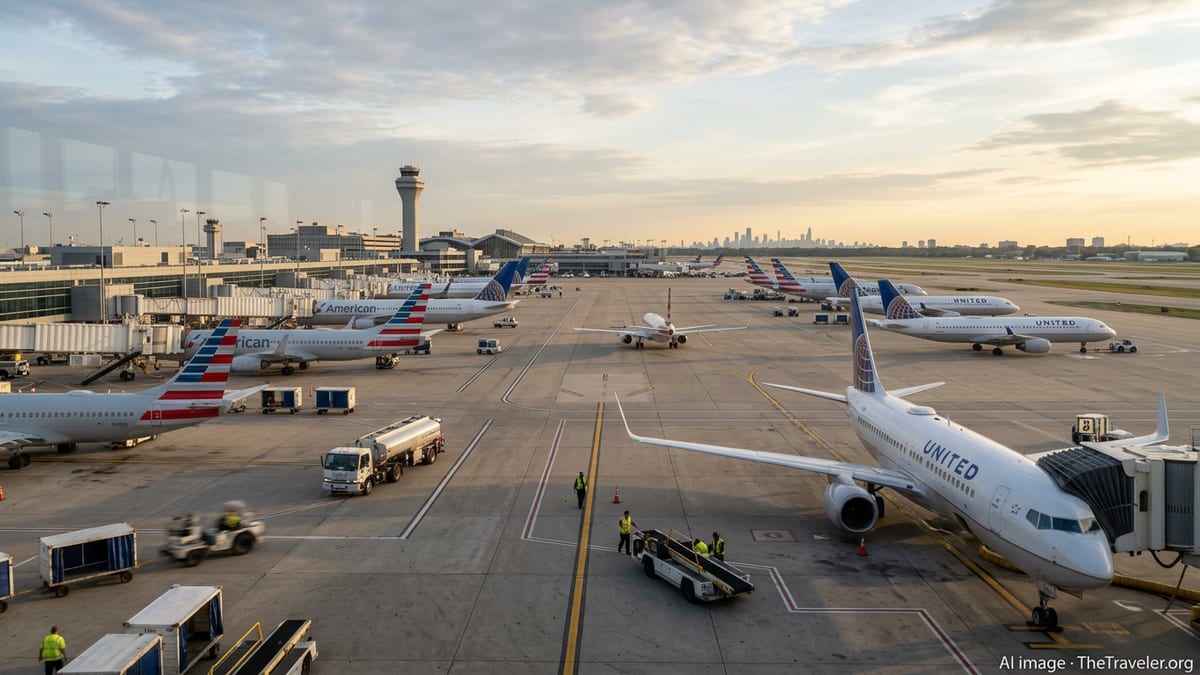
Sharp Allegations as Summer Travel Looms
In fresh remarks this week, executives at Fort Worth based American Airlines charged that United is engaging in what they describe as a “flood the zone” strategy at O’Hare, loading the schedule with more flights than the airport can reliably handle. American argues that the resulting congestion is rippling across the national air network, delaying passengers far beyond Chicago just as airlines prepare for another record summer of travel.
The criticism marks a rare public swipe between two of the country’s largest carriers, both of which rely on O’Hare as a cornerstone hub. While the two airlines have sparred for years over gates, terminal space, and long term expansion, American’s latest accusation directly links United’s scheduling decisions to mounting delays, missed connections, and ground holds that have frustrated travelers.
United has defended its approach, saying its schedule reflects strong demand in the Chicago market and growing connectivity through the hub. The carrier maintains that it is operating within current rules and that its growth is supported by investments in aircraft, staffing, and infrastructure to keep flights running on time.
The war of words is unfolding just as many travelers lock in summer itineraries. Industry analysts say the public feud could heighten anxiety for passengers who watched last summer’s disruptions play out at major hubs and are hoping to avoid similar headaches in 2026.
FAA Moves to Cap Flights at Congested O’Hare
The Federal Aviation Administration has now stepped into the fray, proposing a hard limit of about 2,800 daily operations at O’Hare for the peak summer season. The agency says the cap is needed to address what it calls “severe congestion” and to curb over scheduling that has stretched the airport’s runways, taxiways, and gate capacity to the breaking point.
Regulators point to a pattern of bottlenecks at O’Hare, where arriving aircraft frequently wait on taxiways for open gates and departures stack up during peak hours. By paring back schedules to what the FAA believes the airport can realistically process, officials hope to reduce cascading delays and lessen the risk of widespread cancellations during summer thunderstorms or air traffic control constraints.
Both United and American will be required to trim some flights if the proposal is finalized, but American insists United’s expansion is what pushed O’Hare over the edge. The cap would effectively force airlines to make hard choices about which routes and departure times to prioritize, especially during the morning and late afternoon peaks that business travelers favor.
For passengers, the change could mean fewer nonstop options and higher fares on the most in demand routes, even as reliability improves. Airlines are expected to push for exemptions and creative workarounds, while consumer advocates warn that competition on some smaller city pairs could suffer if slots are consolidated by the largest incumbents.
Gate Power, Market Share and a High Stakes Turf War
Underlying the scheduling clash is a fierce battle for gate access and long term dominance at O’Hare. Under the airport’s lease framework, an airline’s gate rights are closely tied to its historical share of departures, creating a powerful incentive to add flights and protect market share. American contends that United has taken this logic too far, overscheduling to lock in more gates and limit room for rivals to grow.
United, for its part, has spent the past several years investing heavily in O’Hare, positioning the airport as a central pillar of its network. Executives there have touted a denser schedule, upgraded aircraft, and expanded lounges as proof that United is the carrier of choice for Chicago based flyers, and they have brushed off American’s complaints as a competitive gambit.
The dispute has already spilled into courtrooms and city hall conference rooms, with American challenging aspects of O’Hare’s gate allocation and expansion plans. Chicago officials find themselves walking a fine line between two major employers and taxpayers, while also being pressed by federal regulators to ensure that the airport operates safely and efficiently.
Industry observers say the outcome will shape not only how the two airlines divide up O’Hare, but also how other slot constrained airports manage growth. If regulators side with American’s view that aggressive scheduling can itself be an unfair tactic, carriers at other crowded hubs may face new limits on how far they can push their schedules.
Travelers Brace for a Potential ‘Summer of Hell’
For passengers, the high level feud is less about corporate strategy and more about whether they will make it to weddings, vacations, and business meetings on time. O’Hare has long been notorious for weather related snarls, but labor groups and passenger advocates warn that current schedules leave little margin for error, raising the odds of long tarmac waits and missed connections when anything goes wrong.
Some union leaders have warned that front line staff could be forced to bear the brunt of traveler frustration if the status quo persists, echoing concerns that 2026 could bring a “summer of hell” for crews and customers moving through Chicago. They argue that overly tight schedules translate into chronic overtime, operational stress, and more frequent meltdowns when storms or tech outages hit.
American is leaning on those fears to bolster its case, portraying itself as a voice for reliability in a market that has outgrown its infrastructure. United counters that curbing its O’Hare schedule too sharply would strand travelers in the Midwest and reduce connectivity to smaller communities that rely on hub links.
As the FAA gathers feedback on its proposed cap and the airlines jockey for advantage, travel planners are urging customers to build in longer connection times at O’Hare, book earlier in the day when possible, and stay vigilant for schedule changes. With two giants locked in a public showdown and regulators rewriting the rules in real time, Chicago’s status as the nation’s aviation crossroads is once again under intense scrutiny.