

More news on this day
American Airlines is confronting renewed investor skepticism as its stock comes under pressure, with mounting financial strains and a jump in market volatility testing confidence in the carrier’s ambitious recovery plan.
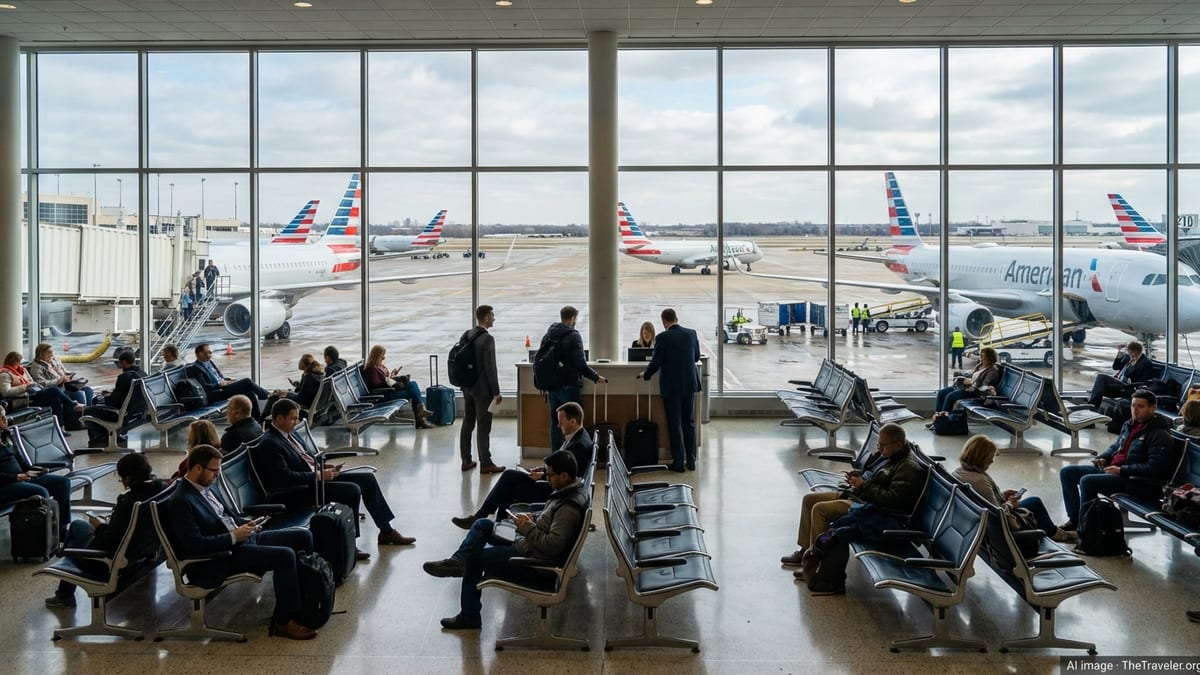
Stock Slides as Volatility Roils Airline Shares
American Airlines Group shares have come under renewed selling pressure in recent sessions, slipping to around the mid-teens as broad market volatility hits cyclical and highly leveraged names particularly hard. In trading last week, the stock fell a little more than 2 percent on a single session that saw major U.S. equity benchmarks retreat, underlining how quickly sentiment toward airline stocks can sour when risk appetite fades.
The pullback comes despite the fact that American’s share price is modestly higher year to date and up on a one year basis, reflecting a fragile equilibrium between improving fundamentals and persistent concerns about balance sheet risk. While the company has delivered progress on debt reduction and free cash flow, investors appear increasingly focused on how exposed the equity remains to any downturn in demand or spike in costs.
Analysts note that American’s recent trading pattern has been notably more volatile than that of the wider market, with daily moves amplified whenever macroeconomic headlines trigger shifts in expectations for interest rates, fuel prices or consumer spending. For a carrier with a relatively thin safety margin in its income statement, even modest changes in those variables can have an outsized impact on perceived equity value.
Compared with some U.S. peers that entered the post pandemic period with stronger balance sheets, American’s stock retains a reputation as a high beta way to express views on the broader travel cycle. That dynamic has helped the shares during periods of optimism but now appears to be working in reverse as investors question how sustainable current earnings momentum will be in a choppier environment.
Thin Margins and Heavy Debt Feed Investor Anxiety
Beneath the recent share price swings lies a financial profile that leaves American particularly vulnerable to shifts in the economic and rate environment. Over the past twelve months the company generated more than fifty billion dollars in revenue but translated that into net income of roughly one hundred million dollars, leaving it with a profit margin near zero. Such slim profitability offers little room to absorb fresh shocks, whether from weather disruptions, labor costs or a slowdown in bookings.
Debt remains a central concern. American ended 2025 with approximately thirty six and a half billion dollars in total debt, even after retiring roughly two point one billion dollars over the course of the year. While management has signaled that it expects to reduce that figure below thirty five billion dollars by the end of 2026, leverage remains high enough that a substantial share of the company’s enterprise value is tied up in obligations to lenders rather than equity holders.
Financial data providers estimate the group’s debt to equity ratio at deeply negative levels because shareholder equity remains in negative territory, underscoring how heavily past losses and borrowings still weigh on the balance sheet. With interest rates elevated compared with much of the last decade, that pile of debt also translates into a sizable non operating expense line that drags on earnings and limits flexibility.
For equity investors, the combination of heavy leverage and razor thin margins translates directly into volatility. When sentiment is positive and revenue trends are improving, the potential operating leverage can make the stock look inexpensive on forward earnings. When guidance is trimmed or macro risks rise, however, the same structure magnifies downside scenarios and can prompt rapid repricing.
Guidance Bump Meets a Harsher Market Mood
American’s latest financial results and guidance illustrate the tension between an operational turnaround story and a market that is increasingly unforgiving of balance sheet risk. In late January, the carrier reported what it described as a strong fourth quarter, highlighting higher passenger demand, improved load factors and a double digit rise in quarterly revenue compared with the year before. Net income for the quarter increased meaningfully, and management emphasized progress in trimming debt and reining in some operating costs.
At the same time, the company set out an ambitious outlook for 2026, forecasting adjusted earnings per share in a range that would represent a multiple expansion over 2025 and signaling expectations for more than two billion dollars in free cash flow. Executives framed the coming year as an inflection point, arguing that investments in the network, cabin upgrades and revenue management were poised to translate into significantly better returns.
Yet the stock reaction has been muted at best and at times outright negative, as traders pick apart the assumptions underlying those targets. Some market commentators have pointed to the gap between American’s adjusted metrics and its very modest reported net income, warning that the company still needs to demonstrate it can convert operational wins into durable bottom line improvement. Others flag that even if management hits its free cash flow goals, much of that cash is likely to be earmarked for further deleveraging rather than shareholder returns, limiting the near term appeal of the equity.
The disconnect between upbeat guidance and a skittish share price reflects a broader shift in market psychology since the initial travel rebound. With risk free yields still elevated and alternatives plentiful, investors are showing less tolerance for companies that require near perfect execution to justify their forward valuations, particularly in cyclical industries that are vulnerable to external shocks.
Operational Shocks Highlight Fragile Resilience
If the balance sheet exposes American to financial risk, recent operational disruptions have underscored how quickly external events can test the company’s resilience. The carrier has warned that Winter Storm Fern, which triggered thousands of flight cancellations, is on track to produce a negative revenue impact of up to two hundred million dollars in the first quarter of 2026. In addition, the disruption is expected to push non fuel unit costs higher as the airline absorbs higher crew, accommodation and recovery expenses.
That forecast has had an immediate impact on earnings expectations, with the company guiding to an adjusted loss per share in the opening quarter of the year despite still healthy underlying travel demand. For investors, the episode serves as a reminder that even as American touts improved operational reliability and cost discipline, weather and other uncontrollable events can quickly erode thin profit margins.
Beyond storms, the airline continues to face cost pressure from labor agreements and maintenance needs. Recent years have seen substantial increases in salaries, wages and benefits following new contracts with pilots and other work groups. While those deals are central to maintaining staffing stability and service quality, they add to the structural cost base at a time when the company is also investing in fleet refurbishments and digital systems.
The challenge for American is that many of these expenses are either fixed or slow to adjust downward, while revenue remains sensitive to the broader economy and competitive dynamics. That mismatch can create sharp swings in quarterly performance and feeds investor concern that a single difficult season could set back the company’s deleveraging progress.
Revenue Strategy: Premium Push and Network Bets
In response to these vulnerabilities, American is doubling down on a revenue strategy built around premium products, loyalty and hub optimization. Management has highlighted plans to retrofit widebody aircraft with upgraded Flagship Suites and other high yield seating, betting that business travelers and affluent leisure customers will continue to pay for more space and service. Industry wide data indicates that premium cabins have been outperforming the main cabin on both load factor and yield, giving airlines a powerful lever to support margins.
The carrier is also reshaping its network to emphasize hubs that generate the most attractive returns. Dallas Fort Worth, already the company’s most profitable hub, is being re banked to increase connectivity, while the airline has leaned into selective international growth where it believes its schedule and partnerships can command better pricing. At Chicago, executives have defended a recent expansion in flying, arguing that the investments are starting to pay off in higher loyalty and local market share.
On the commercial side, American is investing in sales and distribution technology designed to steer more volume into channels and fare products that carry lower costs and higher revenue quality. The airline has reported that it exited 2025 having restored its historical share of indirect channel revenue and is working to refine fare families and ancillary offerings to capture more spend per customer. Those efforts are aimed at building a more resilient top line that can help buffer the balance sheet from shocks.
For now, though, markets remain cautious about how quickly these strategies can offset the headwinds from cost inflation and debt servicing. While a shift toward premium travel and tighter capacity could support higher unit revenue over time, investors have seen past cycles in which aggressive capacity moves or macro downturns undid similar progress.
Market Volatility and Macro Headwinds Weigh on Travel Names
American’s stock specific challenges are unfolding against a backdrop of choppy global markets. Equity indices have swung sharply in recent weeks as traders react to shifting expectations for central bank policy, mixed economic data and geopolitical tensions. Sectors tied closely to discretionary consumer spending and corporate travel, including airlines and hotels, have often been hit hardest on days when risk appetite retreats.
Higher interest rates present a double bind for American. They raise the implicit discount rate investors apply to future earnings, compressing the valuation multiple that a highly leveraged company can command. At the same time, they keep borrowing costs elevated and reduce flexibility to refinance existing debt on more favorable terms. That combination magnifies the impact of any perceived wobble in the earnings outlook.
The macro picture for travel demand remains broadly constructive, with many carriers reporting strong booking trends into 2026 and resilient appetite for both leisure and premium products. Yet there are early signs that some consumers are trading down or becoming more price sensitive, particularly on domestic routes where capacity has grown. For an airline that already saw domestic pricing come under pressure last year, even incremental softness could constrain the pace of margin expansion that investors are willing to underwrite.
In this environment, market participants have shown a clear preference for airlines with more conservative balance sheets and a track record of steady profitability. That leaves American’s stock more exposed than some rivals when volatility spikes, as risk averse investors rotate out of names perceived as higher beta or more dependent on an uninterrupted expansion.
Travelers Watch for Ripple Effects on Schedules and Fares
For travelers, the financial story behind American’s stock moves may seem distant, but it carries potential implications for service, fares and network decisions. Airlines managing heavy debt loads often prioritize routes and schedules that generate the strongest returns, while trimming marginal flying to conserve cash and support unit revenue. That can mean fewer frequencies or smaller aircraft on certain city pairs, especially during off peak periods, even as peak time flights remain busy.
At the same time, the carrier’s emphasis on premium revenue and loyalty could lead to a clearer segmentation of the travel experience. Investments in upgraded cabins, lounges and digital tools are likely to benefit frequent flyers and premium customers most, while economy passengers may see continued pressure on space and an expanded menu of paid extras. The extent to which those strategies succeed in balancing profitability with customer satisfaction will be closely watched across the industry.
Rising market volatility and cost pressures may also influence fare dynamics. When demand softens or storms disrupt operations, airlines often resort to targeted discounts to fill seats, creating short term opportunities for flexible travelers. Over the longer term, however, carriers facing high fixed costs and ambitious deleveraging targets tend to seek higher average fares and ancillary revenue to close the gap.
As American navigates this period of financial strain and market uncertainty, passengers are likely to encounter a carrier that is simultaneously investing in its product and scrutinizing every dollar of spending. How successfully it balances those priorities could determine not only the trajectory of its share price, but also the travel experience it offers in key domestic and international markets over the coming years.