

More news on this day
American Airlines has suspended plans to resume its Miami to Paris Charles de Gaulle service and is trimming parts of its European network, signaling a strategic rethink of where and how it deploys its long-haul fleet across the Atlantic.
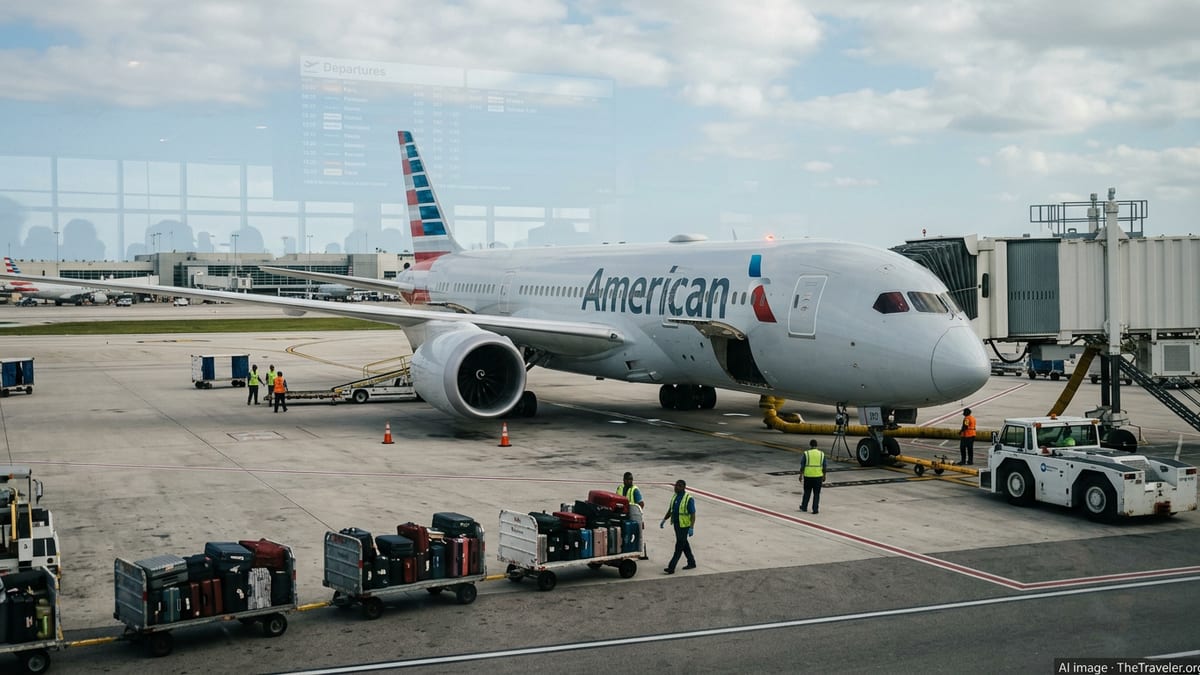
Miami–Paris Link Disappears From Winter Schedule
American had previously filed plans to bring back a daily Miami to Paris Charles de Gaulle route in the Northern winter 2026 to 2027 season, operated by Boeing 787-8 aircraft. The flight was due to restart in mid-December, positioned as a key connection between South Florida and one of Europe’s most visited capitals.
However, the latest schedule update over the weekend of March 7 shows that the planned resumption has been pulled. Industry schedule data now lists the Miami–Paris service as cancelled for the coming winter season, with no new start date filed. The decision effectively keeps Miami without an American-operated nonstop to Paris in the medium term.
For Miami-based travelers, the move narrows nonstop options to France on American metal, pushing many passengers toward partner or rival carriers that serve Paris from other U.S. gateways or via connecting hubs. It also underscores how American is prioritizing where it assigns its limited widebody fleet as it navigates aircraft delivery constraints and shifting demand.
Network Pruning Across Europe
The suspension of the Miami–Paris route forms part of a broader recalibration of American’s Europe schedule. Recent filings show adjustments and seasonal pauses on several transatlantic routes, including Chicago O’Hare to Madrid and other city pairs where winter demand is softer.
Rather than exiting Europe, American appears to be tightening its focus on routes where it sees the strongest year-round performance or benefits most from joint ventures and alliances. In some cases, flights are being shifted into peak summer months and scaled back or suspended during shoulder and off-peak periods, reflecting a more surgical approach to capacity.
These changes arrive after several years of post-pandemic rebuilding in the transatlantic market, during which airlines added routes aggressively to capture leisure demand. With travel patterns normalizing and operational costs remaining high, carriers such as American are now separating marginal routes from those that consistently deliver strong yields.
Capacity Pressures and Fleet Constraints
Behind the schedule changes are the hard limits of aircraft availability. American, like other major U.S. carriers, has faced delivery delays on widebody aircraft, leaving it with less flexibility to operate marginal or highly seasonal routes. Each long-haul frame must be deployed where it can generate the greatest revenue and support the broader network.
In this context, a route like Miami–Paris, which competes with multiple connections through other hubs, may struggle to justify year-round use of a widebody if performance is uneven outside peak travel periods. Cutting or deferring such flights allows American to reinforce higher priority services, including its largest transatlantic hubs.
At the same time, U.S. airlines are contending with external pressures, from airspace restrictions in parts of the world to government-mandated flight reductions at some domestic airports. These factors can ripple through long-haul planning, prompting airlines to hedge bets on new or returning intercontinental routes until conditions are more stable.
Impact on Miami as a European Gateway
Miami has long marketed itself as a dual gateway for both Europe and Latin America, and American is by far the dominant carrier at the airport. In previous seasons, the airline highlighted a growing roster of European destinations from Miami, including Barcelona, London, Madrid, Paris and, more recently, Rome.
The decision not to move forward with the Miami–Paris resumption weakens that European portfolio at the margins and shifts more of Miami’s long-haul weight back toward Latin America and the Caribbean, where American maintains extensive networks. Passengers seeking Paris from South Florida will now need to rely on other airlines, connect through another U.S. or European hub, or mix carriers on a single trip.
Airport and tourism officials in South Florida are likely to watch the development closely. Nonstop connectivity to major European capitals is often seen as a barometer of a city’s global reach, and the absence of a Miami–Paris link on American could have knock-on effects for premium corporate travel as well as high-spend leisure visitors heading in both directions.
What Travelers Should Expect Next
For customers already holding or seeking tickets between Miami and Paris for the upcoming winter, the lack of an American-operated option means itineraries will be built around connections or other carriers. Travel agents and online booking tools are steering passengers toward routes via hubs such as Dallas Fort Worth, New York, Charlotte or European partners, depending on date and fare.
American has not indicated when, or if, Miami–Paris might return to its schedule beyond the current planning horizon. Given the lead times required for long-haul route launches, any revival would likely appear first in airline schedule filings before being officially promoted to the public.
In the meantime, the airline is expected to keep fine-tuning its transatlantic program as demand forecasts, competitive moves and aircraft deliveries evolve. For travelers, that means continuing volatility in the mix of nonstop and connecting options between the United States and Europe, with routes added, reduced or reshaped as American and its rivals vie for the most profitable share of the market.