

More news on this day
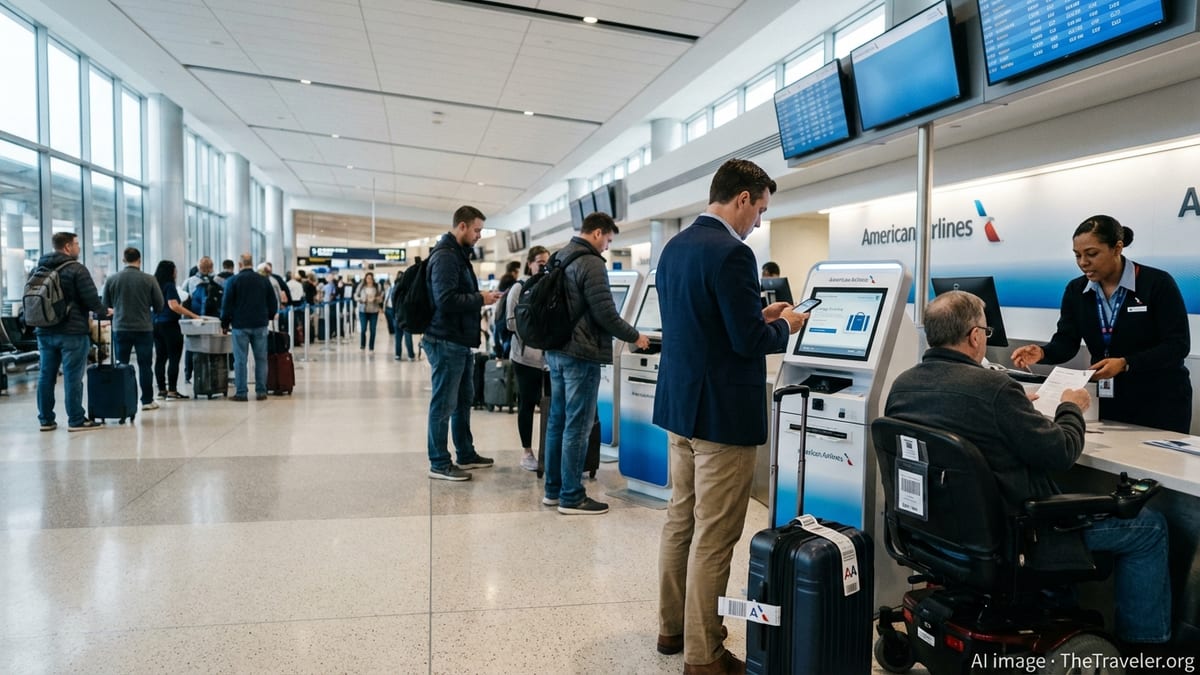
American Airlines is rolling out a suite of new digital tools and policy tweaks aimed at turning one of air travel’s biggest pain points – checking and tracking luggage – into a more seamless, data-driven part of the journey.
From Lost Bags to Live Data: A Strategic Shift
The U.S. carrier, which transports more passengers than any other airline in the country, has been steadily expanding the role of artificial intelligence and real-time data in its operation. After using machine learning to optimize schedules and aircraft routing, American is now directing that same focus toward the baggage journey, investing in tools that give customers and frontline staff clearer visibility into where bags are and how they are handled.
The push reflects both competitive pressure and a recognition that mishandled luggage can quickly erode customer trust. While industry statistics show that a small fraction of bags go missing or are delayed, the emotional impact of being separated from a suitcase can be outsized. For American, enhancing luggage management with smarter tracking, streamlined check-in and more flexible policies has become a central plank of its broader modernization strategy.
Executives position the changes not as a one-off upgrade, but as part of a multiyear transition toward a more responsive operation, in which baggage flows are predicted and managed with the same precision as passenger itineraries. That means combining traditional barcode and tag scans with customer-facing digital tools and, increasingly, data from personal tracking devices.
Apple AirTag Integration Brings Crowdsourced Tracking Mainstream
One of the most visible developments for travelers is American’s decision to support Apple’s Share Item Location feature for AirTags and similar devices. Customers who have placed an AirTag in a checked suitcase can now generate a temporary tracking link from Apple’s Find My system and securely share that location with the airline when reporting a delayed bag on eligible itineraries within the United States, Puerto Rico and the U.S. Virgin Islands.
The process is initiated at the baggage service desk, where travelers scan a QR code or follow staff instructions to attach their tracker-generated link to an official delay report. Airline agents then see the same approximate location data that the passenger does, narrowing the search and helping differentiate between a bag that never left the origin airport, one that was misrouted through a hub, or one that is already on its way to the carousel.
The shared link automatically expires after a set period or can be deactivated once the bag is recovered, addressing privacy concerns around continuous tracking. American describes the integration as an additional layer on top of its existing barcode-based system rather than a replacement. The airline continues to scan bags at multiple points along their journey, but now has the option to blend that internal data with customer-supplied information from consumer devices.
The move places American alongside a growing list of major carriers that are embracing traveler-owned tracking tags instead of discouraging their use. For passengers already accustomed to dropping an AirTag into their suitcase, the airline’s willingness to work directly with that data could make the process of filing and resolving a lost luggage report significantly less opaque.
Smarter Digital Tools in the App and Behind the Scenes
In parallel with personal tracker integration, American is deepening the role of artificial intelligence across its baggage operation. The airline has confirmed it is developing and refining models to forecast bag volumes by flight and by station, aiming to better match staffing and equipment to real-world demand. The goal is to identify potential bottlenecks before they occur, from understaffed belt areas during peak banks to tight connection windows where transfer carts might need to be prioritized.
For customers, the most tangible piece of this strategy shows up in the airline’s digital channels. American already offers bag tracking through its website and mobile platforms, allowing travelers to see when a suitcase has been checked in, loaded, transferred and unloaded. That information is being updated and surfaced more proactively through notifications and redesigned status screens that make it easier to follow a bag’s progress without having to ask an agent at the carousel.
Within airport operations, frontline teams are receiving richer, device-based views of baggage flows. Supervisors can monitor inbound and outbound bag counts in real time, while ramp and baggage room crews are given more detailed work lists tied to specific flights and connections. American says its philosophy is to use AI to augment, not replace, human decision-making, feeding teams better data so they can intervene earlier when they see a risk of misconnection or delay.
The airline is also exploring generative AI tools to support customer service, including chat-based assistance that could eventually answer specific questions about baggage status, delayed delivery timelines and reimbursement rules. While those capabilities are still evolving, they underline the airline’s ambition to give travelers clearer, quicker answers when plans are disrupted.
Automated Tags Transform Handling of Mobility Devices
A particularly significant change for passengers who travel with wheelchairs and other mobility devices is the rollout of automated, digitally enhanced tags designed specifically for this equipment. American, which says it handles hundreds of thousands of mobility devices a year, has become the first major U.S. airline to introduce tags that carry detailed, device-specific data instead of relying solely on handwritten labels.
Developed by the company’s in-house technology team, the new tags include information such as the passenger’s itinerary, delivery and pickup points, device weight, battery type and configuration, and notes on any components that have been detached and carried into the cabin. That data is tied into frontline staff applications, so agents and ramp workers at different points in the journey can see exactly what type of equipment they are handling and how it should be loaded, stowed and returned.
The airline frames the change as part of a broader effort to reduce damage to mobility devices and improve the experience for customers with disabilities, a group that has long reported inconsistent handling and stressful uncertainty at baggage claim. Early internal metrics suggest that better tagging and training are contributing to a measurable improvement in how these devices are managed across the network.
Alongside the tags, American has expanded in-person training for airport teams on how to move and secure wheelchairs safely and has invested in specialized equipment such as lifts and powered movers at high-traffic hubs. The combination of digital tracking, standardized information and physical support tools is intended to make the process of checking a mobility device more predictable and less risky from the customer’s perspective.
More Flexible, Customer-Friendly Carry-On Procedures
The airline is also altering how it enforces its longstanding carry-on size rules, in a move that directly affects the boarding experience. While American’s core policy remains in place, allowing each passenger a personal item and a standard carry-on that must fit in the overhead bin, the company is phasing out the use of rigid metal sizers at boarding gates across its U.S. network.
The sizers, long a source of anxiety for passengers who feared being forced to check borderline bags at the last minute, are being removed from gate areas in favor of a more judgment-based approach. Agents are still empowered to require checking of clearly oversized carry-ons, but internal guidance encourages staff to give customers the benefit of the doubt when bags are only marginally outside published dimensions, particularly if overhead space remains available.
Travelers who want certainty before arriving at security will still find sizers in airport lobbies near check-in, where they can test their luggage and make adjustments before heading to the gate. American says the change is designed to reduce confrontations and delays during the boarding process, allowing passengers to focus on finding their seats rather than navigating a last-minute size check.
The carrier has recently made related tweaks to its boarding procedures, including slightly extending domestic boarding times and refining pre-boarding groups for premium customers and families. Easing the strict use of gate sizers is seen as another step in smoothing the flow of passengers onto the aircraft, which can have knock-on benefits for on-time departures.
Digital Tools Extend Beyond the Carousel
American’s rethinking of baggage does not end when the carousel stops. The airline and its partners continue to offer doorstep luggage delivery services in many markets, and those products are increasingly interwoven with digital communication and flexible change options. Customers using premium delivery can often adjust drop-off details, receive status alerts and, in some cases, cancel or modify orders close to arrival if their travel plans shift.
The company has also been tightening the integration between its baggage systems and its broader conditions of carriage, clarifying when bag fees are refundable and under what circumstances customers can request reimbursement for unused extras. In cases where flights are disrupted, digital self-service tools are being enhanced so travelers can more easily understand their options, including the status of any paid baggage services tied to their original itinerary.
For frequent flyers, these changes are beginning to converge in their profiles and trip management screens. Information about typical baggage preferences, mobility devices, and ancillary purchases is being stored and surfaced in ways that aim to streamline future bookings. American says that, over time, customers will need to re-enter fewer details and will see more personalized prompts related to their usual luggage patterns.
Behind these improvements lies an effort to present baggage not as a disconnected add-on but as an integrated part of the journey, with data passing more seamlessly between booking systems, airport operations and customer service channels. The airline argues that this holistic view is essential if it is to meaningfully reduce frustrations that, for years, have been treated as an unavoidable part of flying.
Competitive Pressures and Travelers’ Rising Expectations
American’s renewed focus on baggage technology comes amid an industry-wide race to modernize luggage handling. Rival carriers have rolled out their own mobile bag trackers, virtual gate experiences and AI-powered routing tools, setting a higher bar for what passengers expect from a premium airline app. Travelers are increasingly accustomed to parcel-style tracking for everything from online shopping deliveries to rideshare vehicles, and many now look for comparable transparency when they fly.
That shift in expectations has been amplified by the spread of personal trackers like AirTags, which give passengers near-real-time views of where their suitcases are, even when official systems remain silent. Rather than treating that consumer technology as a threat, American is betting that embracing and integrating it will reduce conflict and speed up resolutions when things go wrong.
The airline’s leaders acknowledge that the ultimate measure of success will not be the number of digital features unveiled, but a sustained improvement in customers’ lived experience: fewer missing bags, faster reunions when delays occur, and a boarding process that feels less adversarial. With regulators and consumer advocates paying closer attention to how airlines handle both standard suitcases and mobility devices, the stakes are not just reputational but regulatory.
For now, American’s latest round of digital tools and flexible policies signals that luggage management, long treated as a back-of-house function, is moving to the center of the airline’s customer strategy. As these technologies continue to roll out, travelers will soon discover whether the promise of effortless baggage handling can finally match the reality at the carousel.