

More news on this day
American Airlines is signaling a potential shift in its long-standing cabin strategy as it explores bringing seatback screens back to parts of its fleet and studies low Earth orbit satellite systems, including Amazon’s successor to Project Kuiper, as it races to keep pace with rivals offering faster, often free, in-flight internet.
Get the latest news straight to your inbox!
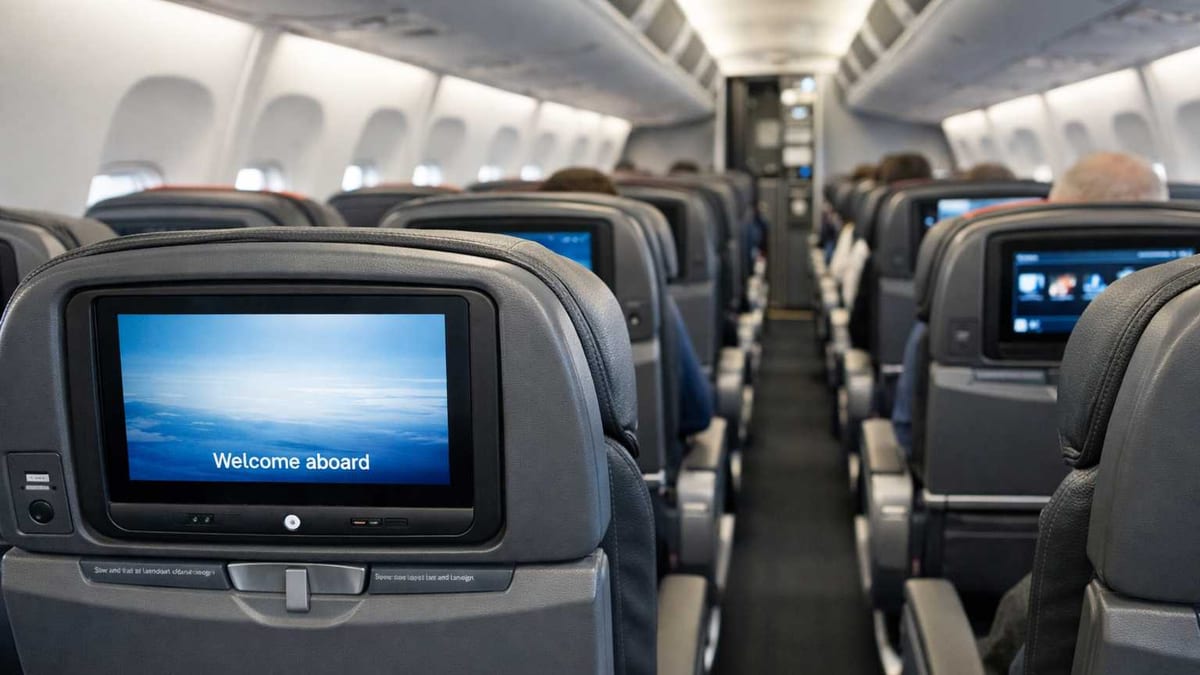
Image by Travel and Tour World – Tourism, Airline, Destination, MICE, Gobal Travel Market, Hotel news that you will find only over here.
From Removing Screens to Rethinking the Cabin Experience
For much of the past decade, American Airlines stood apart from its largest U.S. competitors by moving away from built-in entertainment. The carrier removed seatback screens from most domestic narrowbody aircraft and committed to a model built around passengers’ own phones, tablets, and laptops. That approach cut weight and maintenance costs but also created a visible gap with competitors that were doubling down on in-seat hardware.
By 2025, reports indicated that the final seatback monitors on American’s Airbus A319s were being retired, leaving the airline as the only major U.S. legacy carrier with no embedded screens across its domestic mainline fleet. Public commentary from travel analysts and opinion writers highlighted growing frustration among premium travelers who compared American’s cabins with newer products at Delta and United, where large high-definition displays had become a key part of the branding.
In that context, industry coverage now points to a reassessment inside American about how to make its cabins feel more competitive. While the airline has not released a detailed seatback hardware roadmap, executives have acknowledged that customer expectations are evolving, and that the combination of free connectivity, power at every seat, and refreshed interiors may not be enough on its own for certain higher-yield routes.
Concept studies shared in aviation forums and trade reporting describe American weighing a hybrid approach in future refits and aircraft orders. Under these scenarios, larger domestic and long-haul jets could regain modern seatback displays, while smaller and older frames would remain focused on personal-device streaming, supported by more capable internet systems.
Race to Next-Generation Satellite Wi-Fi
Any return to seatback screens at American is closely linked to the quality of connectivity behind them. Over the past two years, the airline has invested heavily in satellite-based broadband from providers such as Viasat and Intelsat, with public information showing hundreds of regional and mainline aircraft already equipped and more conversions scheduled through early 2026.
American has also committed to making onboard connectivity far more accessible. In April 2025, the company announced a plan to offer free high-speed Wi-Fi for AAdvantage loyalty members starting in January 2026 on roughly 90 percent of its fleet, focusing on aircraft fitted with the latest satellite antennas. Subsequent testing on selected routes has provided a preview of that experience, with passengers on some flights reporting complimentary access ahead of the formal launch window.
At the same time, American is closely watching a broader industry pivot toward low Earth orbit, or LEO, satellite constellations. Competitors such as United, Alaska, and Hawaiian have public agreements to deploy SpaceX’s Starlink across large portions of their fleets, and early reviews from test flights describe performance that rivals home broadband, with low latency suitable for video calls and high-bandwidth streaming.
While American has not announced a Starlink deal of its own, the airline’s connectivity roadmap is being drawn up in that new competitive environment. Any decision on seatback hardware will need to be paired with a long-term strategy for bandwidth and network resilience that can support hundreds of simultaneous streams in each cabin.
Talks With Amazon’s Rebranded Kuiper Constellation
The most concrete sign of American’s next move in this space has come through its engagement with Amazon’s satellite division. In late 2025, coverage in satellite industry publications reported that American’s chief executive confirmed exploratory discussions with the company behind Amazon Leo, the recently rebranded successor to Project Kuiper.
Amazon’s LEO network is designed to compete directly with Starlink by offering low-latency broadband via thousands of small satellites. Aviation-focused analyses note that the system aims to serve airlines, cruise ships, and remote enterprises, positioning it as an alternative backbone for high-speed in-flight connectivity. JetBlue has already been identified as an early airline customer, providing a real-world test bed for the service on commercial aircraft.
For American, a potential arrangement with Amazon Leo would represent both a technological and strategic bet. Rather than following the early wave of Starlink signings, the carrier could align with a rival LEO network that promises similar performance but might offer different commercial terms or integration options. That choice could also allow American to differentiate its digital platform, particularly if Amazon’s broader ecosystem of cloud, e-commerce, and entertainment services is brought into the cabin experience.
Analysts following the talks caution that complex certifications, antenna development, and constellation build-out timelines mean any deployment would occur over several years. However, the willingness to publicly confirm discussions signals that American is actively evaluating a shift toward the same next-generation satellite architectures that competitors have already embraced.
What a Screen Comeback Could Look Like for Travelers
If American moves ahead with reintroducing seatback screens supported by LEO satellite connectivity, the passenger experience on some routes could change noticeably. Industry design concepts show larger, higher-resolution displays with Bluetooth audio pairing, personalized profiles tied to loyalty accounts, and integrated access to both stored content and live internet-based services.
Travel technology observers expect that any new-generation screens on American would be tightly linked to the airline’s mobile app and AAdvantage program. That could allow travelers to start a movie on their phone in the lounge, continue on the seatback display after boarding, and resume on their personal device on arrival. It could also open the door to targeted shopping, destination content, and live messaging anchored in the seatback interface rather than just a browser portal.
There is also the question of where and how widely such hardware would be deployed. Given the cost and weight of embedded systems, reports suggest that American is most likely to prioritize premium transcontinental routes, high-demand domestic business markets, and select international services, while leaving much of its short-haul network on a streaming-only model. That approach would mirror strategies at other carriers that differentiate cabin features by route and aircraft type.
For many travelers, though, the most tangible shift may simply be the combination of reliable free Wi-Fi and the option, on key routes, to ignore their own battery levels and stream directly from a seatback screen. After years of being pointed to device cradles and QR codes, American’s customers could once again be greeted by powered-on displays at eye level on at least part of the network.
Competitive Pressure in the U.S. Skies
The backdrop to American’s evolving plans is an intensely competitive market for premium travelers in the United States. Delta and United have invested heavily in cabin upgrades that spotlight seatback screens, mood lighting, and advanced connectivity, and they have been explicit about using these features to cultivate brand loyalty and justify higher fares on key business routes.
Free or nearly free Wi-Fi has rapidly become a benchmark rather than a differentiator. Delta opened the floodgates in 2023 by making connectivity complimentary for SkyMiles members on most domestic flights, followed by similar moves at JetBlue, Hawaiian, Alaska, and United on Starlink-equipped aircraft. American’s pledge to follow with free Wi-Fi for AAdvantage members in 2026 is widely viewed as a necessary response to avoid being left behind.
In this environment, the decision to explore both a partial return to seatback screens and an alignment with a LEO satellite provider such as Amazon Leo appears rooted in brand positioning as much as in technology. A modern hardware and connectivity package could help American reshape perceptions that grew out of its earlier cost-cutting phase, when cabin retrofits focused heavily on densification and the removal of older amenities.
How quickly that transformation occurs will depend on aircraft modification timelines, regulatory approvals, and the pace at which satellite constellations reach full operational capacity. For now, publicly available information signals that American is recalibrating its strategy, with a future onboard experience that blends free high-speed Wi-Fi, more powerful satellites, and, potentially, the return of the very seatback screens it once rushed to remove.