

More news on this day
American Express has opened its first proprietary airport lounge in mainland China at Shanghai Pudong International Airport, marking a significant expansion of the company’s premium travel footprint in one of the world’s busiest aviation markets.
Get the latest news straight to your inbox!
A Strategic Move Into Mainland China’s Aviation Hub
The new American Express lounge at Shanghai Pudong International Airport positions the brand at the heart of mainland China’s international air travel network. Publicly available information indicates that Pudong ranks among Asia’s largest passenger hubs, with heavy long haul traffic connecting China to North America, Europe, and the wider Asia Pacific region. Establishing a flagship lounge in this setting allows American Express to tap into both outbound Chinese demand and the fast growing flow of international transit passengers.
Reports indicate that the lounge is located in the international departures area of Pudong, targeting premium travelers holding American Express cards with lounge access privileges. The opening aligns with broader trends in China’s aviation recovery and capacity growth, with international routes steadily rebuilding and airlines adding frequencies on major business and leisure corridors.
By adding a proprietary space in mainland China, American Express complements its existing presence in Hong Kong and other regional airports, signaling a longer term commitment to the Chinese travel market. Industry observers view the Pudong opening as an anchor investment that could pave the way for further branded spaces in other major Chinese cities.
Design, Amenities and the Centurion Lounge Playbook
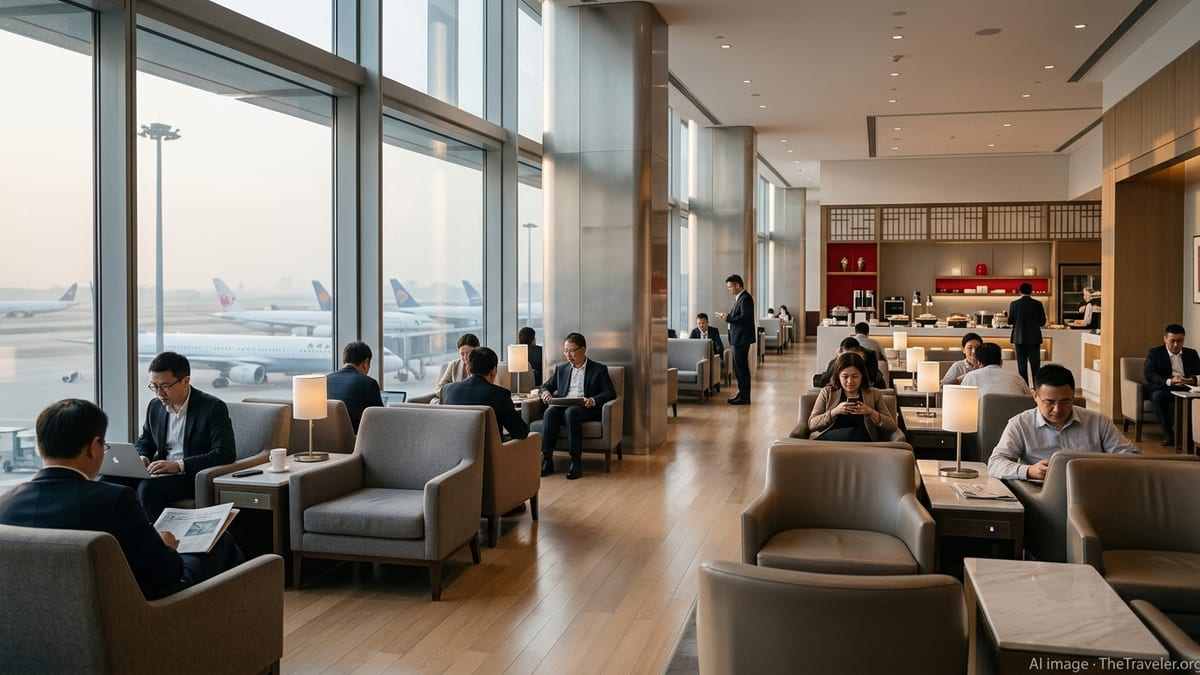
While detailed interior specifications have not been widely disclosed, the new lounge is understood to follow core elements of the Centurion Lounge playbook that American Express has rolled out in other global gateways. This typically includes a combination of relaxed seating zones, dedicated workspaces, dining areas with hot and cold food, and a staffed bar offering a curated beverage program tailored to local regulations and tastes.
Travel industry coverage notes that recent American Express lounges have placed greater emphasis on space planning, acoustics, and natural light to manage crowding and improve comfort during peak waves of departures. The Shanghai Pudong lounge is expected to reflect these design priorities, with distinct zones for dining, quiet work, and short rest, along with charging points and high speed connectivity for business travelers.
In mainland China, where many existing third party lounges have traditionally prioritized capacity over design differentiation, a proprietary American Express space offers an opportunity to showcase an elevated yet functional environment. The focus on consistent global standards, combined with localized touches in food and beverage, positions the lounge as a new benchmark for card based premium access in the market.
Access Rules and Competitive Positioning
According to American Express’s published information on lounge access, entry to proprietary lounges is generally reserved for eligible cardmembers holding premium products such as Platinum or Centurion branded cards, often subject to same day boarding passes and time limited stay rules. Although specific Shanghai policies may vary, the new Pudong lounge is expected to align broadly with these parameters, integrating into the company’s global lounge network.
The debut in mainland China intensifies competition in a space historically dominated by airline operated and independent contract lounges. Chinese full service carriers and their alliance partners have long maintained branded facilities at major hubs, while independent operators cater to a mix of bank card programs and pay per use customers. By introducing a proprietary lounge, American Express transitions from primarily partnering with third party facilities in mainland China to directly shaping the on the ground experience for its cardmembers.
For frequent travelers who already rely on airline status or business class tickets for lounge access, the new space at Pudong adds another option that can be particularly valuable during irregular operations, tight connections, or off peak hours when airline lounges may have reduced services. For American Express, it deepens engagement with high spending customers by turning card benefits into a tangible, place based experience at a key international node.
Implications for Chinese Travelers and International Transit
The opening of an American Express lounge in Shanghai carries specific significance for Chinese outbound travelers, who increasingly expect seamless premium services from check in to boarding. As international leisure and business travel from China continues to recover, card linked lounge access is becoming an important differentiator among affluent consumers choosing between financial institutions and payment brands.
The location at Pudong also serves a large cohort of international transit passengers travelling between North America, Europe and other parts of Asia via Shanghai. For these travelers, a consistent lounge product that mirrors what they encounter in other global hubs can reduce friction and deliver a more predictable experience across complex itineraries.
Publicly available data on card spending patterns suggests that airport environments are high value touchpoints for premium customers, with significant expenditure on dining, duty free shopping, and ancillary services. By offering a comfortable space to rest and work, American Express strengthens its position at a moment when travelers are most likely to use their cards, potentially reinforcing loyalty and daily spend beyond the airport.
A Broader Global Lounge Expansion Strategy
The Shanghai Pudong opening forms part of a wider international expansion of American Express’s proprietary lounge network in recent years. The company has invested in new locations and upgrades across North America, Europe, and Asia, reflecting a strategy that treats lounges as both a customer benefit and a brand showcase.
Industry analysis points out that increased competition among premium travel cards has pushed issuers to differentiate through physical experiences, not only through rewards structures. Lounges offer a visible, high impact benefit that can influence card choice, particularly for frequent flyers who pass through major airports multiple times a year. The decision to enter mainland China aligns with this logic, positioning American Express alongside other global payment brands that are strengthening their presence in the region.
As capacity and demand continue to evolve at Shanghai Pudong International Airport, the performance of the new American Express lounge will likely serve as a test case for further investments in mainland Chinese airports. Its reception among both local and international travelers will provide insight into how global lounge concepts can adapt to China’s rapidly changing aviation landscape and increasingly discerning premium passenger segment.