

More news on this day
American Airlines is facing fresh criticism over how it treats paying premium customers after a former "Saturday Night Live" cast member said he and his wife were downgraded from first class to economy on an overnight Hawaii to Phoenix flight so two uniformed pilots could take their seats.
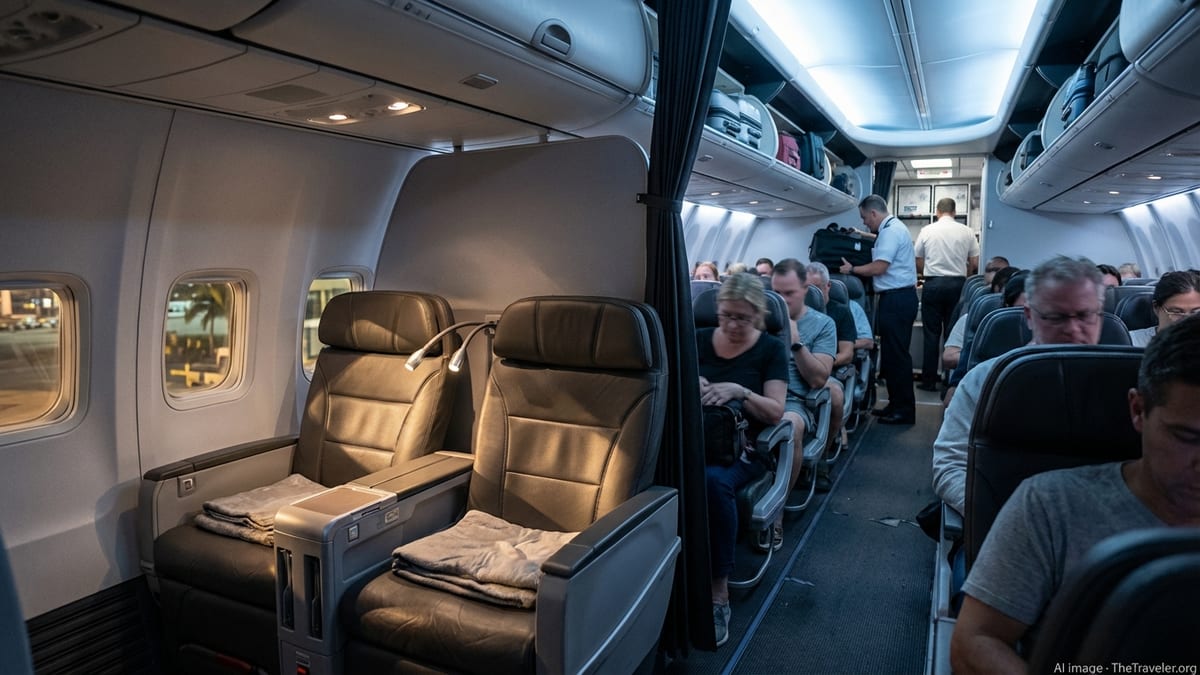
Viral Complaint Puts Spotlight on Honolulu to Phoenix Redeye
The dispute centers on an overnight American Airlines service from Honolulu’s Daniel K. Inouye International Airport to Phoenix Sky Harbor International Airport, a six-hour redeye that many travelers specifically book in first class for the chance to sleep. Comedian Jim Breuer, who is currently touring the United States, said he and his wife had purchased first class tickets for the flight and received multiple confirmations from the airline in the weeks prior, including an email inviting them to pre-select meals such as steak or chicken.
According to Breuer, the couple arrived at the gate expecting to board as premium passengers when a supervisor informed them that their reservations had been changed and that their original first class seats had been reassigned. The new occupants, Breuer said, were two American Airlines pilots in uniform who were traveling on the same flight. The couple was instead moved to row 18 in the main cabin for the overnight journey.
Breuer recounted the incident in an emotional video posted to social media, where he described the experience as a violation of trust and likened it to having purchased property taken away without consent. The clip spread quickly across platforms, drawing hundreds of thousands of views and prompting a wave of criticism directed at the carrier from other travelers who said they had lost confidence that purchasing first class guaranteed the product they thought they were buying.
American Cites Operational Needs as Outrage Mounts
American Airlines has not publicly detailed every step of its decision-making in the Honolulu to Phoenix case, but industry sources and internal policy commentary suggest the move was tied to operational requirements for repositioning or resting flight crew. On longer flights, airlines must sometimes transport pilots as passengers, a practice known as deadheading, or reserve designated seats for crew rest in order to comply with safety and fatigue regulations.
In practice, that can mean flight crew are given priority over paying passengers when premium-cabin seats are needed for required crew movement. On certain lengthy segments, pilot contracts can stipulate that deadheading pilots be placed into first class if space is available, which can lead to last-minute reassignments when a flight is full or oversold in economy and business. While such provisions are not new, the visibility of Breuer’s complaint has made them a flashpoint in the broader debate about fairness to customers who pay thousands of dollars for premium seats.
American is understood to have offered Breuer and his wife compensation in the form of a partial refund and flight credit for the involuntary downgrade. Travel blogs and aviation sites reporting on the incident said the offer was in the range of several hundred dollars per person, a figure many online commenters described as inadequate for losing first class on an overnight transpacific segment. The airline declined to address specific customer cases but has pointed in the past to contract-of-carriage language that allows it to change seat assignments for operational, safety or security reasons.
Passenger Rights and the Fine Print of First Class Tickets
The uproar around the Honolulu to Phoenix flight has renewed public attention on what, exactly, travelers are buying when they pay for first class. While many customers assume that a confirmed first class seat is a firm entitlement, the legal agreements that govern airline travel generally stop short of guaranteeing a specific seat. Instead, carriers promise transportation from origin to destination in a given cabin, while reserving wide discretion to alter aircraft types, seat maps and individual seat assignments even after boarding passes are issued.
Involuntary downgrades, where a passenger is moved from a higher cabin to a lower one against their wishes, occupy a gray area that is often poorly understood. Unlike denied boarding due to oversales, involuntary downgrades do not always trigger automatic protections under federal rules, and compensation policies vary widely by airline and route. American’s customer contracts indicate that the airline will refund the fare difference between the purchased cabin and the one actually flown, but they do not promise additional cash or travel credits, even when the downgrade occurs at the last minute.
Consumer advocates argue that this framework leaves premium passengers vulnerable to abrupt changes that devalue an expensive purchase, especially on overnight or long-haul flights where lie-flat seats and quiet cabins are central to the product. The key issue, they say, is not that airlines retain the right to move people for safety or crew positioning, but that customers are often unaware of the extent of those rights when they decide to spend significantly more for a first class experience.
Social Media Reacts: Anger, Sympathy and Calls for Boycott
Reaction to Breuer’s account has been swift and polarized. Many travelers expressed sympathy for the comedian and said they could relate to a growing sense of uncertainty around premium travel. Commenters across social networks repeated a similar refrain: that paying for first class on some U.S. carriers no longer guarantees the level of service or security of assignment that the higher fares imply.
Several self-described frequent flyers shared their own stories of last-minute downgrades, missing upgrades or unexplained seat changes, saying they had come to view premium booking as a gamble rather than a reliable product. Among them were passengers who claimed to have been moved out of business or first class on other American flights so that crew members, non-revenue employees or other travelers could be accommodated, sometimes with minimal explanation and modest compensation.
At the same time, a subset of commenters defended the airline’s need to prioritize safety and crew rest, arguing that properly rested pilots are essential and that airlines must sometimes make unpopular decisions to keep operations running smoothly. Some pointed out that pilots do not personally decide to take a paying customer’s seat, but are assigned by scheduling systems and gate staff in accordance with labor agreements and regulatory requirements.
Crew Rest, Deadheading and the Hidden Geometry of Airline Seating
Behind the public dispute lies a complex operational reality that shapes who sits where on any given flight. Airlines operate intricate networks in which pilots and flight attendants must be positioned across multiple cities to operate scheduled services. When pilots need to move between bases or replace a crew on another route, they may travel as passengers while still being on duty, known as deadheading. For certain long or overnight flights, regulations and company policies also require designated seats where pilots can rest during off-duty portions of the journey.
These requirements are often embedded in union contracts and safety protocols that have been negotiated over many years. On some mid- to long-haul routes, especially overnight services like Honolulu to Phoenix, carriers may treat a limited number of premium seats as potential crew rest positions. If a flight is heavily booked and a last-minute need arises for a deadheading pilot or an additional crew member, those seats can be reallocated with little notice.
From the passenger perspective, these behind-the-scenes adjustments can feel arbitrary and deeply personal, particularly when they involve losing a lie-flat first class seat on a red-eye and being reassigned to a standard economy row. Aviation analysts say airlines have not always been transparent about how these operational constraints interact with customer expectations, which can fuel outrage when cases like Breuer’s arrive in the public eye through viral videos.
Pattern or One-Off? Other Incidents Raise Questions
Although the Honolulu to Phoenix episode has become a focal point, travel forums and consumer complaint boards indicate that similar disputes have surfaced across multiple carriers in recent years. Passengers on American and other major airlines have reported being downgraded from business or first class for reasons ranging from aircraft swaps and weight-and-balance concerns to crew positioning needs. In some instances, customers said their premium seats were reassigned to airline staff or to travelers with elite frequent-flyer status while they were moved to economy.
On American specifically, frequent-flyer communities have documented cases of confirmed business class upgrades being reversed at the airport, with travelers finding themselves in coach after check-in despite earlier confirmations. Others have described scenarios where pilots or crew members were placed into premium cabins on full flights, pushing revenue or upgraded passengers further back. While not all of these incidents involve the exact circumstances Breuer describes, together they contribute to a narrative that premium customers can no longer count on stability.
Airline representatives counter that such situations remain relatively rare in the context of millions of passengers transported each year. They emphasize that most first class travelers still receive the product they purchase and that operational decisions are made under significant constraints, particularly in tightly scheduled networks. However, the accumulation of stories and the visibility of high-profile complainants have made it harder for carriers to dismiss the perception that premium downgrades are becoming more common.
Regulatory Scrutiny and Potential Policy Shifts
The controversy has drawn attention from consumer advocates who are already pressing regulators to tighten rules around airline customer protections. While existing federal regulations focus primarily on overbooking and tarmac delays, there is growing discussion about whether involuntary downgrades should trigger clearer, standardized compensation rules, especially when passengers are moved from premium cabins on long-haul or overnight flights.
Advocacy groups argue that the combination of high fares for premium seats and expansive airline discretion over seating assignments creates an imbalance of power that disadvantages consumers. They say passengers should receive automatic minimum compensation when moved from first or business class to a lower cabin, and that airlines should be required to disclose, at the point of sale, that operational decisions or crew needs can override seat assignments.
For now, there is no indication that regulators will immediately intervene in the Honolulu to Phoenix case, but incidents that capture broad public attention often help shape the policy agenda. If complaints and viral stories continue to highlight premium downgrades and pilot seat assignments, lawmakers and transportation officials may face pressure to consider new consumer protections aimed at restoring confidence in what a first class ticket actually guarantees.
Trust, Loyalty and the Future of Premium Travel on U.S. Carriers
For American Airlines, the episode comes at a time when competition for high-spending travelers is intensifying. Major U.S. carriers are investing heavily in new business and first class cabins, touting upgraded seats, improved dining and enhanced lounges as they seek to attract corporate clients and affluent leisure customers. At the same time, they are increasingly monetizing every aspect of the travel experience, from extra-legroom seating to priority boarding, creating a more complex and, at times, opaque marketplace for premium products.
Travel industry analysts say that while one viral incident is unlikely to cause a long-term exodus of customers, repeated stories of downgrades and broken expectations can erode the trust that underpins loyalty programs and premium fare purchases. When passengers believe that even a fully paid first class ticket can be taken away at the gate with limited recourse, they may opt for carriers perceived as more reliable, or choose to downshift to extra-legroom economy rather than risk an expensive disappointment.
In the wake of Breuer’s complaint, some frequent travelers have publicly pledged to reevaluate where they spend their travel budgets, while others say they will now document their seat assignments and interactions with gate agents more carefully in case of future disputes. For American, and for the industry more broadly, the central challenge will be balancing the operational realities of crew movement and safety with clearer, more transparent promises to the passengers who pay a premium price to sit in the front of the cabin.