

More news on this day
American Airlines and JetBlue Airways have agreed to pay nearly one hundred million dollars to settle claims tied to their failed Northeast Alliance, closing a high-profile chapter in the government’s crackdown on airline partnerships while opening new questions about competition, passenger compensation and the future of cooperation among major U.S. carriers.
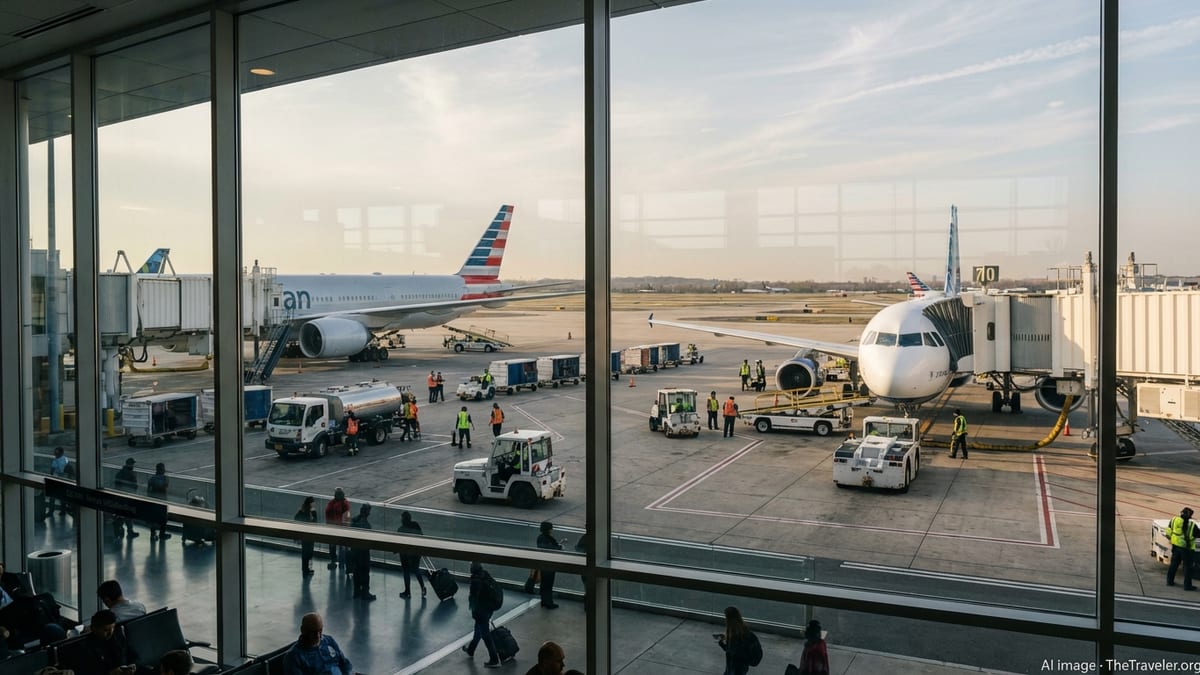
A Costly End to a Controversial Partnership
The settlement, finalized after years of litigation and regulatory scrutiny, marks one of the largest financial resolutions ever tied to a domestic airline partnership. American Airlines and JetBlue will together pay close to one hundred million dollars to address the legal and competitive fallout from their once-ambitious Northeast Alliance, which a federal court determined violated U.S. antitrust law.
The agreement follows a string of courtroom defeats for the carriers, including a 2023 ruling that ordered the alliance dissolved and subsequent decisions that upheld the government’s position that the collaboration reduced competition on crucial routes in and out of New York and Boston. While the airlines continue to insist the alliance delivered more choices and lower fares, the settlement effectively acknowledges the financial and legal risks of continuing to fight.
For travelers, the deal formalizes what has already been reality in the skies for nearly two years: the Northeast Alliance is over, and American and JetBlue are again operating as independent competitors in the region. What is new is the scale of the financial tab the two carriers must now shoulder, at a time when both face intense pressure on costs, network strategy and investor expectations.
Officials familiar with the settlement say the nearly one hundred million dollars reflects a mix of payments tied to state-level legal costs, consumer redress mechanisms and ongoing class actions. While the precise allocation is complex and subject to court approvals, the dollar figure underscores how costly an aggressive enforcement wave has become for airlines that attempt deep domestic tie-ups.
How the Northeast Alliance Took Off and Came Apart
Announced in 2020, at the height of the pandemic’s damage to air travel, the Northeast Alliance was pitched as a transformative way to bolster service in New York and Boston. American and JetBlue entered into a broad cooperation pact that allowed them to coordinate schedules, share revenue on specified routes, and offer reciprocal frequent flyer benefits in some of the nation’s most congested airspace.
The carriers argued that, together, they could better compete against entrenched rivals that dominate key Northeast airports, particularly Delta Air Lines and United Airlines. By pooling scarce takeoff and landing slots, aligning schedules and jointly planning capacity, American and JetBlue said they would open new routes, grow their footprint and improve connections for business and leisure travelers alike.
For a time, the alliance appeared to be working as advertised. Both airlines launched or expanded routes in the Boston and New York area, marketed joint schedules and highlighted the convenience of codesharing and cross-earning loyalty currency. Executives pointed to rising passenger numbers and claimed that the collaboration created a stronger challenger to larger legacy hubs, rather than a cartel.
Yet from the outset, the arrangement drew skepticism from regulators and consumer advocates, who warned that the alliance looked less like a pro-competitive partnership and more like a quasi-merger in the Northeast corridor. As traffic rebounded after the worst of the pandemic, federal antitrust officials sharpened their focus on how much coordination between nominal competitors the law should tolerate.
Why Regulators Said the Alliance Hurt Competition
The U.S. Department of Justice and several state attorneys general sued to block the Northeast Alliance, arguing that the pact would eliminate head-to-head competition between American and JetBlue on dozens of routes. Rather than vigorously undercut each other on price, capacity and schedule, the government said, the airlines would have incentives to coordinate and keep fares higher.
In court filings, enforcement officials described the alliance as a de facto consolidation of American and JetBlue’s Northeast operations, with joint control over routes at key airports such as New York’s John F. Kennedy International, LaGuardia, Newark Liberty and Boston Logan. They pointed to internal communications and modeling that, in the government’s view, showed the carriers expected to benefit from softer competition, not just new growth.
U.S. District Judge Leo Sorokin ultimately sided with the government, concluding in May 2023 that the alliance violated antitrust law. His ruling ordered the carriers to unwind the partnership and forbade American from entering similar domestic alliances for a decade. American unsuccessfully appealed, while JetBlue largely chose not to continue the fight, instead pivoting to other network strategies.
The decision became a signature victory for the Biden administration’s aggressive antitrust agenda, signaling that even partial joint ventures short of full mergers would face tough scrutiny if they reshaped competition in concentrated markets. That message resonated across the airline industry, where partnerships, code shares and joint ventures have long blurred the lines between cooperation and consolidation.
Breaking Down the Nearly $100 Million Settlement
The newly agreed settlement is made up of several strands of financial obligation that have accumulated as the legal saga unfolded. A portion of the money covers attorneys’ fees and costs incurred by states that joined the Justice Department in challenging the alliance. In earlier proceedings, a federal court ordered American and JetBlue to reimburse state plaintiffs for their legal expenses, setting a precedent for further cost-sharing as cases progressed.
Another component is linked to private class-action claims brought on behalf of passengers alleging that the alliance raised fares and limited options on certain routes. While those claims are still being sorted out in court, the nearly one hundred million dollar figure is designed to create a pool that can support refunds or credits for affected travelers once final frameworks are approved.
On top of that, the carriers have had to account for internal disputes over how to settle their own financial obligations from the partnership’s wind-down. American has accused JetBlue in court of failing to pay amounts due under the alliance’s revenue-sharing rules, at one point seeking well over one hundred million dollars in compensation. The settlement incorporates a compromise on those issues, according to people briefed on the talks, reducing the risk of a prolonged, public financial feud between the former partners.
Combined, these pieces bring the total financial impact to just under the symbolic one hundred million dollar mark. While that sum is relatively modest in the context of multibillion-dollar airline balance sheets, it arrives as both carriers are under pressure to cut costs, update fleets and navigate an intensely competitive domestic market.
What It Means for Travelers in the Northeast Corridor
For travelers flying through New York and Boston, the immediate operational impact of the settlement is limited, because the alliance has already been dismantled. Separate check-in desks, standalone loyalty programs and independent schedules have been the norm since 2023, and no provisions in the latest agreement restore any of the former coordination.
What could change over time, however, is the competitive dynamic on key city pairs such as Boston to New York, New York to Florida and transcontinental services from the Northeast to the West Coast. Without a formal alliance, American and JetBlue are again free to compete head to head on frequency, aircraft type, onboard product and pricing. Regulators are betting that this rivalry will benefit consumers, particularly those willing to be flexible on departure times and airports.
The potential for consumer redress is also significant. Depending on how courts ultimately approve and structure payments tied to the settlement, some passengers who flew on routes covered by the alliance during its operation could be eligible for cash or travel credits. Details are expected to be released in coming months, and consumer advocates are urging travelers to watch for notices that may arrive by email or mail once claimant classes are defined.
Beyond pocketbook issues, the episode underscores for Northeast travelers how central the region has become to the national aviation map. With slot-constrained airports and high concentrations of business and leisure demand, New York and Boston serve as bellwethers for policy debates over how much consolidation regulators will tolerate and what kinds of cooperation can still pass legal muster.
Ripple Effects Across the Airline Industry
The near nine-figure settlement is likely to reverberate across the broader airline industry, where partnerships have become a core tool for reaching new markets without full-blown mergers. Domestic collaborations now face a higher bar for approval, particularly in regions where a small number of carriers control most capacity.
International joint ventures, long treated more leniently under U.S. law when coupled with open skies agreements, may also attract sharper questions if they involve significant coordination on price and capacity. While regulators have not signaled a wholesale reversal of approvals for global alliances, the Northeast Alliance case offers a roadmap for more assertive enforcement where authorities believe consumers are left with fewer choices.
For airlines, the new environment complicates long-term network planning. Carriers must weigh the revenue benefits of deeper partnerships against the potential legal and financial downside if regulators object. That calculus now explicitly includes the risk of multi-year litigation and settlements that, while not existential, can add meaningful costs and distract management from fleet renewal, technology investment and service improvements.
Analysts say the enforcement wave could, paradoxically, nudge some airlines back toward traditional mergers, which at least follow a well-worn regulatory review process, rather than creative domestic alliances that might be deemed anti-competitive after the fact. Others expect carriers to pursue lighter-touch agreements focused on interline cooperation and limited codesharing, keeping a clearer distance from joint revenue pooling and capacity coordination.
American, JetBlue and the Search for New Strategies
American Airlines, the country’s largest carrier by several metrics, now finds itself recalibrating its Northeast strategy without the structural support of JetBlue. The airline continues to operate a large hub at New York’s JFK and a significant presence at LaGuardia, but must contend on its own with slot pressures and intense competition from Delta and United on both domestic and transatlantic routes.
Executives at American have suggested that, while the Northeast Alliance did not survive legal scrutiny, the experience informed how the carrier thinks about partnerships, loyalty and corporate contracting across its network. The company remains heavily invested in other joint ventures, particularly on international routes, but will have to tread carefully in any future domestic collaborations to avoid triggering additional antitrust concerns.
JetBlue faces a different set of challenges. The carrier has spent the past several years searching for growth opportunities, first via its now-blocked bid to acquire Spirit Airlines and later through new or expanded partnerships with other carriers. The failure of the Northeast Alliance and the financial settlement add to the pressure on management to find sustainable ways to expand without relying on deep domestic alliances that regulators are likely to reject.
Both airlines must also reckon with investor scrutiny. Shareholders have already absorbed years of legal expense, operational disruption and strategic uncertainty tied to the alliance. The settlement offers a measure of closure, but analysts will watch closely to see how quickly American and JetBlue can redirect capital and management attention toward core operations and profitable growth.
A Landmark Case for Future Airline Cooperation
As the dust settles on the nearly one hundred million dollar settlement, the Northeast Alliance is emerging as a landmark case in the legal and commercial history of U.S. aviation. It has defined the outer limits of acceptable cooperation among domestic rivals, clarified the enforcement playbook for regulators, and provided a cautionary tale for executives tempted to push those boundaries.
Future partnerships will likely be structured with the alliance’s fate in mind, with lawyers and economists modeling not only revenue synergies but also worst-case scenarios in which a judge orders a rapid unwind. Provisions governing revenue sharing, dispute resolution and wind-down procedures are expected to become more detailed, in part to avoid the kind of post-termination financial disputes that have now themselves contributed to the settlement total.
For travelers, the case reinforces the idea that competition policy is not an abstract exercise conducted in distant courtrooms. Decisions about how much coordination airlines are allowed to pursue directly affect the prices, schedules and choices available at the gate. The American and JetBlue settlement, in closing one chapter of that debate, sets the stage for the next wave of experimentation and enforcement in an industry that remains central to how Americans move, work and travel.