

More news on this day
Travel across South Korea is facing renewed disruption as a fresh wave of cancellations by American Airlines and Korean Air at Incheon and Jeju airports interrupts key routes to Dallas, Yeosu and other domestic and international destinations, according to airport data and airline status updates reviewed on March 24, 2026.
Get the latest news straight to your inbox!
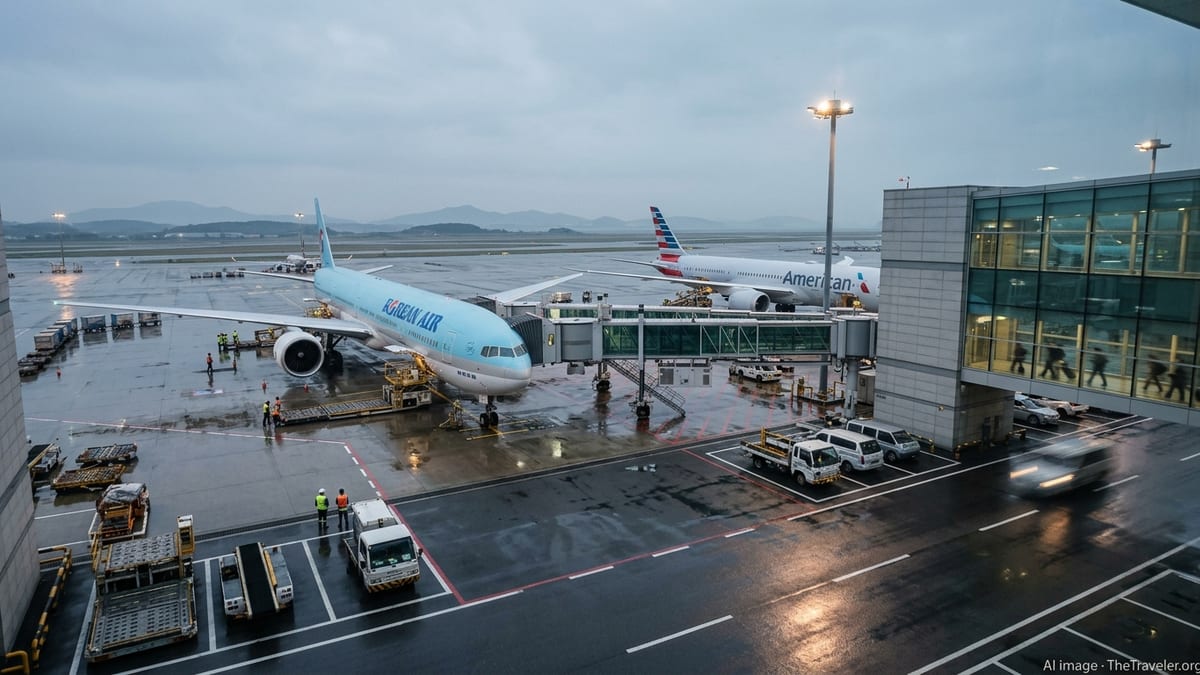
New Cancellations Deepen Ongoing Schedule Volatility
Recent operational updates show three additional flight cancellations involving American Airlines and Korean Air at Seoul Incheon and Jeju airports, compounding a pattern of intermittent schedule instability on some long haul and domestic routes through South Korea. The latest disruptions, identified in airport departure boards and carrier status tools, affect services touching Dallas Fort Worth and regional routes linked to Yeosu, increasing pressure on already busy spring travel corridors.
Publicly available information indicates that the cancellations form part of a wider set of tactical adjustments airlines have been making in response to shifting demand, aircraft rotations and weather exposure at key hubs such as Dallas. Industry analyses of recent winters point to pre emptive system wide cancellations by American Airlines during severe weather around Dallas Fort Worth, a strategy designed to retain overall network reliability but one that can leave long haul travelers from Asia facing missed connections and rebookings.
At the same time, Korean Air continues to refine its domestic network in the wake of its merger with Asiana Airlines, which was formally completed in late 2024. The consolidation has elevated Korean Air’s role as the dominant carrier in the South Korean market, with additional scrutiny on how it manages capacity on high demand leisure routes such as Jeju Yeosu and Jeju Seoul as peak seasons approach.
For travelers moving between South Korea and the United States, the latest cancellations highlight how even a small number of disrupted flights on trunk corridors can reverberate across multiple days of itineraries. With Dallas Fort Worth operating as a primary gateway for American Airlines traffic to and from Asia, any disruption at either end of the long haul corridor can cascade into domestic legs and onward international connections.
Impact on Links Between Incheon, Jeju and Dallas Fort Worth
The most immediate effect of the new cancellations is being felt on itineraries that connect Seoul Incheon to Dallas Fort Worth, either on nonstop services or via onward domestic connections within the United States. Flight tracking records over recent months show repeated instances of transpacific arrivals and departures around Dallas being cancelled or heavily delayed during periods of operational stress, which can strand passengers in Seoul until replacement flights or reroutings become available.
American Airlines’ approach, described in publicly available customer guidance and independent analyses, typically prioritizes consolidating passengers onto fewer flights when conditions deteriorate at major hubs such as Dallas. While this may reduce last minute in flight disruptions, it can also mean that long haul services are cancelled outright if the downstream domestic network lacks the resilience to absorb further delay.
From the South Korean side of the corridor, any cancellation of a long haul departure from Incheon can ripple back through Korean Air and partner schedules. Travelers booked on codeshare services, or those relying on interline agreements to connect from domestic Korean cities through Incheon to Dallas, may find that a single cancellation forces multiple legs to be rebooked, particularly when flights are already operating close to capacity in the spring shoulder season.
For some passengers, the disruption is further complicated by tight connection windows at Dallas Fort Worth. Travel forums and recent passenger accounts describe scenarios in which overnight delays into Dallas caused missed onward flights, even when the original long haul sectors operated close to schedule. The latest cancellations from South Korea are expected to reinforce advice for travelers to build in longer connection times when planning Dallas itineraries via Incheon.
Jeju and Yeosu Routes Face Fresh Pressure
Within South Korea, the new cancellations have heightened attention on Jeju’s connectivity to other regional airports, including Yeosu. Domestic aviation in South Korea is heavily concentrated on leisure and visiting friends and relatives traffic, with Jeju serving as a central node for short haul flights. Any cancellation on the island’s links to secondary cities can quickly reduce options, especially during busy holiday and festival periods.
Jeju’s domestic routes have already been under close observation following previous safety incidents in the broader Korean market and subsequent fleet wide inspections at several carriers. Industry updates over 2025 and early 2026 note that airlines operating from Jeju have occasionally trimmed schedules or re timed flights in order to accommodate maintenance, aircraft rotations and regulatory checks, occasionally resulting in short notice changes for travelers.
Observers of South Korea’s regional aviation sector suggest that the Korean Air Asiana consolidation may gradually reshape domestic flows, with some thinner routes potentially consolidated through larger coastal airports and rail links. In the meantime, cancellations that affect Jeju Yeosu rotations can make it harder for travelers to align domestic legs with long haul departures from Incheon, especially when those long haul flights connect onward to North American hubs such as Dallas.
For tourism dependent destinations such as Jeju and the Yeosu coastal region, even small clusters of cancellations can have an outsized effect on weekend occupancy and local spending. Hospitality operators relying on consistent air access may feel the impact of last minute schedule changes as travelers either postpone trips or switch to alternative domestic locations reached more reliably by rail or road.
Travelers Face Rebookings, Tight Capacity and Higher Fares
Across both international and domestic routes, the additional cancellations are feeding into a familiar pattern of rebookings onto already crowded flights. American Airlines and Korean Air each offer digital tools and mobile apps that allow passengers to monitor status and request limited self service changes, but published accounts from recent disruption periods indicate that popular alternatives often fill rapidly, leaving some travelers with overnight stays or multi stop reroutings.
Analysts tracking airfares in and out of South Korea note that compressed capacity during disruption spikes can temporarily drive up prices on remaining seats, particularly in premium cabins and on peak day departures. This dynamic can be especially acute on long haul corridors such as South Korea to Dallas, where only a limited number of daily nonstops or one stop options compete at transpacific distances.
At the same time, Korean domestic travelers are seeing similar constraints on routes linking Jeju, Yeosu and other coastal cities. When a small number of flights are removed from the schedule on a given day, travelers may face longer gaps between departures or be forced to route through Seoul to complete what would otherwise be a short point to point hop. This can lengthen total travel time and increase the risk of missed connections with international flights.
Some passenger rights advocates emphasize that travelers affected by cancellations should review airline policies and transport regulations carefully. Publicly available consumer guidance in the United States, for example, distinguishes between controllable cancellations, such as those linked to staffing or maintenance, and non controllable events like severe weather. The nature of the disruption can influence eligibility for refunds, meal vouchers or rebooking assistance, although specific entitlements vary by jurisdiction and carrier.
What International and Domestic Passengers Should Do Next
For travelers with upcoming trips involving American Airlines or Korean Air through Incheon or Jeju, the latest cancellations underline the importance of proactive planning. Aviation experts and frequent flyers consistently recommend checking flight status frequently in the 24 hours before departure, as well as monitoring both the operating carrier and any codeshare partner for changes that may not immediately appear in third party booking tools.
On itineraries involving Dallas Fort Worth, longer connection buffers can provide a margin of safety when winter and early spring weather patterns remain unsettled in North Texas. Travelers connecting from South Korea may wish to select schedules that allow several hours between arrival and onward departure, even if this means longer layovers, to reduce the risk of misconnecting during knock on delays.
Within South Korea, passengers heading to or from Jeju and Yeosu may benefit from considering alternative routes, including high speed rail and mixed mode itineraries that combine air and ground transport. While these options can add complexity, they may also offer resilience when domestic flight schedules are temporarily thinned by maintenance or operational constraints.
As airlines continue to adjust their networks through 2026, observers expect further fine tuning of schedules linking South Korea with major North American hubs. For now, the three additional cancellations at Incheon and Jeju serve as a reminder that even incremental changes can significantly affect passenger journeys, and that staying informed and flexible remains essential for anyone planning to travel between South Korea, Dallas, Yeosu and other key destinations in the region.