

More news on this day
American Airlines, long a proponent of streaming entertainment to personal devices instead of built-in screens, is now reportedly weighing whether to bring seat-back TVs back to parts of its narrowbody fleet as competition for premium-minded travelers intensifies.
Get the latest news straight to your inbox!
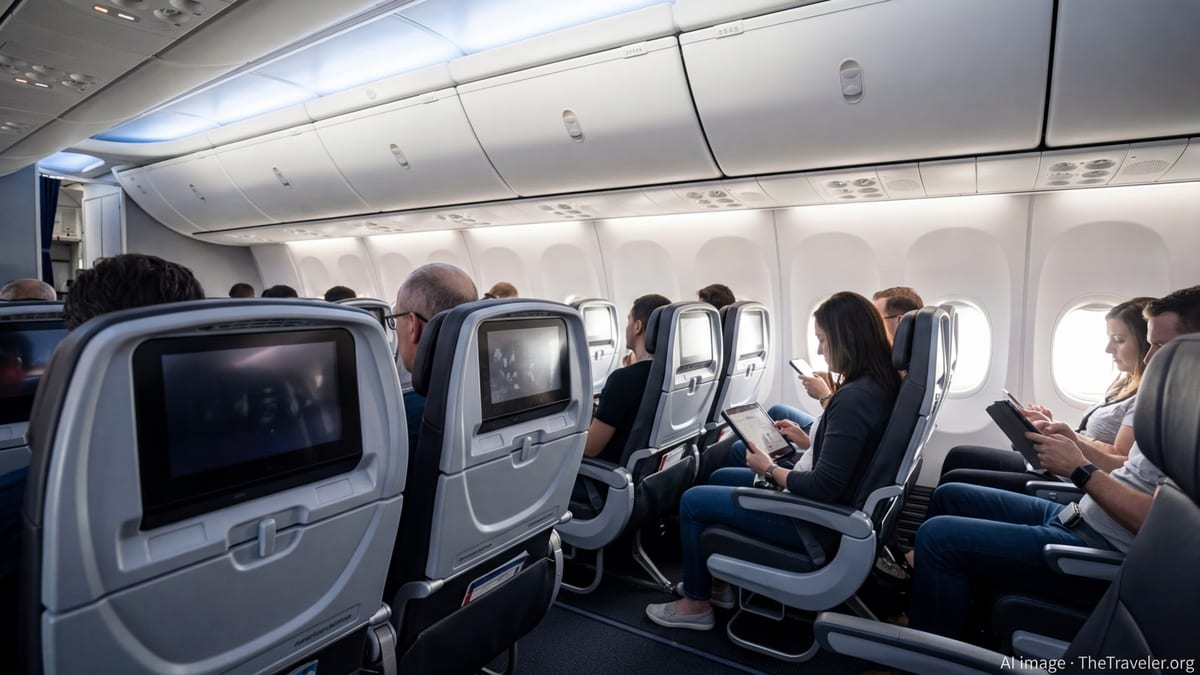
From Removing Screens to Rethinking the Strategy
Over the past several years, American Airlines has steadily removed embedded entertainment screens from its domestic narrowbody aircraft, favoring a lighter, lower-cost cabin built around passengers’ own phones, tablets and laptops. Publicly available information indicates that the final round of retrofits on legacy Airbus A319 jets, which had been the last narrowbodies with seat-back systems, is scheduled to strip out those monitors as part of a broader cabin refresh focused on additional premium seating and larger overhead bins.
Analyst commentary and industry coverage have described the move as making American the only large U.S. network carrier without seat-back entertainment across most domestic single-aisle routes, at a time when competitors Delta Air Lines and United Airlines are investing heavily in updated in-seat screens and high-speed connectivity. Reports indicate that this divergence has become more visible as those rivals promote their cabins with slogans centered on every seat having its own screen.
Against that backdrop, new discussion has emerged around whether American’s all-streaming strategy has gone too far. Online aviation forums and recent coverage point to internal debates over the future of onboard technology, including whether the airline should reconsider in-seat displays on future narrowbody deliveries or upcoming interior refreshes in order to better match customer expectations.
Competitive Pressure From Delta, United and JetBlue
The potential rethink at American is unfolding in a marketplace where other U.S. airlines have framed seat-back screens as a core part of their brand. Delta’s marketing emphasizes a nearly fleetwide rollout of individual monitors, paired with complimentary connectivity that allows passengers to stream their own content as well as use the airline’s library. United has detailed a multiyear upgrade plan that includes new high-definition screens on many narrowbody jets, along with expanded map and personalization features.
JetBlue, which helped popularize personal TVs in the U.S. domestic market, continues to differentiate itself with live television and on-demand options at every seat on mainline aircraft. Industry observers note that these carriers frequently highlight consistent in-seat entertainment as a selling point, particularly to frequent flyers who value predictable amenities on every trip.
Within this context, reports that American is at least weighing the return of seat-back systems speak to intensifying pressure for the airline to narrow the perceived gap with its closest competitors. Aviation analysts have argued that for high-yield customers selecting between carriers on similar routes, the presence of seat-back screens, reliable Wi-Fi and power outlets can collectively influence loyalty, especially on longer domestic segments.
Passenger Expectations in the Streaming Era
American’s shift to a bring-your-own-device model initially aligned with broader consumer trends toward streaming video on personal electronics. The airline invested heavily in onboard Wi-Fi and a browser-based portal that offers a catalog of complimentary movies, TV shows and live channels that can be accessed on phones, tablets and laptops without purchasing full internet access.
However, traveler feedback collected in public forums and surveys covered by travel media suggests that many passengers still value the simplicity of a dedicated screen at every seat. For families, a built-in monitor can spare battery life on shared devices and reduce the need to juggle multiple tablets. For business travelers, it allows work to continue on a laptop while entertainment plays independently in front of them.
Accessibility advocates have also raised questions about whether a device-only strategy disadvantages passengers who do not own compatible devices or prefer not to use them during flight. As more airlines promote both free Wi-Fi and upgraded in-seat systems, expectations for a full suite of options have increased, potentially leaving American’s narrowbody cabins looking comparatively sparse.
Cost, Weight and Sustainability Considerations
Any move to restore seat-back entertainment on American’s narrowbody jets would need to contend with the financial and environmental trade-offs that led to their removal. Embedded systems add weight to each seat, which in turn contributes to higher fuel burn and operating costs over the life of the aircraft. They also require ongoing maintenance, software updates and periodic hardware refreshes to keep pace with consumer technology cycles.
Industry reporting has previously highlighted these factors as central to American’s decision to standardize on personal-device streaming, especially as the airline pursues fleet renewal and fuel-efficiency targets. Sustainability reports and fleet planning documents emphasize the importance of reducing weight and simplifying cabin components as part of efforts to lower emissions per seat.
Advances in display technology and lighter hardware could shift this calculus. Newer generation in-seat screens are more energy-efficient and compact than earlier models, which may mitigate some of the fuel penalty. If paired with next-generation satellite or ground-based connectivity, they could also support dynamic content delivery and real-time information services, potentially creating new revenue or loyalty opportunities that help offset installation costs.
Next-Generation Wi-Fi and a Hybrid Entertainment Model
Reports circulating in aviation circles now suggest that American is exploring upgrades to its onboard connectivity, including potential partnerships with high-bandwidth providers for future Wi-Fi systems. As discussions about these technologies progress, the airline is also described as weighing whether a hybrid approach that combines robust streaming with selective deployment of seat-back screens on certain aircraft types or key routes might offer the best balance between cost and customer appeal.
Such a model could see new or refurbished narrowbody jets configured with a mix of premium amenities: larger overhead bins, additional extra-legroom and first class seating, power at every seat, complimentary Wi-Fi for loyalty program members and, on some aircraft, modern slimline screens with Bluetooth audio support. This approach would mirror global trends in which airlines use upgraded cabins and differentiated entertainment to compete for higher-spend travelers.
For now, American’s narrowbody fleet remains largely screen-free, and the reported considerations around bringing back seat-back TVs have not yet translated into a firm fleetwide program. But as rivals continue to raise the bar on inflight entertainment and connectivity, industry observers will be watching closely to see whether American’s next round of cabin decisions marks a pivot back toward built-in screens or a doubling down on the personal-device strategy that has defined its domestic product in recent years.