

More news on this day
When American Cruise Lines’ American Symphony eases into Pensacola this March, the 180-passenger modern riverboat will mark the start of a new Gulf Coast cruising era, linking New Orleans to Northwest Florida on a small-ship route that tourism officials have pursued for years.
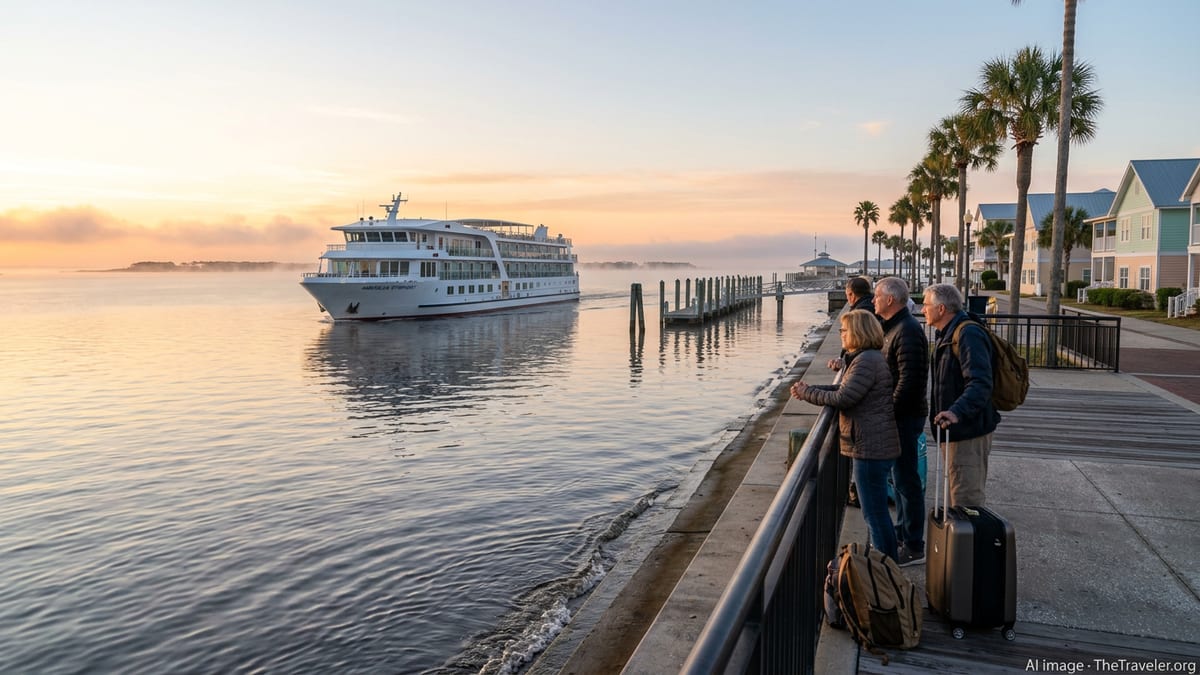
Inaugural Gulf Coast Sailings Begin March 2026
The first dedicated Gulf Coast cruise on American Symphony is scheduled to launch in early March 2026, operating an eight-day, one-way itinerary between New Orleans and Pensacola. The small ship, which typically sails America’s inland waterways, is being redeployed to trace the northern Gulf shoreline, turning a familiar stretch of highway into a slow-travel coastal voyage.
According to company schedules and recent port announcements, American Symphony’s early March departures are already heavily booked, with demand driven by travelers seeking a no-fly, close-to-home alternative to larger ocean liners. Fares for the debut season start in the upper mid-range of the U.S. cruise market, reflecting the ship’s all-inclusive structure and limited capacity.
The new route positions March 2026 as a pivotal month for Gulf Coast cruising, as American Cruise Lines joins the short list of operators running regular calls to smaller ports between Louisiana and Florida. The line has framed the deployment as part of a broader expansion of domestic itineraries timed to the United States’ 250th anniversary year in 2026.
While larger cruise ships have long called on New Orleans and some Alabama and Mississippi ports, American Symphony’s schedule formalizes a continuous New Orleans-to-Pensacola circuit, bringing overnight cruise tourism to communities more accustomed to day-trippers arriving by car.
From New Orleans to Pensacola: A New Coastal Corridor
The Gulf Coast cruise connects New Orleans’ historic riverfront with beach towns and working harbors across Mississippi, Alabama and the Florida Panhandle before concluding in Pensacola. The itinerary includes calls in Biloxi and Gulfport, the arts-focused community of Ocean Springs, and the busy port of Mobile, transforming a drive that many travelers rush in a day into a weeklong exploration by water.
Onboard, passengers remain within sight of the shoreline for much of the journey, with views shifting from barrier islands and shrimp boats to casino towers, fishing piers and long, white-sand beaches. Shore excursions being marketed for the March sailings emphasize local seafood traditions, maritime museums, coastal architecture and small historic districts that have rarely seen overnight cruise guests.
In Mobile, officials are preparing for multiple calls from American Symphony across March as part of the inaugural series, with the riverboat returning later in the year for November and December departures. Local tourism leaders view the stops as an opportunity to extend visitor stays beyond a single afternoon, encouraging passengers to sample downtown restaurants and waterfront attractions before reboarding.
For passengers ending in Pensacola, the route offers a gentle transition from river voyage to beach vacation. Many are expected to add nights in the city or along nearby barrier islands, taking advantage of Pensacola’s role as both cruise terminus and regional gateway airport.
Pensacola Steps Onto the River Cruise Map
Pensacola’s selection as the eastern anchor for American Symphony’s Gulf Coast cruises is being hailed by local tourism officials as a milestone in the city’s ongoing waterfront revival. Long known for its naval aviation history and broad beaches, Pensacola has not previously served as a regular homeport for overnight small-ship cruises.
Port authorities have spent recent months finalizing berthing plans and shore-side logistics ahead of the March 2026 arrival, focusing on passenger handling, provisioning and coach access for excursions. The compact historic core, located a short distance from the waterfront, allows disembarking guests to walk to restaurants, galleries and Spanish-era sites within minutes of stepping ashore.
City leaders say the new cruise calls complement existing tourism rather than replace it, describing American Symphony’s guests as an additional layer atop snowbirds, beachgoers and event travelers. Because the ship carries fewer than 200 passengers, officials expect the impact to be noticeable for downtown businesses without overwhelming streets or popular attractions.
The riverboat’s schedule is also expected to dovetail with Pensacola’s calendar of cultural events and festivals, giving visitors a chance to experience concerts, markets and seasonal celebrations as part of their cruise week. Local tourism campaigns are already highlighting the port call as an opportunity to “sail in and stay a while” in Northwest Florida.
Small-Ship Cruising Gains Ground Along the Gulf
American Symphony’s arrival underscores the growing appeal of small-ship and river-style cruising along the U.S. coastline. American Cruise Lines has steadily expanded its fleet of modern riverboats since launching American Symphony in 2022, positioning the vessels as boutique alternatives to traditional ocean-going ships with several thousand passengers.
The Gulf Coast program leverages that model by offering inclusive fares, single-destination days and a slower pace than many Caribbean sailings. Travelers can spend the morning exploring a port such as Biloxi or Ocean Springs and return to a quieter onboard environment, with most distances between ports short enough to allow daylight cruising and evening dockside overnights.
Industry observers note that the timing aligns with renewed interest in domestic travel and “drive-to” cruises, particularly among older guests who prefer itineraries that begin and end in familiar regional hubs. By linking New Orleans with smaller Gulf communities and Pensacola, the line taps into a broad catchment area stretching from Texas to the Southeast and Midwest.
Other operators are watching the launch closely, as success could encourage additional small-ship deployments along the Gulf or spur new itineraries that combine river and coastal segments. Port officials in Mississippi and Alabama have already framed American Symphony’s calls as part of a long-term strategy to diversify waterfront economies beyond cargo and day-trip tourism.
Economic Ripple Effects for Gulf Coast Communities
Local leaders from Louisiana to Florida point to a range of potential economic benefits as American Symphony begins its March 2026 sailings. The ship itself is expected to generate direct spending on port fees, fuel, provisions and local services, while each visit brings a new group of passengers into downtown districts and waterfront neighborhoods.
In smaller ports, business owners are preparing for modest but meaningful surges in weekday traffic when the riverboat is docked, particularly during shoulder seasons when traditional leisure travel is lighter. Restaurants, independent shops, museums and tour operators are tailoring offerings to small groups and short shore calls, emphasizing experiences that fit within a single morning or afternoon.
Tourism officials emphasize that the new cruise product is as much about visibility as immediate revenue. Regular calls by a branded ship such as American Symphony help place communities like Gulfport, Biloxi and Pensacola on the mental map of travelers who may return later by car or plane for longer stays, multiplying the long-term impact of each docking.
As the inaugural season unfolds, ports along the corridor plan to monitor passenger feedback, traffic patterns and spending, hoping to refine excursion options and infrastructure in time for additional Gulf Coast sailings already scheduled for late 2026 and into 2027.