

More news on this day
American Airlines’ rollout of the long‑range Airbus A321XLR is igniting fresh speculation that Glasgow could soon join the carrier’s expanding transatlantic map, a prospect that tourism and hospitality leaders in Scotland say would turbocharge growth just as demand from the United States hits new highs.
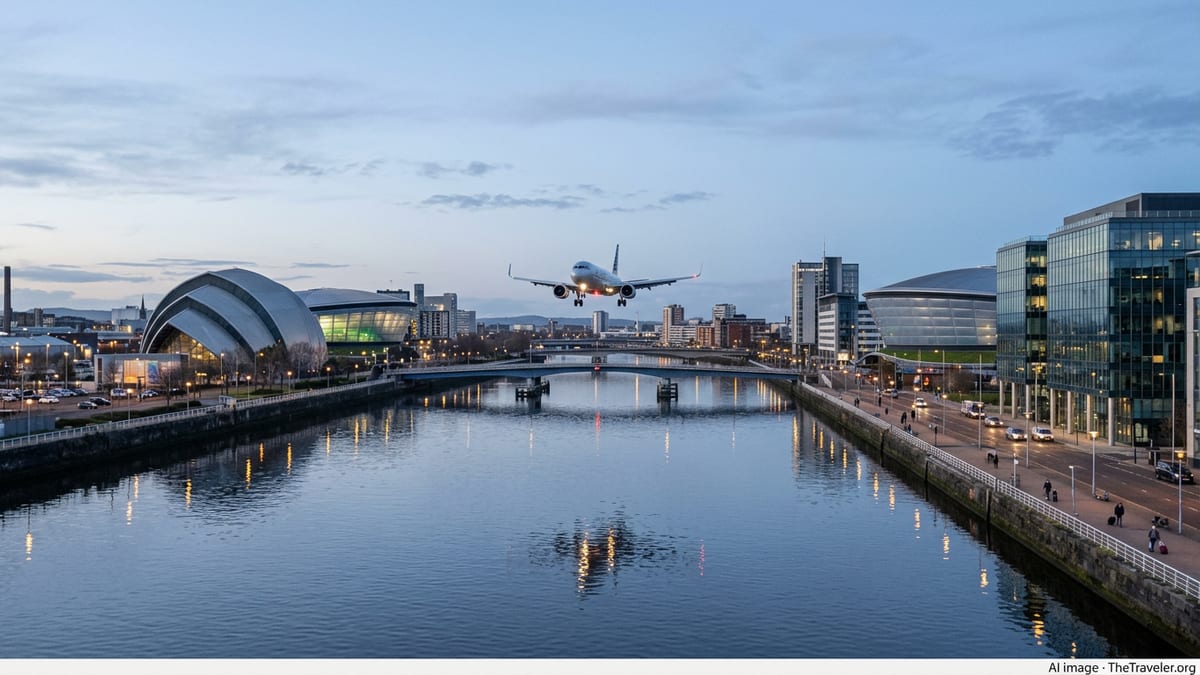
A321XLR Gives American New Reach Into Secondary Scottish Cities
The Airbus A321XLR has been central to American Airlines’ long‑haul strategy since the carrier took delivery of its first aircraft and began proving flights ahead of a planned transatlantic debut in 2026. The extra‑long‑range narrowbody is designed for so‑called long and thin markets, routes with solid year‑round demand that are too small to justify daily widebody service but lucrative enough to support a premium‑heavy cabin.
American has already confirmed that New York to Edinburgh will be its first international long‑haul route for the A321XLR, signaling a clear intent to use the jet to deepen its presence in Scotland beyond existing widebody services. Industry analysts note that once initial crew training and reliability data are bedded in, the same economics that make Edinburgh work strengthen the case for a second Scottish point such as Glasgow, particularly from hubs like New York and Philadelphia.
With a range in excess of many legacy Boeing 757 configurations and significantly better fuel burn per seat, the A321XLR allows American to test new city pairs with lower financial risk. That flexibility could prove decisive for Glasgow, where previous US routes have been operated seasonally and often with smaller widebody aircraft or older narrowbodies that struggled to achieve the right cost profile.
In network‑planning terms, the aircraft changes the question from whether Glasgow can sustain a full‑season widebody to whether it can support a right‑sized narrowbody that delivers transatlantic range, lie‑flat business seats and premium economy. For American, that calculus increasingly looks favorable as Scotland’s overall visitor numbers from North America climb and rival carriers deepen their own Scottish footprints.
Glasgow’s Tourism Mix Aligns With US Demand Trends
Scotland’s tourism appeal in the US market has broadened well beyond traditional heritage trips, and Glasgow has been a major beneficiary. The city’s cultural scene, music venues, contemporary food offering and festivals sit alongside easy access to the Highlands, islands and golf courses that many American visitors still prioritise. Direct flights would plug US travelers straight into that ecosystem without a domestic connection from London or a surface transfer from Edinburgh.
Tourism officials point out that Glasgow’s hotel market has matured significantly over the past decade, with new lifestyle, upscale and extended‑stay properties opening in and around the city centre. That diversification is critical for handling the mix of leisure, event‑driven and corporate demand that a nonstop US service would stimulate. American’s A321XLR configuration, with a relatively high proportion of premium seats, is well suited to that blend of customers.
For inbound operators tailoring Scotland itineraries for US clients, a Glasgow nonstop is particularly attractive. It allows packages that begin in the west of Scotland and loop through Argyll, the Hebrides or the North Coast before exiting via Edinburgh or another European city, reducing backtracking and long ground transfers. Industry insiders say such routing options typically command higher per‑trip spend and longer stays, directly benefiting local businesses from boutique hotels to independent guides and restaurants.
Glasgow Airport’s own marketing push to keep local passengers from leaking to rival airports underscores how much latent demand exists in its catchment. A direct US service from American would not only capture outbound Scots who currently connect via London or European hubs, it would also reposition Glasgow in the minds of US travelers as a primary gateway rather than a secondary add‑on to an Edinburgh‑centric itinerary.
Hospitality Sector Braces for a New Wave of US Visitors
Hotel and hospitality operators across Glasgow and the wider west of Scotland are already preparing for a step‑change in American arrivals, driven by a combination of new and returning long‑haul services. The arrival of another US carrier, on top of existing and announced routes, would compound that effect. Industry groups report heightened interest from US tour operators in locking in room blocks and event space several seasons out, anticipating more nonstop capacity into the region.
Restaurant owners, attraction managers and venue operators say American visitors are among their highest‑spending guests, often booking premium experiences such as whisky tastings, private touring and higher‑category rooms. A modern narrowbody equipped with lie‑flat business class and premium economy cabins mirrors that spending profile, giving American Airlines an incentive to target Glasgow with a product that appeals to both affluent leisure travelers and small‑business clients.
The prospect of direct flights has also emboldened investors. Several Glasgow hotel projects currently in planning or early construction phases have cited growing long‑haul connectivity and US demand as part of their business case. Developers argue that a diversified mix of carriers and aircraft types, including new‑generation jets like the A321XLR, provides a more resilient base of international demand than reliance on a single operator or widebody type.
Beyond the city, rural communities in Argyll and the islands anticipate knock‑on benefits as more itineraries anchor around a Glasgow arrival. Additional airlift from the United States would support seasonal employment, extend the shoulder season for accommodations and experiences, and give councils further justification for infrastructure investment in trails, marinas and transport links.
Competitive Pressure Builds as Rivals Target Scotland
Any American Airlines move into Glasgow with the A321XLR would land in an increasingly competitive Scottish market for US visitors. Rival US carriers have already stepped up their presence, including the planned return of nonstop New York service to Glasgow by another major airline, while European and Irish operators continue to feed large volumes of transatlantic traffic through their hubs.
That context matters for American’s decision‑making. Adding Glasgow would not be about chasing first‑mover advantage, but about defending and expanding its share of a buoyant US–Scotland market. Analysts note that Edinburgh has become a fiercely contested airport among transatlantic carriers, and that deploying the A321XLR to a complementary city gives American more flexibility to balance capacity, yields and seasonality across the country.
For Glasgow Airport, securing American would represent a milestone in its efforts to rebuild a diversified long‑haul portfolio. Having more than one US carrier operating modern, fuel‑efficient aircraft across the Atlantic would enhance resilience if economic conditions soften or if one airline reshapes its network. For passengers on both sides of the ocean, the immediate effect would be more choice of schedules, cabins and connection points across North America.
From American’s perspective, the A321XLR is designed precisely for this kind of competitive environment. By keeping trip costs lower than a widebody while still offering a full‑service experience, the aircraft lets the airline hold its ground on price without hollowing out the premium cabin. In a market where US leisure travelers have become more value‑conscious but remain willing to spend on comfort and convenience, that balance could be decisive.
From Speculation to Strategy: What Comes Next
While American Airlines has so far focused its public messaging on the A321XLR’s first wave of routes, including the confirmed New York to Edinburgh launch, network planners are already looking beyond 2026. Industry observers say the airline is likely to follow a familiar pattern: consolidate performance on initial transatlantic services, fine‑tune schedules for connectivity at US hubs, and then roll the aircraft out to additional European cities that fit the long‑and‑thin profile.
Glasgow checks many of those boxes. It offers a sizable metropolitan catchment, strong cultural and leisure appeal, and a growing base of corporate and conference traffic, yet historically has struggled to sustain multiple competing widebody services year‑round. That is exactly the niche the A321XLR is meant to fill, turning what used to be marginal routes into sustainable, higher‑yield operations.
Scottish tourism and hospitality leaders are keenly aware that route announcements can hinge on small margins. They have stepped up joint marketing activity in the United States, pitching Glasgow and the west of Scotland as a distinct proposition from Edinburgh and the Highlands. Should American confirm direct A321XLR service to Glasgow, these campaigns are ready to pivot into full‑scale co‑operative promotions, spotlighting city breaks, touring itineraries and event travel built around the new nonstop link.
For now, the combination of a game‑changing aircraft and a destination on the rise is enough to fuel optimism. As American’s A321XLR fleet grows and the carrier looks for profitable ways to deploy it across the Atlantic, Glasgow’s case as the next Scottish city to gain direct US service is stronger than it has been in years, and the country’s tourism and hospitality industry is positioning itself for a potential surge in American guests.