

More news on this day
American travelers are preparing to spend more on vacations in summer 2026 than ever before, with new surveys pointing to record household travel budgets and a stabilizing financial outlook despite lingering economic uncertainty.
Get the latest news straight to your inbox!
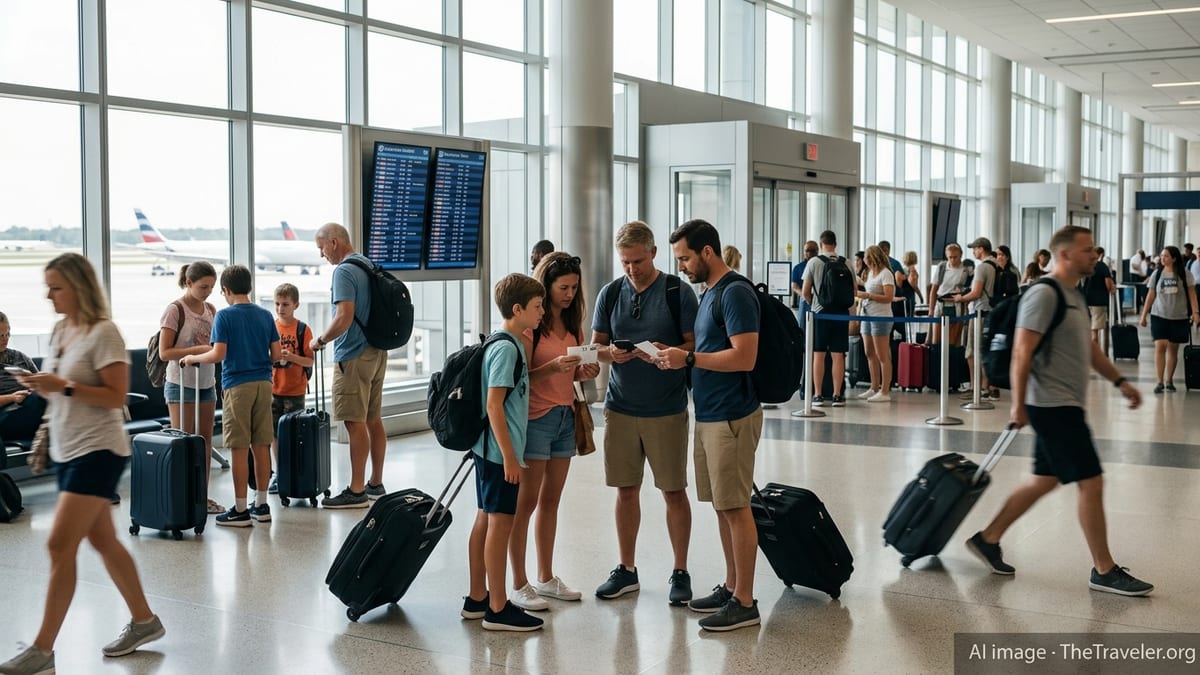
Record Vacation Budgets Signal Travel as a Top Priority
Recent travel and consumer sentiment surveys indicate that Americans are on track to set new records for summer vacation budgets in 2026, extending trends that began in 2024 and strengthened through 2025. Research from financial services and insurance providers tracking the travel market shows that average planned household spending on summer trips has consistently pushed above the 2,000 dollar mark in recent years, with projections for 2026 edging higher in both total volume and per-trip outlay.
Data shared in the most recent Vacation Confidence Index from Allianz Partners USA describes how Americans have steadily normalized higher travel budgets, even as they adjust to elevated prices for flights, accommodations and entertainment. The 2024 edition of the index already identified a record year for planned summer vacation spending, and subsequent updates point to further gains, supported by households that have now built travel back into annual budgeting as a non-negotiable line item.
Industry forecasters note that this willingness to ring up larger vacation tabs is not limited to affluent travelers. Surveys of middle-income households show increased intent to travel and a growing acceptance that trips will cost more than before the pandemic. Many respondents report saving earlier in the year, reallocating spending from discretionary categories at home, and prioritizing one major summer trip rather than multiple shorter getaways.
At the same time, travel companies are adjusting product offerings around this record budget environment. Tour operators, cruise lines and large hotel brands are expanding bundled packages and pre-paid options that lock in costs, catering to travelers who are prepared to spend more but want clearer predictability and value for their higher budgets.
Stabilizing Financial Sentiment Supports Strong Summer Demand
Behind the bigger budgets is a gradual stabilization in consumer financial sentiment heading into the 2026 summer season. While concerns about inflation, housing costs and political uncertainty remain, multiple consumer confidence and travel-intent surveys show that many Americans feel more capable of managing their finances than they did in the immediate post-pandemic period.
Reports from travel research firms that track American travel sentiment on a monthly basis show a modest but consistent improvement through late 2025 in the share of adults who say now is a good time to spend on vacations. Analysts attribute this in part to slower price growth for airfares and moderating gas prices compared with earlier spikes, as well as a labor market that has remained relatively resilient.
Some indicators still point to caution. Households with tighter budgets are more likely to say that cost is the main barrier to summer travel, and a significant minority continue to postpone or shorten trips in response to higher prices. However, sentiment data suggests that instead of canceling vacations outright, many of these travelers are shifting how and where they spend, helping sustain overall demand and keeping aggregate travel budgets near all-time highs.
For destinations and travel businesses, the stabilization in sentiment gives greater visibility when planning for 2026. Tourism boards and major brands are using more optimistic baseline scenarios for visitor numbers and spending than they did two or three years ago, building marketing and staffing plans around an expectation of another exceptionally busy warm-weather season.
Domestic Travel Leads as International Flows Diverge
Domestic travel is expected to capture the largest share of these record American travel budgets in summer 2026, continuing a pattern observed in 2024 and 2025. Forecasts from organizations such as AAA for major U.S. holiday periods in 2025, including Memorial Day and the July 4th week, showed domestic travel volumes repeatedly breaking long-standing records, even as some households expressed concern about the broader economy.
Those projections, which called for tens of millions of Americans to travel at least 50 miles from home during peak holiday windows, highlight how strongly domestic demand has recovered. Analysts note that as Americans grow accustomed to crowded roads and airports during high season, they are increasingly willing to book shoulder-season trips or midweek departures to stretch vacation budgets without sacrificing days away.
International travel trends look more uneven. Industry analyses and tourism statistics for 2025 point to a drop in inbound visitors to the United States from several key overseas markets, reflecting a combination of economic headwinds, currency effects and shifting geopolitical dynamics. At the same time, outbound leisure travel by Americans has remained resilient, with travelers allocating a significant portion of their growing budgets to long-haul trips, particularly to Europe, Mexico and the Caribbean.
This divergence means that while U.S.-based travelers are helping fuel record global demand on popular routes and at marquee destinations, many American tourism-dependent cities and attractions are relying more heavily on domestic visitors to offset weaker international inflows. For summer 2026, destination marketers are expected to continue targeting U.S. travelers aggressively with value-oriented campaigns that speak directly to the larger budgets and strong desire to travel.
Travelers Trade Down Elsewhere to Protect Trip Plans
One defining feature of the current cycle is how determined Americans appear to be to protect their vacation plans, even if it means substantial trade-offs in other parts of their budgets. Surveys from travel insurers, research firms and consumer analysts repeatedly show travelers cutting back on dining out at home, delaying big-ticket purchases or choosing budget-friendly entertainment options throughout the year to free up funds for summer trips.
Allianz Partners reporting on recent survey waves highlights a noticeable increase in the share of respondents who describe vacations as an essential part of their wellbeing rather than a luxury. This framing helps explain why travel continues to command a rising portion of discretionary spending, even among those who describe their overall financial situation as only fair or somewhat strained.
Within travel itself, Americans are also making tactical shifts to keep total costs in check. Publicly available data and industry coverage indicate a rise in interest in so-called dupe destinations, where travelers seek out less expensive alternatives to high-profile hot spots. There is also evidence of more flexible trip design, with travelers mixing shorter city stays with longer, lower-cost time in drive-to rural or beach destinations, and opting for midscale accommodations that allow room in the budget for experiences and activities.
Travel businesses are responding with tiered pricing, loyalty-based discounts and dynamic packaging that allows consumers to dial spending up or down. For summer 2026, many operators are expected to lean into this flexibility, emphasizing that travelers can still enjoy meaningful trips even if they choose more economical options for flights or lodging.
What Rising Budgets Mean for the Summer 2026 Travel Landscape
The combination of record budgets and steadier financial sentiment is shaping expectations across the travel ecosystem for summer 2026. Airlines are fine-tuning capacity plans after a series of record-breaking holiday and summer periods, balancing the temptation to add more seats with a desire to preserve yields. Hotel groups, meanwhile, are investing in upgrades and new openings in high-demand leisure markets, betting that elevated rate levels will be sustained by travelers who are ready to spend.
Tour operators, cruise lines and online travel agencies are also planning for a busy season, with many extending early-booking promotions further into the spring to lock in travelers who are still comparison shopping. As more Americans become comfortable with higher overall trip costs, value messaging is evolving from simple discounting to a focus on what is included and how experiences can be personalized within a given budget.
For travelers, the environment presents both opportunity and pressure. Larger average budgets may expand options for destinations and experiences, but they also raise expectations for service quality and trip outcomes. As a result, industry analysts expect continued growth in ancillary services such as travel insurance, premium transportation upgrades and curated local experiences, as travelers look to safeguard and enhance vacations that now represent one of their most significant annual expenditures.
With summer 2026 shaping up as another milestone in the post-pandemic travel recovery, the defining theme is not simply that Americans are spending more. It is that travel has firmly reestablished itself at the center of household priorities, absorbing a growing share of discretionary dollars even as families navigate a complex and often unsettled economic backdrop.