


More news on this day
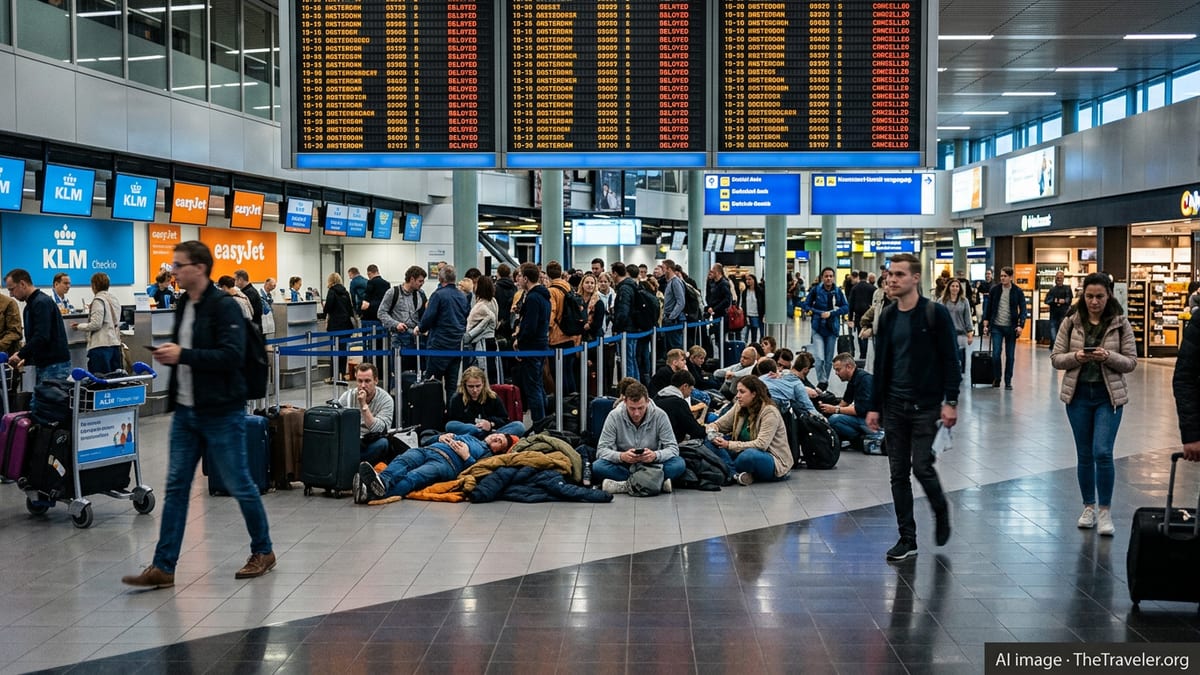
Hundreds of passengers were left stranded at Amsterdam Schiphol after a fresh wave of disruptions led to 293 delayed departures and seven cancellations, knocking on to routes across the Netherlands, France, Italy, Portugal and several other European destinations.
Get the latest news straight to your inbox!
Knock-on Disruptions From Amsterdam Across the Network
Publicly available operational data from Amsterdam Schiphol indicates a sharp spike in delays on short and medium haul services, with nearly 300 flights experiencing significant disruption and a smaller number cancelled altogether. The imbalance between scheduled and actual traffic has caused missed connections and last-minute reroutings for travellers heading to major hubs in France, Italy and Portugal, as well as secondary airports across the continent.
European network monitoring reports show that Amsterdam remains one of the busiest nodes in the region, meaning even a relatively contained operational problem can ripple quickly through the wider system. When departure slots are missed or reduced, aircraft and crews arrive late into onward bases, accumulating delays throughout the day on services that link the Netherlands to Paris, Lyon and Nice in France, Rome and Milan in Italy, and Lisbon and Porto in Portugal.
Several carriers are reported to have restructured rotations to keep long haul services running, concentrating disruptions on intra-European flights. This strategy has left many passengers bound for nearby countries facing extended waits in Amsterdam or being rebooked via alternative hubs such as Frankfurt, Brussels or London, adding hours to relatively short journeys.
According to published coverage and airline advisories, some travellers only discovered rebookings overnight or at the airport, after their original departures from Amsterdam failed to materialise. That uncertainty has compounded congestion in customer service queues, with passengers attempting to secure replacement routings before remaining seats on alternative services filled up.
Weather, Capacity and Rail Issues Add to the Strain
The latest wave of disruption comes in a year already marked by weather-related constraints and capacity pressures at Schiphol and other European airports. Earlier in the winter, a combination of snow, strong winds and runway de-icing backlogs led to large numbers of cancellations and delays, establishing a pattern of vulnerability when traffic levels are high and conditions deteriorate.
Network analysis from Eurocontrol shows that even temporary technical or staffing issues at a hub airport can generate thousands of minutes of accumulated delay, as aircraft wait for departure slots or are held on the ground elsewhere. When these constraints occur at a major node such as Amsterdam, the effects are quickly felt on routes to Southern Europe, including leisure destinations in Italy and Portugal that rely heavily on tight turnaround schedules.
On top of the aviation pressures, recent rail disruptions in the Netherlands have periodically limited train access to and from Schiphol, affecting travellers who depend on rail connections for early morning or late evening flights. Public information from Dutch rail and infrastructure operators has highlighted incidents such as fire alarms and tunnel faults that temporarily suspended services on key corridors, further complicating journeys for passengers already dealing with flight uncertainty.
Travel advisories circulating among passengers in recent months have increasingly recommended building additional buffer time for airport transfers within the Netherlands and considering alternative rail routings when primary lines serving Amsterdam are affected. For some stranded travellers, limited rail capacity has removed a traditional fallback option when flights are delayed or cancelled.
Impact on Key Routes to France, Italy and Portugal
The current pattern of 293 delays and seven cancellations at Amsterdam has had a disproportionate impact on popular European routes, especially those that operate at high frequencies throughout the day. Services linking Schiphol with Paris and other French cities form part of dense networks used by both business and leisure travellers, so any reduction in capacity can quickly lead to overbooked replacement flights and extended waiting times.
In Italy, operations to major airports such as Rome and Milan have also experienced knock-on effects from late-arriving aircraft and altered rotations. Italian aviation notices in recent weeks have already highlighted periods of industrial action and localized weather issues, meaning the additional strain from Amsterdam-originating delays is arriving on top of pre-existing schedule fragility.
Flights from Amsterdam to Portuguese gateways including Lisbon and Porto are often used as connection points for long haul services to South America and Africa. When those departures leave late or are cancelled, travellers can miss intercontinental links onward from Portugal, forcing complete itinerary changes and overnight stays. Local media coverage and traveller accounts have described passengers being rerouted through alternative hubs or rebooked onto services on subsequent days.
Tourism bodies in Southern Europe have previously warned that repeated disruption at northern hubs can depress traveller confidence and complicate peak-season planning. The clustering of delays and cancellations at Amsterdam adds to those concerns at a time when many destinations are relying on strong summer demand to support local economies.
What Stranded Travellers Are Experiencing on the Ground
Reports from passengers on social media and travel forums describe crowded departure halls at Schiphol, with long lines at airline desks and self-service kiosks as travellers attempt to adjust itineraries. Many accounts mention difficulty obtaining timely information about the precise cause of individual delays, as airlines and airport operators work through large volumes of schedule changes.
Travellers with tight connections have been among the hardest hit, particularly those linking from short European hops to long haul departures. When initial flights from Amsterdam to nearby countries such as France or Italy leave late, onward options may already be full by the time passengers arrive at their intermediate hubs, leaving them dependent on standby lists or forced overnight stays.
Families and older travellers appear especially affected when disruptions stretch into the evening, as hotel availability near airports tightens and rebooking efforts extend past normal operating hours. Some passengers have turned to rail and long distance bus services as last-resort alternatives, despite separate reports of congestion on major rail routes that limit capacity for last-minute changes.
Publicly available information from airlines indicates that standard passenger rights rules remain in effect, with carriers offering refunds or rerouting where required and providing care such as meals and accommodation in qualifying cases. However, the volume of disrupted journeys means that even when policies are clear, the practical process of securing assistance can be slow.
Guidance for Upcoming Travellers Through Amsterdam
Travel experts and consumer organisations responding to the latest disruptions are emphasizing preparation and flexibility for anyone scheduled to pass through Amsterdam in the coming days. Recommendations widely shared in public guidance include monitoring flight status closely from 24 hours before departure and using airline apps or online tools to respond quickly to any schedule change.
Passengers are also being encouraged to allow extra connection time when planning itineraries that route through Schiphol, especially on days with heavy traffic or unsettled weather forecasts. Travel planning resources note that itineraries with self-arranged separate tickets are at particular risk when one leg is delayed, because protections that apply to through-tickets may not cover independently booked connections.
For those already at the airport, consumer advocates suggest approaching airline customer service channels in parallel, using both in-person desks and digital options where available. With phone lines and help desks under strain, some travellers have reported better results when pursuing multiple avenues at once rather than waiting in a single queue.
While the current tally of 293 delayed flights and seven cancellations reflects a snapshot in a highly dynamic situation, the episode underscores the sensitivity of Europe’s aviation network to pressure at a few key hubs. For many travellers heading through Amsterdam to France, Italy, Portugal and beyond, careful planning and real-time information have become essential tools for navigating an increasingly unpredictable travel environment.