

More news on this day
An Amtrak train carrying more than 100 people was left immobilized in rural South Carolina after colliding with a garbage truck at a private crossing, stranding passengers for hours while crews assessed damage and worked to restore service along the busy East Coast route.
Get the latest news straight to your inbox!
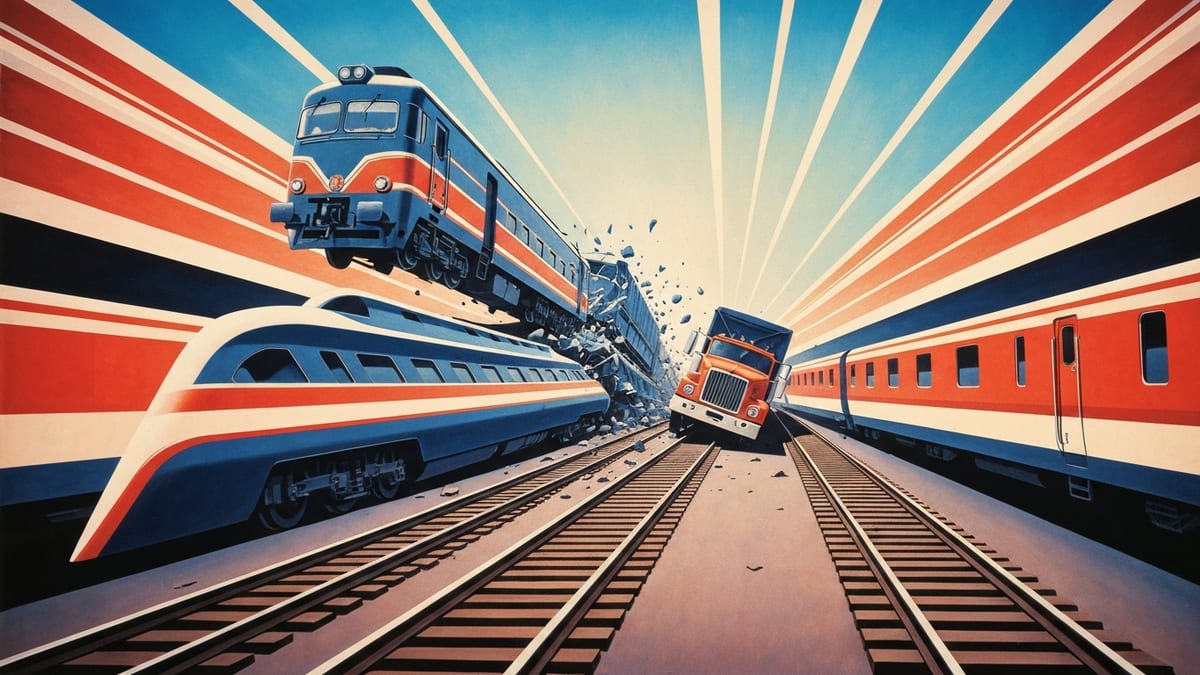
Collision at Remote Williamsburg County Crossing
The incident occurred late Wednesday morning, April 1, near Highway 52 in Williamsburg County, about three miles north of Kingstree. Reports indicate the northbound Amtrak train, identified in local coverage as Train 90 traveling between Savannah and New York, struck the rear of a garbage truck at a private rail crossing without gates or warning lights.
Local news accounts describe the impact pushing the truck off to the side of the tracks while the train remained upright but sustained visible damage to its locomotive and some equipment. The truck driver sustained minor injuries and was transported for medical evaluation, while passengers and crew on the train were reported unharmed.
The crash halted traffic along the single track that links coastal South Carolina with the broader Amtrak network on the Atlantic seaboard. Rail infrastructure at the site required inspection before any trains could safely pass, immediately disrupting scheduled passenger services through the region.
According to published coverage from regional outlets, initial assessments pointed to the absence of active warning devices at the private crossing as a complicating factor, drawing renewed attention to long-standing safety concerns at lightly protected rail intersections.
Hours-Long Stranding for More Than 100 Travelers
With the train disabled in a sparsely populated area, more than 100 passengers and crew were left on board for an extended period as emergency responders and railroad personnel converged on the scene. Local reports place the total number of people on the train at 101, underscoring the scale of the disruption for a midweek daytime journey.
Images and descriptions shared in news coverage suggest that passengers initially remained inside the railcars while responders checked for injuries and evaluated the stability of the train. With no serious injuries reported among those on board, the immediate focus shifted from medical care to logistics and how to move dozens of travelers from the crash site to a safer location.
Because of the train’s position on the line and the need for inspections, normal operations could not resume quickly. This left passengers dealing with delays of several hours in warm daytime conditions before buses and other support vehicles could be organized and dispatched from nearby towns.
Publicly available information from local agencies indicates that buses were eventually brought in to move passengers to a recovery point in Kingstree, where they could access restrooms, food and updated travel information while the damaged equipment and track were examined.
Service Suspensions and Wider Travel Disruptions
The damage to the Amtrak train and the need for thorough track inspections prompted a broader operational response. Coverage carried by national and regional outlets states that Amtrak temporarily suspended portions of its service in South Carolina following the crash, limiting movements along the affected corridor while safety checks were carried out.
Travelers planning to pass through the state faced cancellations or rerouting as dispatchers kept passenger trains away from the damaged stretch of line. Some services were reportedly truncated or replaced with bus transportation, adding hours to journeys and forcing last-minute changes to itineraries.
The disruption reverberated beyond Williamsburg County, as long-distance routes that connect the Southeast with the Northeast rely on the same north-south spine. The suspension of service in South Carolina required schedule adjustments for trains running over multiple states, a familiar challenge for rail operators when a single-line corridor is blocked.
Amtrak’s public statements, as summarized in news reports, emphasized that regular service would not resume until inspections confirmed the structural integrity of the tracks and equipment, reflecting industry practice that prioritizes infrastructure safety over on-time performance after a crash.
Spotlight on Private Crossings and Rail Safety
The Williamsburg County crash has renewed discussion of safety at private railroad crossings, particularly those without gates, flashing lights or bells. According to accounts from South Carolina media, the crossing where the collision took place lacked active warning systems, relying instead on motorists to look for approaching trains before driving across the tracks.
Transportation analysts and safety advocates have long highlighted such locations as among the most vulnerable points on the rail network. When trains travel at higher speeds and have long stopping distances, even brief misjudgments by drivers can lead to collisions that immobilize both vehicles and rail equipment, regardless of whether serious injuries occur.
Publicly available federal and state data show that highway-rail grade crossings, especially lightly protected rural ones, remain a recurring source of crashes affecting both freight and passenger trains. The South Carolina incident fits a broader pattern in which trains collide with road vehicles that are crossing or stopped on the tracks, leading to delays, costly repairs and heightened concern among passengers.
Safety discussions following the Williamsburg County crash have also referenced earlier high-profile Amtrak collisions in South Carolina, including a 2018 crash near Cayce involving a freight train that caused multiple fatalities and scores of injuries. While the circumstances differ, these past incidents continue to frame public perception of rail safety in the state.
Passenger Experience and Questions Over Reliability
For travelers aboard the stricken train, the crash and subsequent stranding offered an unsettling reminder of the vulnerabilities that still exist in long-distance rail travel. Passengers found their trip abruptly interrupted in a rural area, dependent on information disseminated through on-board announcements and later through local authorities once buses arrived.
Published accounts of similar Amtrak incidents in recent years show that extended delays, overnight holds and disrupted connections can erode public confidence in intercity rail, particularly when travelers feel uncertain about when they will reach their destinations. Even without major injuries, the emotional stress and logistical fallout can be significant.
The South Carolina crash arrives at a time when Amtrak is under pressure to expand and modernize services while also improving safety and reliability. Federal infrastructure funding, ongoing technology upgrades and renewed interest in rail as an alternative to driving and flying have raised expectations among passengers across the country.
How Amtrak and state partners address the aftermath of the Williamsburg County collision, from repairs and communication to any future safety enhancements at the crossing, is likely to influence traveler perceptions. For passengers stranded in rural South Carolina this week, the experience underscored how a single crash can ripple across an entire route, reshaping journeys in an instant.