

More news on this day
An Amtrak train traveling through Williamsburg County, South Carolina, collided with a truck near Kingstree this week, leaving passengers temporarily stranded and spotlighting ongoing concerns around safety and reliability on key passenger rail corridors in the Southeast.
Get the latest news straight to your inbox!
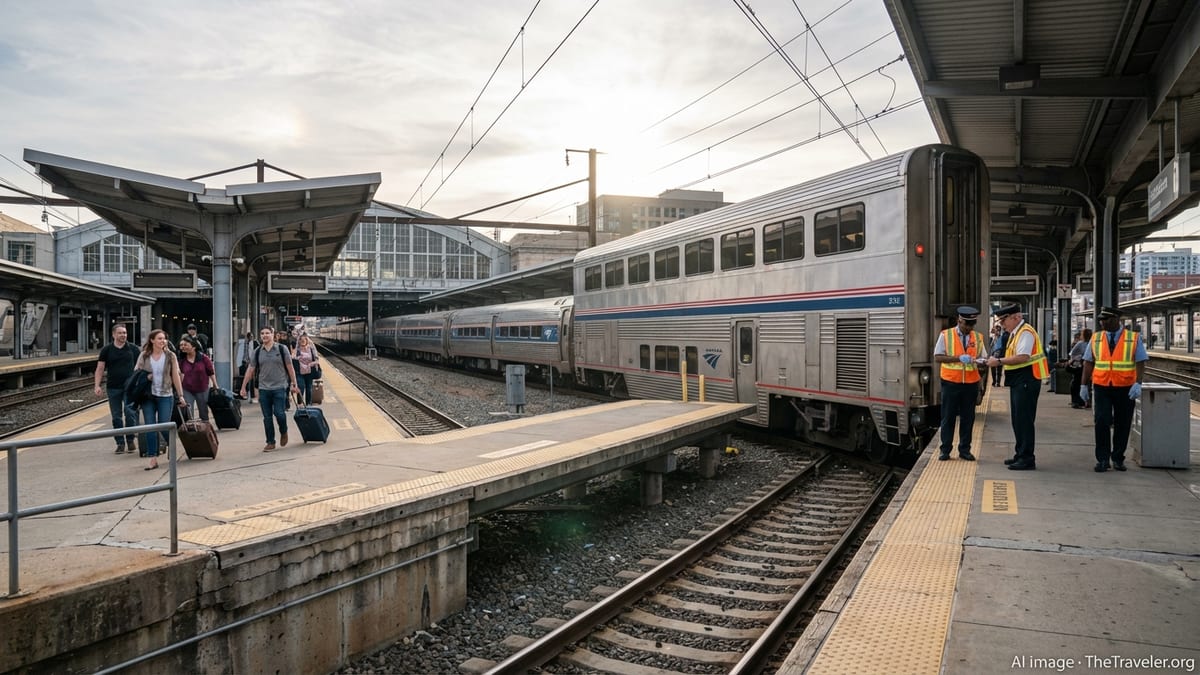
Collision in Williamsburg County Disrupts Amtrak Journey
According to publicly available information, the collision occurred near Kingstree in Williamsburg County on the morning of April 1, when an Amtrak train operating along a north–south route struck a truck at a railroad crossing. Local coverage indicates that the impact severely damaged the truck and brought the train to a halt on the line, interrupting service for more than one hundred passengers on board.
Reports indicate that the crash took place close to a private or lightly controlled crossing near a commercial property, where a garbage or service truck was attempting to traverse the tracks. Video circulating in regional and national outlets shows the train striking the rear portion of the vehicle, spinning debris across the right of way and forcing rail traffic in the area to stop.
Emergency responders were dispatched to the scene and assessed those involved. Published coverage notes that the truck driver sustained minor injuries and was taken to a local medical facility for evaluation. Passengers and crew on the train were evaluated on site, with no serious injuries reported, but the damage to equipment and trackside infrastructure meant that the train itself could not continue under its own power.
As rail investigators and cleanup crews arrived, the halted train effectively became a static waiting room for passengers, many of whom were traveling long distance between major East Coast cities. With the line blocked and the locomotive disabled, onward movement depended on buses and replacement transport arranged from nearby towns.
Passengers Face Delays, Uncertainty and Extra Costs
Local news reports and social media posts from travelers describe hours of uncertainty following the crash, as passengers waited for instructions and arranged their own onward journeys. Some travelers were transported by bus from the site or from a nearby station to facilities in Kingstree, while others attempted to rebook trips through other Amtrak services, intercity buses or last minute rental cars.
Accounts shared in regional outlets highlight the experience of families and solo travelers left weighing whether to stay with the rail operator’s contingency plans or to pay out of pocket for alternative transportation. One family described being stranded overnight and still trying to secure a way home the following day, illustrating how a relatively short disruption on the tracks can cascade into hotel stays, missed work and additional expenses.
Published coverage suggests that information about reimbursements and rebooking options was an immediate concern for many passengers. Under Amtrak’s standard policies, customers affected by service disruptions may be eligible for refunds, credits or accommodation on later trains. However, in smaller communities such as those in Williamsburg County, the limited number of daily departures and scarce same day alternatives can leave travelers effectively stuck even when tickets are refunded.
For tourists and leisure travelers, the crash turned a routine journey into an unplanned detour through rural South Carolina, with some passengers sharing images of crowded waiting areas and chartered buses. For residents of the region using the train as a primary intercity link, the disruption underscored how few backup options exist when a key rail corridor is suddenly taken out of service.
Safety Spotlight on Rail Crossings in Rural Communities
The Williamsburg County crash has renewed attention on the risks associated with rail crossings in smaller towns and rural areas. Publicly available footage from the incident shows a truck entering the crossing as the train approaches, underscoring how timing errors or misjudgments at grade crossings can have severe consequences even when train operations appear normal.
Federal data over recent years show that collisions between trains and road vehicles continue to occur disproportionately at level crossings that lack robust barriers, clear sightlines or modern warning technology. Many of these crossings are in regions similar to Williamsburg County, where freight and passenger trains run through communities built long before current traffic levels and train speeds.
Transportation analysts frequently note that, while high speed derailments capture national headlines, low visibility or unprotected crossings remain a persistent challenge. The South Carolina crash fits a pattern seen around the country, in which a single truck or car on the tracks can halt a long distance passenger service and strand hundreds of people far from their destinations.
In the wake of the incident, public discussion has focused on whether additional investment in crossing upgrades, driver education and enforcement is needed along the routes used by long distance Amtrak services in the Southeast. As more travelers choose trains to avoid road congestion or air travel hassles, expectations for reliable and interruption free journeys are rising.
Impact on Amtrak’s Southeast Network and Future Travelers
The disruption in Williamsburg County rippled along Amtrak’s broader Southeast network, affecting trains that connect major hubs with smaller communities across the Carolinas and beyond. When a crash blocks the line, subsequent departures can be delayed or rerouted, straining available equipment and crew schedules for days after the initial incident.
Travelers planning rail trips through South Carolina in coming weeks may encounter adjusted timetables or limited capacity as equipment is inspected and repairs are carried out. Publicly accessible service alerts indicate that Amtrak typically deploys substitute buses, temporary schedule changes and rolling stock reassignments to keep routes operating following serious disruptions.
The crash also feeds into a wider conversation about how to improve resilience along long distance passenger corridors, where a single event can isolate entire stretches of track. Transportation observers point to potential solutions such as strategically located spare locomotives, stronger agreements with bus operators for rapid substitution, and closer coordination with local agencies in rural counties.
For now, the Williamsburg County crash stands as the latest reminder that even nonfatal rail incidents can significantly disrupt travel plans. Passengers stranded in South Carolina this week experienced firsthand how quickly a routine journey can be upended, and why safety at rail crossings, clear communication and robust contingency planning remain central to the passenger rail experience.