

More news on this day
An Amtrak train carrying more than 100 passengers and crew through rural South Carolina was halted for hours after colliding with a garbage truck near Kingstree, leaving travelers stranded while emergency teams and railroad personnel worked to clear the scene and assess damage to the line.
Get the latest news straight to your inbox!
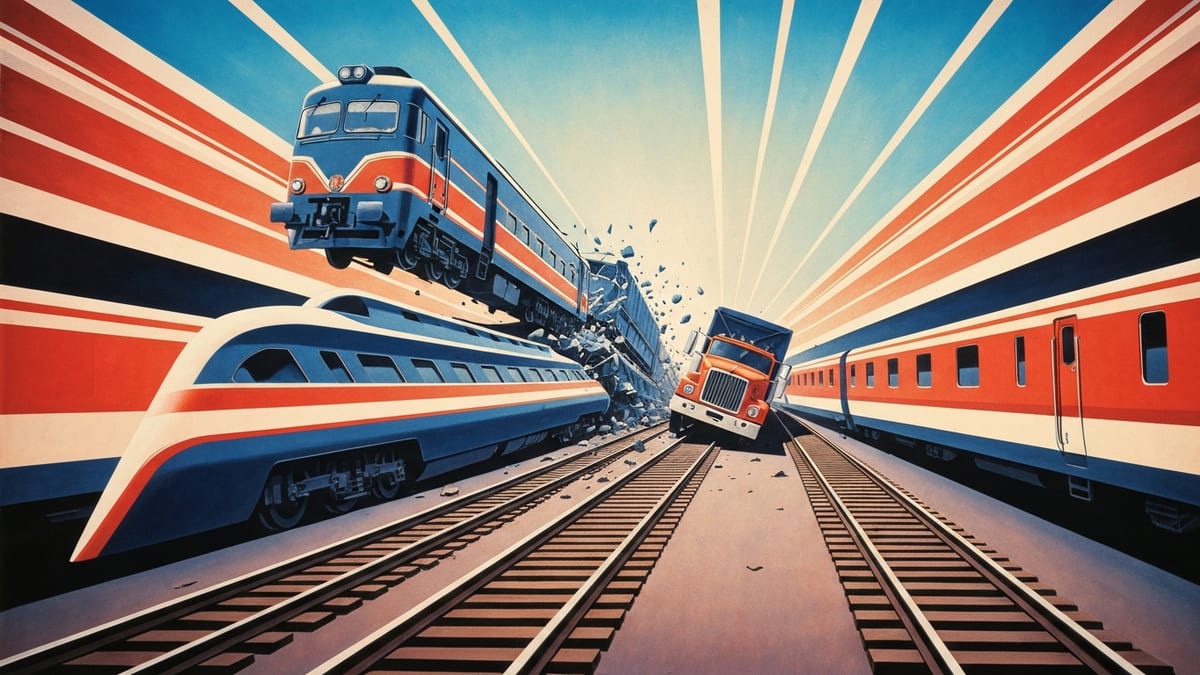
Collision at Private Crossing in Williamsburg County
Publicly available information indicates that the collision occurred late Wednesday morning, April 1, near a private rail crossing off North Williamsburg County Highway, a stretch of track a few miles north of Kingstree. The northbound Amtrak service, identified in local reports as operating between Savannah and New York, struck the rear of a garbage truck that was on or near the tracks.
Coverage from regional outlets describes the impact pushing the truck off to the side of the right of way while the Amtrak train remained upright but sustained visible damage to its lead units. Early summaries from fire and highway agencies cited in those reports indicate that the truck’s driver was able to exit the vehicle and suffered only minor injuries.
Reports note that the crossing where the crash occurred is privately maintained and not equipped with standard gates or flashing warning signals, a detail that has already drawn attention from transportation advocates who monitor rail safety along the busy north–south corridor.
Initial accounts do not indicate any injuries among passengers or crew on board the Amtrak train, although many travelers described significant delays and uncertainty as they waited for guidance on how and when their journeys would resume.
Passengers Stranded as Service in South Carolina Suspended
According to published coverage, Amtrak responded to the crash by suspending service along the affected portion of its route in South Carolina while inspectors evaluated track conditions and the condition of the train itself. The suspension left approximately 101 people on board facing an extended unplanned stop in a sparsely populated area with limited local transportation options.
Local news reports state that buses were requested to transfer passengers from the halted train to a recovery center in Kingstree, where travelers could wait indoors for alternate transportation to the next suitable station or for a follow-up train. Images and descriptions from the scene suggest that the transfer process took hours, as crews coordinated between railroad dispatchers, emergency responders and motor coach operators.
Some accounts from passengers posted publicly online describe an initial period of waiting on board while crews confirmed that it was safe to move through the cars and organize an evacuation. With the train disabled on the main line and freight traffic also affected, the disruption created ripple effects across the corridor for the rest of the travel day.
Amtrak has not yet released a detailed timeline of when full service through the area will be restored, but outlets following the incident report that trains were either canceled, held short of the crash site or rerouted where possible, leaving many travelers facing rebookings and missed connections along the East Coast.
Local Community and Emergency Response
Coverage from television stations serving the Lowcountry and Pee Dee regions highlights the rapid response from Williamsburg County Fire Department units and the South Carolina Highway Patrol, which were dispatched around 10:25 a.m. after reports of a train striking a truck near an auction facility along the highway.
Fire officials quoted in those reports describe arriving to find the garbage truck pushed away from the tracks and the Amtrak consist stopped further down the line. Crews conducted a walk-through of the train to check for medical issues, while troopers documented the scene and began gathering information for a state crash investigation.
The nearby community of Kingstree effectively became a temporary hub for the stranded travelers. Publicly available information indicates that a local facility was used as a reception area, where passengers were offered a place to sit, access restrooms and receive updates on alternate transportation. The influx of people briefly added pressure to the small town’s services but also drew volunteer support from residents and local organizations.
As is typical following a significant rail incident, investigators are expected to examine factors such as sightlines at the private crossing, train speed, the position and movements of the truck before impact, and any previous history of incidents in the area. Those findings will help determine whether changes to signage, access controls or operating practices are recommended.
Renewed Focus on Rail Crossings and Reliability
The South Carolina crash adds to a series of recent incidents in which highway vehicles have been struck at rail crossings, often in rural or semi-rural locations where warning systems vary widely. Transportation analysts quoted in national coverage have long noted that private crossings, which may serve businesses, farms or industrial sites, can pose particular challenges because they frequently lack gates and flashing lights.
While this week’s collision did not result in serious injuries to passengers, the hours-long disruption and the sight of travelers being bused away from a damaged train underscore the vulnerability of long-distance rail itineraries to single-point failures along shared freight corridors. Travelers who rely on Amtrak along the East Coast corridor have periodically faced similar unplanned detours due to vehicle strikes, freight derailments or infrastructure issues.
Publicly available data from federal rail regulators show that highway–rail grade crossings remain a significant source of risk, with a substantial share of train-related fatalities occurring when motorists, pedestrians or trucks are struck at or near crossings. Advocates argue that improved signage, better driver education and targeted investments in upgrading or consolidating crossings could reduce both casualties and service disruptions.
For passengers on this week’s Amtrak service, the incident translated into missed appointments, disrupted vacations and long waits far from their intended destinations. As investigations proceed and the line returns to normal operations, travelers and local residents will be watching closely for any changes aimed at making this busy stretch of track in South Carolina safer and more resilient.