

Illinois is one of the easiest states in the United States to explore by train. With Chicago as Amtrak’s busiest hub in the Midwest and a network of state supported and long distance routes fanning out across the prairies, travelers can experience big city energy, small town charm, and classic Midwestern scenery without ever getting behind the wheel. From the historic streets of Springfield to the Mississippi River bluffs near Quincy and the rolling farm country around Normal and Galesburg, riding Amtrak in Illinois is both a practical way to get around and a memorable part of the journey itself.
Understanding Amtrak’s Role in Illinois Travel
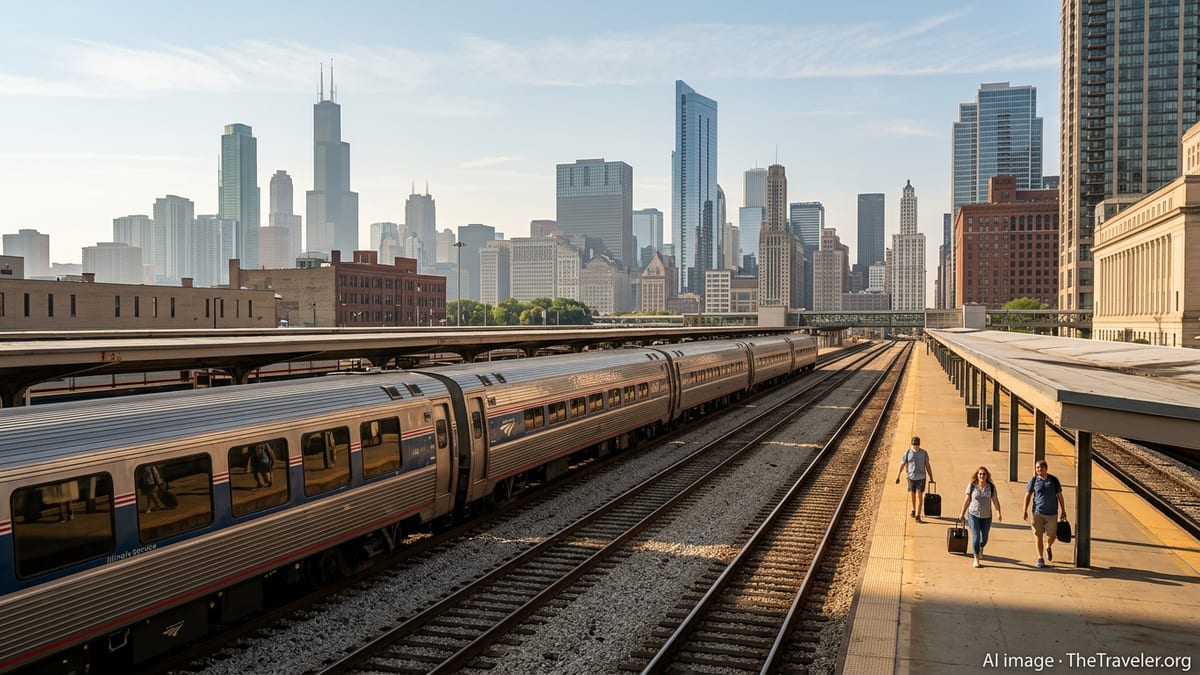
Illinois is central to Amtrak’s national network, and Chicago Union Station is the primary gateway for nearly all routes that pass through the Midwest. Almost every train serving Illinois either starts or terminates in Chicago, making the city a natural base for rail based itineraries across the state. Within Illinois, a set of state supported routes supplements several long distance trains, giving travelers multiple daily departures on key corridors that connect Chicago with Springfield, Carbondale, Quincy, and other communities.
The backbone of Amtrak in Illinois is a group of medium distance routes often referred to collectively as Illinois Service. These include the Lincoln Service toward St. Louis, the Illini and Saluki toward Carbondale, and the Carl Sandburg and Illinois Zephyr toward Quincy. They are funded in partnership with the State of Illinois and provide multiple daily frequencies on each corridor, which is especially convenient for day trips and weekend getaways.
Layered on top of these corridor trains are long distance routes that cross the state as they head to other parts of the country. The City of New Orleans, Texas Eagle, Empire Builder, California Zephyr, and Southwest Chief all originate in Chicago and stop at select Illinois stations on their way to destinations as far flung as Seattle, Los Angeles, and New Orleans. For travelers, that means you can treat Illinois cities as starting points for larger rail adventures, or simply hop on for a scenic segment within the state.
Because trains serve both large cities and smaller communities, Amtrak provides an especially useful option for visitors who want to avoid renting a car. Stations are typically in or near historic downtowns, where you can walk to hotels, restaurants, museums, and waterfronts. For many Illinois communities, the presence of an Amtrak station has become a key asset for tourism and local life.
Key Scenic Routes Across the Prairie State
Several Amtrak routes in Illinois are especially appealing for their scenery, and the landscapes shift subtly as you leave Chicago’s dense urban core and move into open country. One of the most popular is the Lincoln Service, which links Chicago with Springfield and continues toward St. Louis. North of Joliet you see sprawling industrial districts and the broad sweep of the Chicago skyline, while farther south the view opens into classic Midwestern farmland, with grain elevators, small towns, and long horizons under big skies.
To the west, the Illinois Zephyr and Carl Sandburg corridor from Chicago to Quincy is a favorite among rail travelers who love river scenery and historic railroad towns. After leaving the Chicago suburbs, the train passes through communities such as Mendota, Princeton, and Galesburg, where old brick depots and rail museums speak to the region’s long railroad heritage. Near Quincy, the landscape begins to roll more dramatically, with wooded bluffs and glimpses of the Mississippi River that make the final stretch particularly scenic.
South of Chicago, the Illini and Saluki trains travel through the heart of central and southern Illinois en route to Carbondale. This line offers a different kind of beauty, with long, flat reaches of farmland north of Champaign, giving way to more wooded terrain, rivers, and low hills as you approach the southern part of the state. Around Carbondale and nearby Shawnee National Forest, the scenery is surprisingly lush by Midwestern standards, especially in spring and fall.
Long distance trains can turn a simple Illinois segment into a classic rail journey. Riding the City of New Orleans between Chicago and Carbondale, for instance, lets you experience the same corridor as the Illini and Saluki but in the context of an overnight train that continues all the way to the Gulf Coast. Likewise, the California Zephyr, Southwest Chief, and Empire Builder showcase glimpses of Illinois farmland and river crossings before heading west or north toward some of the most dramatic landscapes in the country.
Chicago: The Midwest’s Rail Gateway and Urban Playground
Any Amtrak trip in Illinois almost inevitably begins or ends in Chicago, and that is part of the appeal. Chicago Union Station is one of the great historic rail terminals in the United States, with a monumental main waiting room, marble columns, and high ceilings that evoke the golden age of train travel. Even before you board, simply walking through the station can feel like stepping into the pages of rail history.
Once you arrive, Chicago unfolds easily on foot or via public transit. The station sits near the West Loop, an area that has transformed into one of the city’s most dynamic dining districts, with converted warehouses, contemporary restaurants, and bustling coffee bars. The central business district and the Chicago Riverwalk are a short walk away, as are architectural landmarks, public art, and shopping streets that give first time visitors an immediate sense of the city’s scale and variety.
For travelers focused on scenic experiences, Chicago offers plenty before you ever leave the city. The lakefront, with its long skyline views and parks, is easily reached by bus or a moderate walk from the station. Architectural river cruises, observation decks, and neighborhood explorations in areas like Pilsen or Lincoln Park fit naturally into a rail based itinerary, especially if you prefer to avoid driving and parking in a dense urban core.
Logistically, Chicago Union Station functions as a well connected hub where you can transfer between regional and long distance trains or connect to commuter rail at nearby Ogilvie Transportation Center. While you should allow extra time for connections and station navigation, the process is straightforward, helped by clear signage and station staff. For many visitors, layering a few days in Chicago onto a broader Illinois rail journey makes the trip feel more complete.
Springfield: Abraham Lincoln’s City Along the Lincoln Service
Springfield, the capital of Illinois and longtime home of Abraham Lincoln, is one of the most rewarding cities in the state to reach by Amtrak. Served by the Lincoln Service corridor and the long distance Texas Eagle, the station sits close to the historic downtown core, making it easy to walk from your train to many of the city’s main attractions. The journey from Chicago typically takes several hours, offering a slow reveal of prairie landscapes before you step into a compact capital city with deep historical roots.
The city’s biggest draw is its collection of Lincoln sites. Visitors arriving by train can walk or take a short rideshare to the Abraham Lincoln Presidential Library and Museum, the restored Lincoln Home National Historic Site, and the Old State Capitol where Lincoln argued cases and delivered speeches. These landmarks are clustered in a walkable area that retains a sense of 19th century streetscapes, especially around the preserved Lincoln neighborhood.
Beyond its Lincoln heritage, Springfield offers an appealing mix of statehouse architecture, local restaurants, and seasonal events that give rail travelers plenty to do over a weekend. The Illinois State Capitol building, with its tall dome and formal grounds, dominates the skyline and is an easy stroll from downtown hotels. Side streets feature classic diners, coffee shops, and regional specialties that reflect the city’s role as both a government town and a gateway to central Illinois farming communities.
For visitors planning their itinerary, Springfield works well as an overnight stop between Chicago and St. Louis or as a stand alone destination. With multiple daily Amtrak departures in each direction on the Lincoln Service and Texas Eagle, you can arrive in the late morning or afternoon, explore on foot, and depart the next day without renting a car. The experience feels relaxed, with the train journey and the city’s walkable scale combining into a low stress trip.
College Towns and Cultural Hubs: Normal and Champaign Urbana
Two of the liveliest Amtrak stops in Illinois sit in the state’s central corridor: Normal and Champaign Urbana. Both are anchored by major universities and both are directly served by multiple daily trains, making them attractive, car free destinations for travelers who appreciate campus culture, independent shops, and relaxed nightlife. Their downtowns are close to the stations and are built on a human scale, which suits visitors arriving with luggage in hand.
Normal, served by the Lincoln Service and the Texas Eagle, has invested heavily in a modern multimodal station and a revitalized Uptown district just steps from the tracks. Here you find a mix of cafes, bookstores, restaurants, and public plazas frequented by students from Illinois State University. Public art, bike rentals, and frequent events in Uptown Circle create a sense of place that is easy to tap into during a short visit, and the compact layout makes it simple to explore on foot.
Farther south, Champaign Urbana is a key stop on the Illini and Saluki corridor and on the City of New Orleans. The twin cities are home to the University of Illinois, one of the largest universities in the country, and that presence shapes everything from the local food scene to the cultural calendar. The station area gives you quick access to downtown Champaign’s restaurants, bars, and music venues, while campus neighborhoods offer museums, performance spaces, and leafy streets lined with historic homes.
Both Normal and Champaign Urbana work especially well for weekend trips from Chicago. Travel times are manageable for a Friday evening arrival and Sunday return, and the rail journey itself provides a buffer that helps a short break feel like a real escape. Because both destinations offer robust local transit and rideshare options, it is entirely feasible to explore without a car, relying on frequent trains to connect back to Chicago or on to other Illinois cities.
Western Horizons: Galesburg and Quincy on the Mississippi Corridor
For travelers who want to pair rail travel with classic small city and river scenery, the route from Chicago to Galesburg and Quincy is among the best in Illinois. The Illinois Zephyr and Carl Sandburg trains run this corridor, giving you multiple daily options to ride through the state’s western reaches. Once clear of the Chicago metropolitan area, the line moves through an evolving landscape of farms, small towns, and river valleys that feel far removed from the urban lakefront.
Galesburg, an important junction on the national rail network, is a particularly appealing stop. Its historic Amtrak station, old rail yards, and rail museum reflect more than a century of railroading. The downtown core is within walking distance and features brick streets, local restaurants, and antique shops that make for an easy half day or overnight visit. Rail enthusiasts appreciate the steady parade of freight and passenger trains passing through, and casual travelers often find the town’s relaxed pace a welcome contrast to Chicago’s buzz.
Continuing west, Quincy serves as the western terminus of the Carl Sandburg and Illinois Zephyr and sits close to the Mississippi River. The approach to Quincy brings more varied topography, with tree covered bluffs and river related industry hinting at the waterway just beyond. Once in town, visitors can reach the historic district and riverfront area by short taxi or rideshare, where 19th century homes, churches, and commercial buildings overlook one of the great rivers of North America.
Because both Galesburg and Quincy are relatively compact, they reward unhurried exploration on foot, and the timing of the trains often allows for flexible itineraries. You might spend two nights in Quincy with a daytime excursion to the riverfront and nearby wineries, or plan a rail weekend split between Galesburg and another Illinois city, using Chicago as the connecting hub. In either case, the journey across western Illinois is an important part of the experience.
Southern Gateways: Carbondale and the City of New Orleans
Southern Illinois feels like a different world from the Chicago metropolitan area, and Amtrak offers a direct way to sense that shift. Carbondale, served by the Illini, Saluki, and the long distance City of New Orleans, is the primary rail gateway to the state’s southern region. The town itself is a college community, home to Southern Illinois University, and its station sits close to downtown streets lined with cafes, music venues, and independent shops.
The rail journey south from Chicago gradually transitions from urban fringes to long stretches of farmland before the terrain becomes more wooded and varied. This is particularly striking in spring, when fields are bright green, and in autumn, when trees in the southern counties turn shades of gold and red. Travelers heading to Carbondale for outdoor recreation can connect from town to nearby areas such as Shawnee National Forest, wine trails, and state parks, often via local shuttle services, rental cars, or rideshares.
The City of New Orleans adds a layer of romance and long haul adventure to this same corridor. Boarding in Chicago or intermediate Illinois stops such as Champaign Urbana or Carbondale, travelers can choose sleeping accommodations and dining options that make the train itself a destination. Even if you only ride the Illinois portion, you experience the distinctive rhythm of a long distance train, with its observation of landscapes and small towns at a more measured pace.
For Illinois based travelers, Carbondale can also be a practical jumping off point for trips farther south. You might combine a few days hiking and wine tasting in southern Illinois with a continuation south on the City of New Orleans to Memphis or beyond, all without ever setting foot in an airport. That flexibility is one of the strengths of Illinois’s position on Amtrak’s north south spine.
Planning a Scenic Illinois Rail Itinerary
Designing a rail based trip across Illinois begins with choosing the corridor or combination of routes that best matches your interests. History enthusiasts might prioritize the Lincoln Service, building an itinerary around Springfield’s Lincoln sites and the state capital, with time in Chicago at either end. Travelers drawn to river landscapes could focus on the Carl Sandburg and Illinois Zephyr, using Galesburg and Quincy as base camps for small city exploration and Mississippi views.
College town culture, festivals, and live music point naturally toward Normal, Champaign Urbana, and Carbondale, all of which have schedules that work well for weekend getaways. Many travelers find it rewarding to stitch together two or three of these destinations on a single trip, combining, for example, a few days in Chicago with a night in Springfield and another in Carbondale or Normal. Because trains typically run several times a day on the main corridors, you have flexibility to choose departure times that fit your pace.
When planning, factor in the realities of rail travel in a busy freight region. Timetables provide a solid framework, but you should build some cushion into same day connections, especially if you are moving between corridor trains and long distance services in Chicago. Booking early can help secure preferred departure times and seating, particularly around holidays, major university events, and summer weekends when trains can be busier.
Finally, think about how you want to spend time on board. Scenic sections often pass quickly, so reserving a window seat can enhance the experience, and simple comforts such as layered clothing and snacks can make even a short delay feel manageable. Many corridor trains in Illinois offer Wi Fi and power outlets, but it is worth treating some portions of the journey as time to look out the window, read, or simply enjoy the rhythm of the rails as the prairie scrolls by.
The Takeaway
Traveling by Amtrak in Illinois is about more than getting from one place to another. The state’s mix of frequent corridor routes and iconic long distance trains creates a rail network that is both practical for everyday travel and inspiring for visitors seeking a different way to see the Midwest. With Chicago as a powerhouse hub and smaller cities like Springfield, Galesburg, Normal, Champaign Urbana, Quincy, and Carbondale offering distinctive local experiences, you can build a trip that feels cohesive without relying on a car.
Along the way, the view from your seat offers a constant reminder of Illinois’s varied character: skyscrapers and stockyards giving way to silos and cornfields, river bluffs rising above the Mississippi, and tree lined neighborhoods in college towns where students gather at sidewalk cafes. Whether you are following in Lincoln’s footsteps, tracing the Mississippi corridor, or using Carbondale as a springboard to the South, the journey itself becomes a central part of the story.
For travelers who value slower, more grounded movement, Amtrak in Illinois provides an inviting blend of convenience and atmosphere. Schedules, station improvements, and new projects continue to evolve, but the underlying appeal remains the same: an opportunity to experience the Prairie State at ground level, watching the landscape unfold mile by mile.
FAQ
Q1. Which Amtrak routes are best for scenic views in Illinois?
The western corridor to Galesburg and Quincy, the Lincoln Service to Springfield, and the southern route to Carbondale all offer rewarding prairie, small town, and river scenery.
Q2. Do I need a car to explore Illinois cities served by Amtrak?
In many cases no. Chicago, Springfield, Normal, Champaign Urbana, Galesburg, Quincy, and Carbondale all have walkable cores near their stations, often supplemented by local transit and rideshares.
Q3. How far in advance should I book Amtrak tickets in Illinois?
Booking at least a week or two ahead is usually sufficient for most trips, but planning earlier is wise around holidays, university events, and peak summer weekends when trains can be more crowded.
Q4. Are there overnight Amtrak options that include Illinois stops?
Yes. Long distance trains such as the City of New Orleans, Texas Eagle, Empire Builder, California Zephyr, and Southwest Chief all originate in Chicago and stop at select Illinois stations as part of longer journeys.
Q5. Is Chicago Union Station difficult to navigate for first time visitors?
Chicago Union Station is large and busy but generally straightforward, with clear signage, a central waiting room, and staff who can direct you to boarding gates. Allow extra time for transfers and orientation.
Q6. Which Illinois destinations work best for a weekend trip from Chicago by train?
Springfield, Normal, Champaign Urbana, Galesburg, Quincy, and Carbondale all make good weekend options, offering a mix of history, campus culture, small city charm, and access to outdoor activities.
Q7. What should I expect in terms of onboard amenities on Illinois corridor trains?
Most state supported routes offer comfortable seating, restrooms, power outlets, and usually Wi Fi, along with basic food and beverage options in a café car or at seat service depending on the train.
Q8. How reliable are Amtrak schedules in Illinois?
Schedules provide a solid guide, but trains can experience delays, especially where they share tracks with freight traffic. It is wise to allow some buffer time for connections and important appointments.
Q9. Can I combine multiple Illinois routes in one trip?
Yes. Many travelers route trips through Chicago, using Union Station to connect between the Lincoln Service, Illini and Saluki, Carl Sandburg and Illinois Zephyr, and long distance trains for flexible itineraries.
Q10. Is train travel in Illinois suitable for families and first time rail travelers?
Amtrak in Illinois is generally family friendly and accessible, with straightforward boarding, assigned or easy to manage seating, and stations located close to attractions in many destination cities.