

More news on this day
Continuing flight disruptions at New York’s LaGuardia Airport are accelerating a shift in how New Yorkers travel, with more residents turning to Amtrak as a faster, more predictable option along the Northeast Corridor.
Get the latest news straight to your inbox!
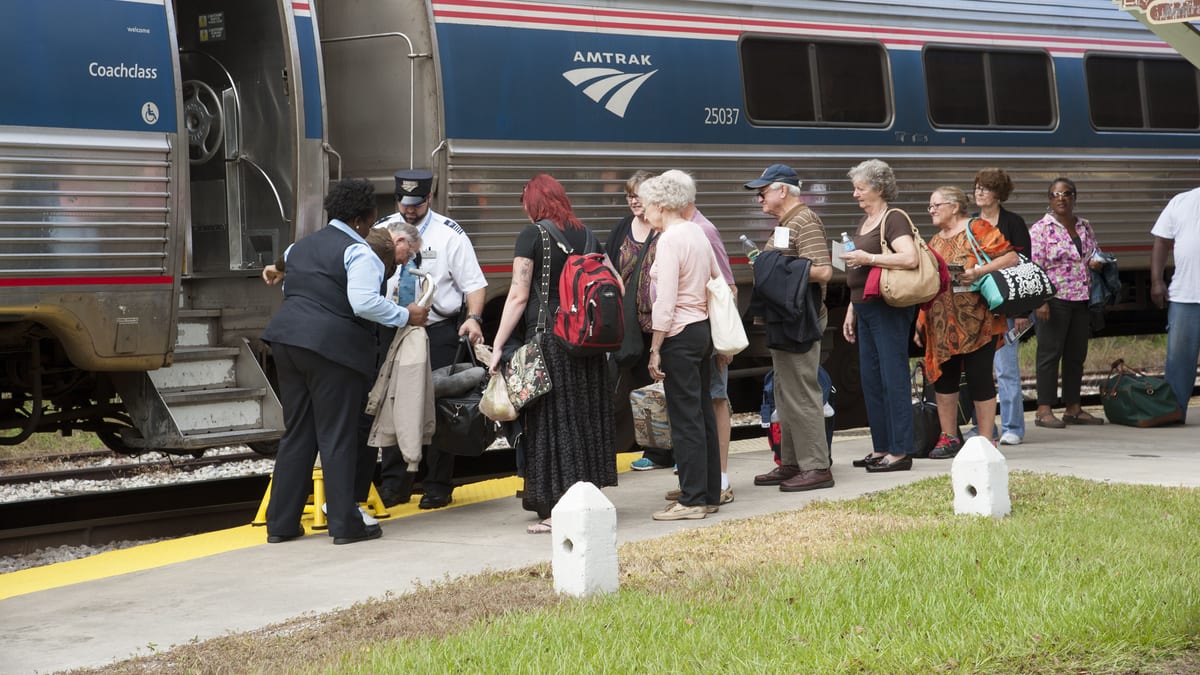
Image by TheTravel
Flight Cancellations Push Travelers Off the Tarmac
LaGuardia has faced another bruising stretch of disruptions in March 2026, including hundreds of cancellations and delays following a deadly collision between an Air Canada jet and an airport firefighting vehicle on the runway. Flight-tracking data cited in recent coverage shows that at one point at least 300 inbound and outbound flights were canceled in a single day, with a similar number delayed, compounding an already fragile operating environment.
Published reports note that the incident added pressure to an air travel system already strained by staffing challenges and congestion at New York’s airports. Travelers have encountered longer security lines, temporarily suspended online wait-time dashboards and lingering schedule instability, factors that collectively make short-haul flights less attractive for time-sensitive trips.
For many New Yorkers, these issues are particularly acute on shuttle-style routes to cities such as Washington and Boston, where air and rail compete directly. On these corridors, a few hours of cascading delays at LaGuardia can erase any scheduled time savings of flying over rail and undermine confidence in booking future flights.
The result is a growing readiness among travelers to consider alternatives that offer a higher degree of reliability, even if published schedules look similar on paper. Amtrak is emerging as one of the main beneficiaries of that shift.
Amtrak Ridership Surges on the Northeast Corridor
Publicly available data shows that Amtrak has been on a sustained growth trajectory that predates the most recent airport disruptions but is now intersecting with them. The company reported an all-time record of 32.8 million riders in fiscal year 2024, followed by further growth to roughly 34.5 million passengers in fiscal year 2025, as summarized in recent industry and company reports.
The Northeast Corridor, which links Washington, Philadelphia, New York and Boston, has been central to this expansion. A 2025 annual report from the Northeast Corridor Commission indicates that overall corridor ridership has now surpassed pre-pandemic levels, with weekday volumes exceeding fiscal year 2019 by several percentage points and weekend ridership up by more than a quarter. Additional Acela, Northeast Regional, Keystone and Empire Service frequencies introduced in 2024 expanded capacity into New York’s Penn Station, making it easier for travelers to find seats on peak trains.
New York Penn Station remains Amtrak’s busiest hub, handling more than 4 million Amtrak passenger boardings and alightings in fiscal year 2025 according to recent federal and company data. That volume highlights New York’s central position in the national rail network and its outsized role in driving Amtrak’s overall ridership gains.
The latest figures build on longer-term market shifts in the Washington to New York corridor, where Amtrak’s Acela and Northeast Regional services had already captured a dominant share of combined air and rail trips even before the current wave of disruptions at LaGuardia. In that context, every additional bout of airport turmoil strengthens rail’s competitive position.
Reliability, City-Center Access and Travel Time Trade-Offs
For New Yorkers recalibrating their travel habits, the appeal of rail often begins with reliability. While Northeast Corridor trains are not immune to disruption, their performance has been bolstered by targeted infrastructure investments, including billions of dollars directed toward bridges, tunnels and track upgrades in recent years. Commission and company reports emphasize that these projects are intended to reduce bottlenecks and improve on-time performance on the most heavily used segments approaching New York.
Travel time comparisons also favor rail in many cases, especially when door-to-door journeys are considered. A typical Northeast Regional trip between New York and Washington takes roughly three hours, and the Acela high-speed service can be faster. Once security screening, boarding, taxiing and potential delays at LaGuardia are factored in, the perceived advantage of a sub-one-hour flight narrows considerably, particularly for business travelers moving between downtowns.
City-center access is another important factor. Amtrak trains arrive directly into New York Penn Station in Midtown Manhattan, within walking distance or a short subway ride from many offices and attractions. By contrast, air passengers must factor in travel to and from LaGuardia, which often involves unpredictable traffic conditions and additional time buffers at both ends of a trip.
Cost dynamics are also shifting. Analysts note that dynamic airline pricing can quickly push last-minute shuttle fares to premium levels, whereas rail often retains a broader range of advance-purchase and off-peak options. As more travelers compare total cost and reliability, rail becomes a more compelling default choice rather than a backup plan.
Infrastructure Investment and Capacity Limits Shape Growth
Amtrak’s ability to absorb a surge of New Yorkers switching from air to rail depends heavily on infrastructure and fleet capacity. Company releases indicate that Amtrak invested more than 4 billion dollars in major projects during fiscal year 2024, with additional record capital spending in 2025. Key initiatives include the long-discussed Hudson Tunnel project between New Jersey and Manhattan, bridge replacements in Connecticut and station modernization programs intended to handle more passengers efficiently.
The Northeast Corridor Commission’s latest annual report notes that total investment on the corridor recently reached its highest level on record. Yet the same report underscores that capacity constraints remain, especially on core segments approaching New York Penn Station, where track availability and aging tunnels limit how many additional trains can be slotted into the timetable during peak periods.
New rolling stock is expected to play a role in accommodating increased demand. Next-generation Acela trainsets and new intercity train fleets for corridor services are being phased into operation, promising more seats, improved reliability and better onboard amenities. Industry analysis suggests that as these trains enter service at scale, Amtrak will gain greater flexibility to lengthen consists on popular departures and potentially add frequencies where infrastructure allows.
For now, observers note that trains on key New York routes are increasingly busy, particularly on Fridays, Sundays and holiday peaks. That pattern suggests that while Amtrak is benefiting from travelers frustrated with air travel, it must continue to expand capacity to sustain its popularity without eroding the comfort and convenience that initially drew riders away from the airport.
New Yorkers Reevaluate Their Default Mode of Travel
The convergence of record rail ridership and recurring air travel disruptions is prompting many New Yorkers to rethink long-standing habits. For some, rail is becoming the first choice for trips along the Northeast Corridor, with flights out of LaGuardia reserved for longer-haul journeys where rail is not a practical alternative.
Travel and transportation analysts point to several overlapping trends reinforcing this pivot, including heightened awareness of the climate impact of short-haul flights, growing comfort with working remotely from trains and a desire to avoid the stress associated with unpredictable airport operations. Published transportation statistics show that intercity rail still represents a small fraction of total passenger miles compared with aviation, but growth on the Northeast Corridor has outpaced that of many other modes in the region.
As New Yorkers adjust to these new realities, Amtrak’s expanding network and upgraded services position it to capture a larger share of regional travel demand. If disruptions at LaGuardia persist or recur, that momentum is likely to continue, reshaping how millions of residents move between major East Coast cities in the years ahead.