

More news on this day
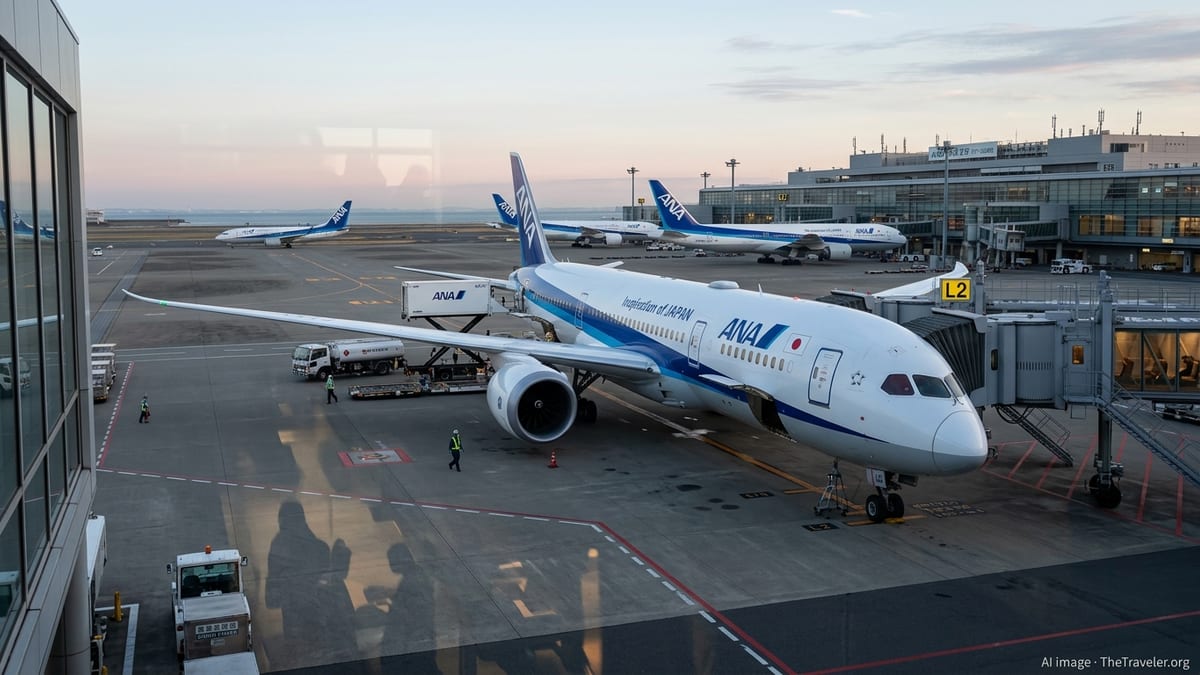
Japan’s All Nippon Airways is tightening its focus on the Boeing 787-9 for long-haul flying, using the twinjet to drive post-pandemic growth, launch new intercontinental routes and gradually reshape its widebody fleet through 2026 and beyond.
Get the latest news straight to your inbox!
Network Expansion Anchored by 787-9 Aircraft
Publicly available schedules and planning documents indicate that ANA is increasingly assigning Boeing 787-9 aircraft to new and returning long-haul routes as demand recovers. The type is emerging as the backbone of the carrier’s growth on services linking Tokyo with Europe, South Asia and Oceania, complementing a smaller number of Boeing 777-300ER flights on trunk markets.
From late 2025 and into 2026, industry coverage shows ANA adding or restoring intercontinental routes from Tokyo to cities such as Milan, Stockholm, Istanbul, Brussels, Perth and Mumbai, with the 787-9 designated as the primary aircraft. These routes, often launched at three weekly frequencies before being ramped up, reflect a strategy of matching capacity closely to demand while still offering the range and cargo capability of a widebody jet.
The focus on the 787-9 also extends to schedule adjustments on existing sectors. Analysis of recent timetable filings highlights a broader trend in which the aircraft is deployed on long-haul routes that do not yet justify the larger 777-300ER, allowing ANA to reopen markets that would be harder to sustain with its highest-capacity fleet.
At the same time, the airline is rebalancing aircraft types on leisure-heavy routes. Coverage of ANA’s plans for Japan–Hawaii services in 2025 indicates that Airbus A380s will increasingly dominate the Tokyo–Honolulu market, with some 787-9 flying withdrawn. This frees 787-9 capacity for redeployment to longer or more premium-focused sectors.
Cabin Upgrades Signal Premium Long-Haul Focus
ANA’s 787-9 strategy is not limited to network choices. The airline is also preparing a new generation of onboard products for the type, aiming to make it its flagship for premium long-haul travel. Corporate materials and specialist aviation reports outline plans to introduce an all-new business class seat, marketed as “THE Room FX,” on selected 787-9 aircraft beginning in 2026.
The new seat builds on the reputation of ANA’s existing “The Room” business class product, which is currently installed mainly on Boeing 777-300ERs and has drawn attention for its high privacy and spacious layout. Industry analysis suggests that the 787-9 installation will adapt those design principles to the slightly narrower fuselage of the Dreamliner, with a focus on direct aisle access for every passenger and improved storage and work space.
ANA’s latest medium-term plan indicates that newly delivered 787-9 aircraft, expected to arrive from August 2026 with updated cabins, will be directed toward long-haul international flying. This points to a phased cabin renewal in which older 787-9s and future deliveries gradually align around a consistent premium product, positioning the type as a cornerstone of the airline’s image on key overseas routes.
Economy and premium economy cabins are expected to benefit as well, as ANA continues to standardize features such as larger seatback screens, enhanced connectivity and improved lighting. These upgrades are designed to strengthen the airline’s appeal in competitive markets where rival carriers are also refreshing long-haul cabins.
Fleet Modernization and Type Consolidation
The emphasis on the 787-9 aligns with a broader fleet modernization program across ANA Holdings. Industry coverage of the 2025 Paris Air Show reported a significant follow-on order for additional Boeing 787-9s, alongside Boeing 737-8 aircraft for domestic and regional flying. Reports indicate that the new Dreamliners will support capacity growth and replace older widebodies over the next decade.
Separate fleet analyses describe a gradual phase-out of older Boeing 767-300ER passenger aircraft between the second half of the 2020s and early 2030s, with some airframes converted to freighters. The 787-9 and larger 787-10 are expected to take over many of the 767’s former missions, including medium- and long-haul sectors where fuel efficiency and range are critical.
ANA is also managing constraints affecting its 787 fleet. Aviation industry reporting notes that a number of ANA’s 787-8s and 787-9s have been temporarily inactive due to global supply chain challenges and maintenance capacity limits. Even so, the airline’s strategic planning continues to center future growth on the type, suggesting confidence in long-term reliability and cost advantages once near-term bottlenecks ease.
As new 787-9s join the fleet and older aircraft are retrofitted, ANA is expected to reduce the number of distinct widebody cabin configurations in service. A more unified 787-9 subfleet can simplify crew training, maintenance and scheduling, while giving planners a flexible tool for matching capacity to diverse long-haul markets.
Reshaping Brand Strategy After AirJapan
The refocusing on mainline ANA 787-9 operations comes as the group prepares to wind down its medium-haul brand AirJapan in early 2026. Public disclosures and subsequent coverage explain that the AirJapan concept, which launched in 2024 using Boeing 787s in a simplified layout, will cease operations as part of a restructuring aimed at streamlining the group’s international offering.
The decision effectively returns more 787 capacity to ANA’s core network, reinforcing the mainline brand on routes previously operated with a lower-cost product. Reports suggest that aircraft and crews associated with AirJapan will be reintegrated, allowing ANA to redeploy 787s on markets where demand has strengthened faster than expected, particularly in Southeast Asia and Oceania.
By drawing down a separate long-haul leisure brand and concentrating operations under the ANA banner, the group is also simplifying its positioning to international travelers. With the 787-9 as the main tool for expansion, the carrier can present a more consistent onboard experience and service standard across new and existing long-haul routes.
This consolidation is occurring against a backdrop of robust inbound travel to Japan and intensifying competition from both full-service and low-cost carriers in Asia. The flexibility of the 787-9, with its range, mid-size capacity and relatively low operating costs, provides ANA with a key asset as it recalibrates its network to these market conditions.
Competitive Positioning in a Changing Long-Haul Market
ANA’s shift toward the 787-9 reflects a wider industry pattern in which airlines are moving away from very large widebodies toward more fuel-efficient twinjets that can serve a broader mix of routes. In ANA’s case, this translates into opening thinner long-haul markets from Tokyo while preserving the ability to add frequencies as they mature.
The approach is particularly important in Europe-bound flying, where airspace restrictions over Russia have complicated route planning and increased operating costs. Analytical coverage notes that such constraints have encouraged carriers to favor aircraft types that combine strong range performance with lower fuel burn, characteristics that align with the 787-9’s design.
ANA’s reliance on the 787-9 also supports its sustainability targets. The type’s lower emissions profile per seat, compared with older widebodies, helps the airline demonstrate progress on environmental commitments at a time when regulators and corporate travel buyers are placing greater scrutiny on long-haul carbon footprints.
As new 787-9s arrive with upgraded cabins and older units transition into unified configurations, ANA appears to be betting that a consistent, fuel-efficient long-haul fleet will underpin its global ambitions. The strategy positions the airline to grow selectively into new markets while reinforcing its presence on established intercontinental corridors from Tokyo.