

More news on this day
All Nippon Airways is marking the 40th anniversary of its first scheduled international flight this month, using the milestone to showcase how a once domestically focused carrier has evolved into a globally connected network poised for another wave of long-haul expansion.
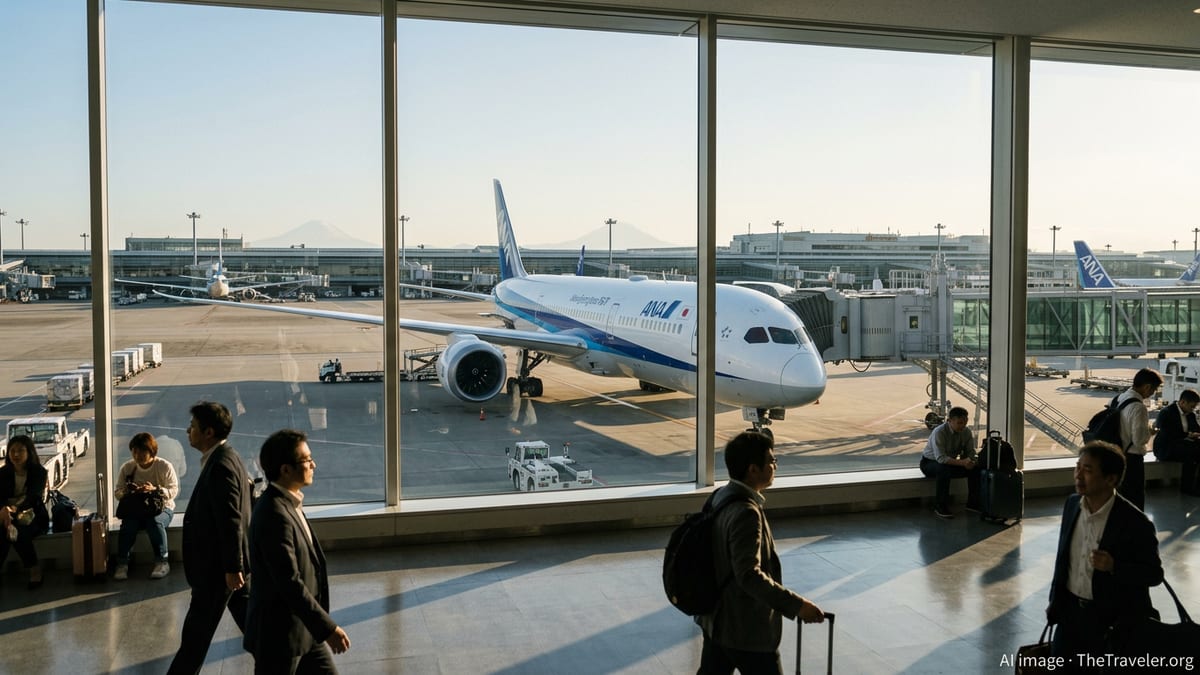
From Narita–Guam to a Worldwide Network
ANA launched its first scheduled international service on March 3, 1986, with a Narita–Guam flight that symbolized the carrier’s long-awaited step beyond Japan’s borders. Until then, the airline had built its business primarily on dense domestic routes linking Tokyo, Osaka and regional cities, competing intensely with rival Japan Airlines on frequency and reliability.
That initial Guam service opened the door to a steady build-out across Asia and the Pacific. In the decades that followed, ANA added routes to key markets including China, South Korea and Southeast Asia, gradually weaving a regional network built on Japan’s role as a hub for business and leisure travel.
The 1990s and 2000s brought a more ambitious push into Europe and North America, supported by long-haul widebodies and alliance partnerships. This shift transformed ANA from a carrier known mainly inside Japan into a Star Alliance member with connectivity that spans Asia, Europe, Oceania and the Americas.
Today the airline’s international network forms a second pillar alongside its still-dominant domestic operation. The anniversary of that first Narita–Guam flight underscores how central international flying has become to ANA’s strategy, even as it continues to lean on its dense home-market schedule for feed.
Domestic Strength as a Springboard to Global Reach
ANA’s international growth has been built on a foundation of domestic scale. The airline remains one of Japan’s largest carriers by passenger numbers, operating an extensive web of flights from Tokyo Haneda and regional airports to cities nationwide. This reach allows ANA to funnel domestic travelers onto long-haul services while also offering foreign visitors convenient onward connections within Japan.
The group’s latest network plans show that domestic connectivity is not being sacrificed to fund overseas expansion. ANA has outlined schedules that maintain close to full domestic capacity while international frequencies climb above pre-pandemic levels, signaling confidence in both segments of the market.
At the same time, ANA has used separate brands to target different customer segments without diluting its core full-service identity. Low-cost affiliate Peach has been expanding on short- and medium-haul routes in Asia, capturing price-sensitive leisure demand and feeding traffic into ANA’s hubs.
Hybrid carrier AirJapan, launched for medium-haul international markets in Asia, is now being folded back more tightly into the mainline network. The group has confirmed that AirJapan-branded scheduled services will end by late March 2026, with aircraft and crews redeployed to operate international flights under the ANA name. The move highlights a strategy of consolidating global flying around a single flagship brand while preserving operational flexibility within the group.
New Long-Haul Routes Signal a Confident Next Chapter
The anniversary coincides with one of the most aggressive phases of network expansion in ANA’s history. The airline’s fiscal 2026 schedule calls for international flight frequencies to exceed the previous year, supported by additional widebody aircraft and upgraded cabin products on key long-haul routes.
ANA is adding new nonstops from Tokyo to several European capitals, including Milan and Brussels, as well as planned services to cities such as Stockholm and Istanbul. These routes are designed to tap resurgent demand for Japan travel in Europe and to strengthen the carrier’s position in connecting flows between Asia and the continent.
Beyond Europe, ANA is charting growth in South Asia and Oceania. New flights to Mumbai will deepen the airline’s presence in India, while planned services to Perth will add capacity into Australia’s west coast market. Additional frequencies to Hong Kong and other Asian cities will tighten the network and support connection banks at Tokyo’s airports.
The carrier is pairing the network build-out with product investments intended to defend its premium positioning. New long-haul cabins are being introduced on Boeing 787-9 aircraft from fiscal 2026, offering refreshed business and premium economy seating aimed at business travelers and high-spend leisure passengers choosing Japan as a gateway.
Customer Experience and Loyalty Evolve With the Network
ANA’s shift from a largely domestic airline to a global operator has required an overhaul of its customer and loyalty platforms. The airline has been overhauling its reservation and fare systems for both domestic and international flights, including new award structures and an expanded ability for travelers to book one-way itineraries and mixed-brand journeys across the group.
For frequent flyers, ANA Mileage Club is being recalibrated around the new network reality. The airline has adjusted mileage requirements for some international award tickets and launched periodic award sales on specific long-haul routes, encouraging members to sample newer destinations as they are added to the map.
Digital touchpoints are also being refreshed to keep pace with a more complex route map. ANA has revamped its international website and online booking interfaces to handle larger volumes of cross-border traffic, while mobile tools are being updated to simplify itinerary changes, upgrades and ancillary purchases for global travelers.
Even as these changes roll out, ANA is emphasizing continuity in service culture as a differentiator. The airline points to its record of top-tier service ratings and safety performance as it courts international passengers who may be flying with ANA for the first time on new European, Indian or Australian routes.
Leveraging Global Events and Partnerships
Looking ahead, ANA is positioning its expanded network to benefit from a busy global calendar in the mid-2020s. Japan’s tourism industry is banking on large-scale events such as the Milano Cortina Winter Olympics and the 2026 FIFA World Cup in North America to stimulate long-haul travel flows that pass through Tokyo or originate in Japan.
The airline’s new European and North American services are intended to plug directly into these demand spikes, offering additional capacity at times when sports fans and business delegations are expected to be on the move. Enhanced schedules to hubs in Europe, India and Australia will also give Japanese travelers more options for multi-stop itineraries tied to major events.
Partnerships remain another lever in extending ANA’s reach beyond its own metal. Code-share agreements and joint ventures with foreign airlines provide onward connections deeper into Europe, the Americas and other parts of Asia, allowing the Japanese carrier to market a broader network than its fleet alone could support.
As ANA celebrates 40 years since its first scheduled international flight, the airline is betting that a mix of domestic strength, disciplined brand strategy and targeted long-haul growth will secure its place as one of Asia’s key global connectors in the decade ahead.