

More news on this day
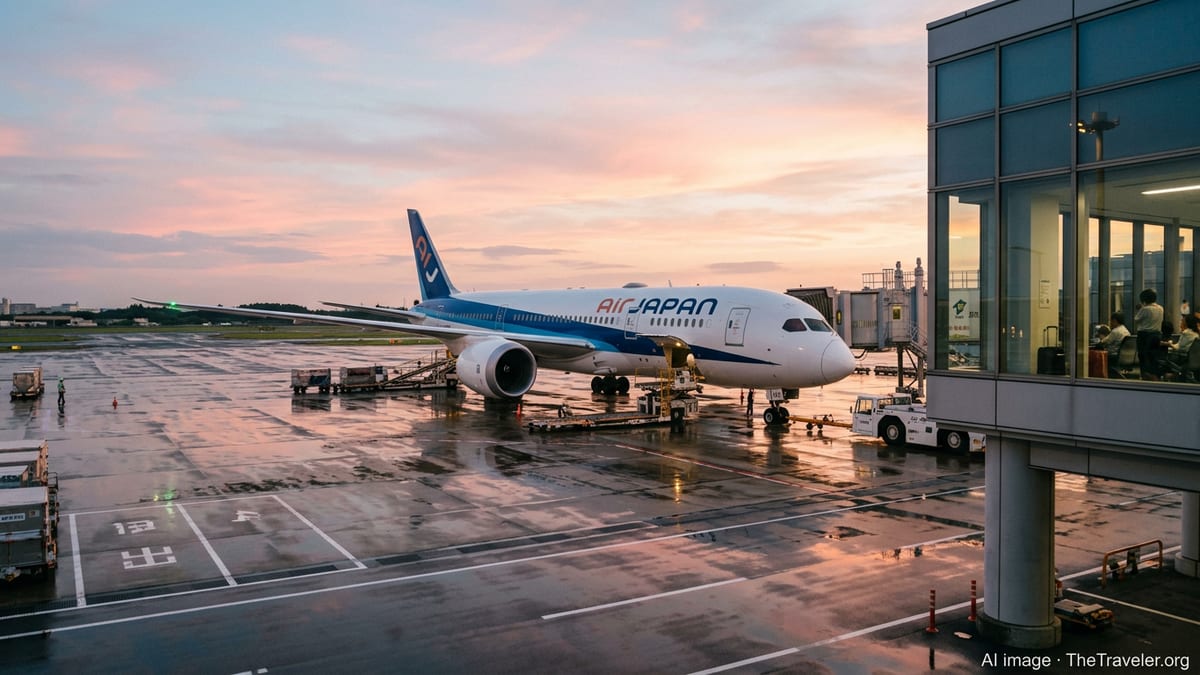
ANA Holdings will phase out its hybrid budget brand AirJapan by the end of March 2026, pulling the plug on all international flights under the label barely two years after launch and consolidating operations back into its core ANA and Peach networks.
Get the latest news straight to your inbox!
What ANA Has Announced About AirJapan’s Final Flights
ANA Holdings has confirmed that all AirJapan branded operations will cease in late March 2026, ending a brief run on medium haul international routes out of Tokyo Narita. According to company disclosures, the AirJapan name will disappear from passenger services as part of a wider restructuring of ANA Group’s portfolio of brands.
The final day of scheduled AirJapan flights is set for March 28, 2026, with the last return sectors from Southeast Asia due to land back in Japan in the early hours of March 29. Services between Narita and Bangkok, as well as Narita and Singapore, are expected to mark the brand’s final rotations, closing the chapter on an experiment in Japan’s long haul low cost segment.
Importantly for travelers, the operating company behind AirJapan will not vanish. The unit, also called Air Japan, will continue to fly widebody Boeing 787 aircraft on behalf of ANA, but those flights will appear and be sold solely under the ANA brand. From the next fiscal year, ANA Group says it will focus on two main passenger brands: full service ANA and low cost carrier Peach Aviation.
The move comes as ANA fine tunes its international capacity ahead of the 2026 summer schedule, shifting aircraft and crews to higher yielding routes while trimming exposure in markets where competition from other Asian low cost carriers has intensified.
Why ANA Is Retiring the AirJapan Brand So Quickly
AirJapan only launched commercial operations in February 2024, positioned between full service ANA and ultra low cost Peach. Operating Boeing 787s in a single class, lower frills configuration from Narita to cities across Southeast Asia, the brand attempted to capture value conscious leisure travelers without fully abandoning ANA’s service standards.
However, ANA’s more recent strategy updates and investor presentations indicate that the economics of maintaining three distinct passenger brands became increasingly difficult. Competitive pressure on fares in Asian leisure markets, rising fuel and staffing costs, and the need to deploy long haul capable aircraft more flexibly all contributed to the decision to wind down the brand.
Industry analysts note that ANA is not alone in reassessing hybrid and long haul low cost experiments as post pandemic demand patterns stabilize. While inbound tourism to Japan has rebounded strongly, yield-sensitive routes from Japan into Southeast Asia remain crowded with aggressive low fare competition, squeezing margins for a mid tier product like AirJapan.
By concentrating widebody operations under the ANA name and leaving pure low cost flying to Peach, the group aims to simplify marketing, scheduling, and fleet utilization. In practical terms, Boeing 787s previously dedicated to AirJapan will be redeployed across ANA’s international network, including on routes where premium and connecting traffic can support higher average fares.
What Happens If You Already Hold an AirJapan Ticket
Passengers who have booked AirJapan flights for travel on or before late March 2026 should expect to fly as planned, subject to the usual schedule changes that accompany a season transition. The final services will operate through March 28, with arrivals into Japan shortly after midnight on March 29, and tickets for those dates remain valid.
For travel after the end of March 2026, ANA has said that services previously marketed as AirJapan will either be discontinued or absorbed into the ANA network. In many cases, affected passengers are likely to be reprotected onto ANA operated flights on similar routes and dates, although specific handling will depend on the itinerary and fare type.
Customers booked via travel agencies or online travel platforms should monitor their reservations closely in the coming months. As the shutdown date approaches and summer schedules are finalized, updated flight numbers, timings, or routings may appear, even if the operating aircraft and crew remain largely unchanged.
ANA has also encouraged travelers to ensure their contact details are correct in reservations so that any rebooking options or notifications can be communicated promptly. While the group has not reported widespread cancellations far in advance, incremental adjustments are expected as it reshapes its international timetable for the 2026 financial year.
Impacts on Routes, Fares and Japan’s Budget Travel Landscape
With AirJapan’s exit, several medium haul routes from Tokyo Narita that were specifically tailored to its hybrid model face uncertainty. Connections to Bangkok, Singapore and select other Southeast Asian destinations may see reduced low cost capacity from Japan, at least in the short term, as ANA weighs whether to continue those markets under its mainline brand or focus on alternative gateways.
Travelers could notice a shift in fare patterns. Where AirJapan previously undercut full service competitors on price, ANA branded replacements might come with higher average fares but more generous inclusions such as checked baggage, mileage accrual and full service in flight offerings. The degree of change will vary by route and season, and bargain hunters may need to be more flexible with dates or departure airports.
Peach Aviation, ANA’s dedicated low cost subsidiary, is expected to absorb some of the demand that AirJapan leaves behind, particularly on shorter haul intra Asia sectors. Peach has been steadily expanding both domestic and regional international services, and ANA’s statements suggest that it will continue to be the group’s primary vehicle for price sensitive leisure travelers.
At a broader level, the withdrawal of AirJapan underscores how fluid Japan’s low cost and hybrid airline landscape remains. While carriers such as Peach, Zipair Tokyo and Jetstar Japan continue to add capacity, several planned or recently launched brands across the region are scaling back or reconsidering their strategies as competition intensifies on popular routes linking Japan with Korea, Taiwan and Southeast Asia.
How to Plan Japan and Asia Trips Around the March 2026 Changeover
For travelers planning trips in late March and early April 2026, the timing of AirJapan’s shutdown coincides with Japan’s busy spring travel season, including cherry blossom holidays and school breaks. That makes it especially important to secure flights early, then keep a close eye on any email or app notifications from ANA about schedule or branding changes.
If you find your AirJapan flight number replaced by an ANA code or a different departure time after March 28, it typically reflects a reconfigured timetable rather than a total cancellation. Review the new itinerary carefully to confirm connections, overnight stays and airport changes, particularly if you are pairing a Japan stopover with a wider Asia itinerary.
Travelers focused on keeping costs down may want to compare options across Peach and other low cost carriers operating from alternative Japanese airports such as Osaka Kansai or Tokyo Narita and Haneda. As AirJapan leaves the market, competing airlines may adjust capacity and fares, opening up new combinations for connecting itineraries throughout the region.
For those flying on frequent flyer miles, ANA’s decision to fold AirJapan capacity into its mainline network could actually expand redemption opportunities on some routes once the transition is complete. Award availability patterns are likely to evolve through the 2025 to 2026 period, so flexibility with dates and routings will remain valuable for securing seats at lower mileage levels.