

More news on this day
All Nippon Airways is launching a sweeping, multi-year modernization of its aircraft maintenance ecosystem, betting that data-rich digital platforms, predictive analytics and tighter global partnerships will redefine how Japan’s largest airline maintains safety, reliability and efficiency across its fleet.
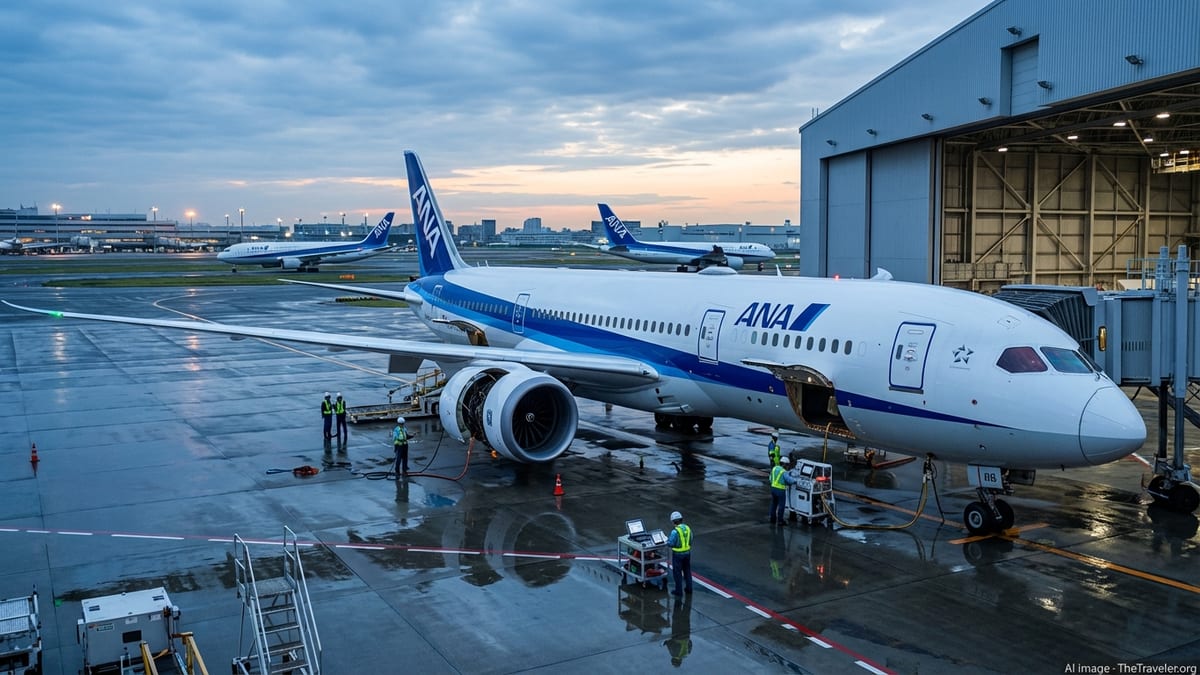
A Strategic Pivot for Japan’s Largest Airline
Announced in early February 2026, ANA’s new maintenance modernization program is framed as a cornerstone of the carrier’s wider digital transformation. The initiative aims to replace a patchwork of legacy tools with an integrated, data-driven architecture that can support faster decision-making, tighter planning and more proactive maintenance across aircraft, engines and components.
Executives at the Tokyo-based airline have described the effort as a deliberate response to increasingly complex fleets, higher utilization rates and mounting pressure on airlines to reduce disruptions while controlling costs. Instead of incremental upgrades, ANA is opting for a structural reset of how maintenance information flows through the organization, from the hangar floor to the operations center and executive suite.
The overhaul is expected to run over several years, with core platforms targeted to go live in the latter half of this decade. By that time the airline expects to have embedded advanced analytics and predictive tools deeply into day-to-day maintenance operations, turning what has traditionally been a reactive function into a strategic differentiator.
For Japan’s leading carrier, which has cultivated a reputation for punctuality and safety, the project is not only about internal efficiency. It is also about positioning ANA as a benchmark for how major airlines in Asia can modernize maintenance in an era defined by data and automation.
From Fragmented Legacy Systems to a Unified Digital Backbone
At the heart of ANA’s plan is a transition from more than 10 separate maintenance-related systems to a single, integrated platform. The airline’s maintenance organization currently relies on specialized applications built up over decades, each serving a particular function such as component tracking, work orders, engineering records or materials management.
While these tools have supported safe operations, their lack of integration has limited real-time visibility across the fleet. Engineers, planners and managers often need to reconcile information manually or move data between systems, slowing responses to emerging technical issues and complicating long-term planning.
The modernization program is designed to centralize that data and create a common source of truth. With a unified maintenance backbone, ANA expects technicians on the line, planners in the control center and executives overseeing capacity to draw from the same live information, improving coordination and enabling faster, more confident decisions.
Crucially, this new digital core is expected to standardize maintenance processes around international best practices. That standardization not only supports regulatory compliance but also makes it easier to embed analytics, benchmarking and automation across the airline’s maintenance network, from major base checks to overnight line work.
Deploying AMOS and MINT TMS as Core Platforms
To power the overhaul, ANA has selected two flagship systems: AMOS from Swiss AviationSoftware and MINT TMS from Germany-based MINT Software Systems. Together, the two platforms will provide the backbone for both technical maintenance management and the training and qualification ecosystem that underpins safe operations.
AMOS will serve as ANA’s central system for managing aircraft, engine and component maintenance. Widely used by global carriers and maintenance organizations, the platform supports everything from planning heavy checks to tracking individual part histories. By deploying AMOS groupwide, ANA plans to consolidate maintenance records and workflows that are currently spread across multiple legacy applications.
Complementing AMOS, MINT TMS will manage training programs, qualifications and resource scheduling for the airline’s Maintenance and Engineering division. The system is expected to automate labor-intensive processes that are often still handled via spreadsheets or bespoke tools, including recurrent training, license tracking and skill-based assignment of technicians.
The combined suite is scheduled to enter service around fiscal year 2027, following an intensive design and implementation phase. Between now and then, ANA’s maintenance, engineering and digital teams are working closely with the two providers to tailor configurations, migrate data and align business rules to the new standardized processes.
Predictive Maintenance: Deeper Ties with Boeing and Collins
While AMOS and MINT provide the backbone, ANA is also sharpening its predictive maintenance capabilities through renewed partnerships with major aerospace suppliers. At the Singapore Airshow in February 2026, the airline announced an expanded collaboration with Boeing focused on Airplane Health Management, the manufacturer’s digital service for monitoring aircraft condition in real time.
Under the new agreement, ANA is extending Boeing’s Airplane Health Management across a wider portion of its fleet, including its 787 Dreamliners and additional 777 and 737 aircraft. The service ingests vast volumes of in-flight and post-flight data, flags anomalies and recommends actions before minor technical trends can escalate into in-service disruptions.
Ana is also deepening its relationship with Collins Aerospace through renewed FlightSense and maintenance, repair and overhaul agreements that emphasize reliability-based support. These arrangements are built around predictive tools that analyze the performance of key systems such as electrical power, engine controls and environmental systems, giving ANA early warning when components begin to drift from normal parameters.
By combining these external predictive services with the centralized data structure provided by AMOS, ANA aims to build a layered defense against unplanned events. Issues identified by Boeing’s or Collins’ analytics will be visible inside the airline’s core maintenance system, allowing planners to slot corrective work into upcoming ground time rather than pulling aircraft unexpectedly from service.
Data, Analytics and the Future of the ANA Hangar
Inside ANA’s maintenance hangars, the transformation is expected to be felt as a gradual but profound shift in how technicians and engineers work. Instead of reacting to faults reported by crew or discovered during scheduled checks, teams will increasingly be guided by dashboards and alerts that highlight specific aircraft, systems or components at higher risk of failure.
The new platforms will create detailed digital records of every maintenance action, part movement and inspection result. Those records in turn will feed analytics engines capable of spotting recurring patterns that human planners might miss, such as clusters of similar defects under certain operating conditions or component batches with higher-than-expected removal rates.
Over time, ANA expects this data-rich environment to support more advanced applications, including digital twins for critical systems and optimized maintenance scheduling that balances safety margins, operational risk and cost. International research trends in prognostics and multivariate sensor analysis are reinforcing how such data can be used to estimate remaining useful life for components, a concept ANA is now positioned to explore at scale.
For technicians, the modernized environment will likely mean greater use of mobile devices on the hangar floor, with access to real-time task lists, illustrated work cards and technical histories drawn directly from AMOS. That shift promises fewer paper-based processes, faster sign-offs and better alignment between the physical work and the digital record.
Training, Workforce Skills and the Role of MINT TMS
Modernizing technology alone is not enough to transform maintenance; ANA’s decision to deploy MINT TMS underscores the importance of matching digital tools with a highly trained workforce. The system will act as a central hub for all training activities and qualifications within the Maintenance and Engineering organization, linked directly to operational requirements.
In practice, that means every technician’s licenses, type ratings and specialized skills will be tracked in a single environment. When new aircraft types are introduced or procedures updated, planners can immediately see which employees need training and how to schedule sessions without disrupting the operation. Automated reminders and workflows will help ensure regulatory requirements are consistently met.
The adoption of MINT TMS also reflects a broader industry trend toward integrating human resources, safety and operations data. With maintenance training data aligned to technical records, ANA will be better able to demonstrate that the right skills were available and applied for each task, an increasingly important dimension of safety oversight and audit readiness.
For employees, the system opens the door to more transparent career development paths. With a clear, data-backed view of required skills and upcoming needs, maintenance professionals can identify training opportunities and qualifications that support advancement, while the airline can plan future staffing and skills development with greater precision.
Competitive Positioning in Asia’s MRO and Airline Landscape
ANA’s overhaul comes as airlines across Asia are reassessing how they manage maintenance amid rising traffic, supply chain volatility and intensifying competition. Carriers that can keep aircraft available and reliable while minimizing heavy maintenance spending are better positioned to expand networks and weather external shocks.
By investing early in a comprehensive digital backbone and predictive partnerships, ANA is signaling that it intends to stay ahead of that curve. The airline already plays a central role in Japan’s maintenance ecosystem, including its involvement in MRO Japan, and its internal transformation is likely to influence expectations among partners, suppliers and even regulators.
The move also has implications beyond Japan. As international peers evaluate their own legacy systems and fragmented workflows, ANA’s project offers a case study in how to stitch together commercial off-the-shelf platforms, manufacturer services and in-house expertise into a cohesive maintenance strategy. Success would reinforce the perception of Japanese carriers as technology-forward operators with exceptionally disciplined maintenance cultures.
At the same time, the path will not be without challenges. Large-scale system migrations can disrupt longstanding routines, and realizing the full promise of predictive analytics often requires cultural shifts as well as technical ones. ANA’s ability to manage change across its workforce and align stakeholders around new processes will be critical to securing the anticipated gains.
What ANA’s Overhaul Signals for the Future of Aviation Maintenance
For the broader aviation sector, ANA’s multi-year initiative is another sign that maintenance is moving from the periphery of airline strategy to its core. Maintenance has always been a major cost center and a critical safety function, but the rise of connected aircraft, big data and artificial intelligence is turning it into a domain where competitive advantage can be built.
As carriers like ANA centralize their data and embrace predictive tools, the industry is likely to see fewer surprise groundings, more efficient scheduling of checks and a closer alignment between maintenance planning and commercial priorities. Airlines will be able to make more informed decisions about when to invest in component overhauls, how to extend the life of assets safely and where to position aircraft to absorb operational shocks.
ANA’s approach also highlights the growing importance of collaboration between airlines, manufacturers and specialist software providers. Rather than attempting to build complex analytics platforms alone, carriers are integrating external services into their own systems and processes, creating a layered ecosystem that can be adapted as technology evolves.
If the project unfolds as envisioned, by the late 2020s passengers flying on ANA may never notice the transformation directly, but they will experience its effects through more reliable schedules, fewer last-minute aircraft changes and a maintenance operation designed for a future in which data is as central to aviation as fuel and airspace.