

More news on this day
All Nippon Airways is sharpening its long-haul strategy around the Boeing 787-9, preparing to bring new Dreamliners into service from August 2026 in a move that is expected to lift international capacity from key markets such as the United States, South Korea and Taiwan while feeding Japan’s fast-recovering hospitality sector.
Get the latest news straight to your inbox!
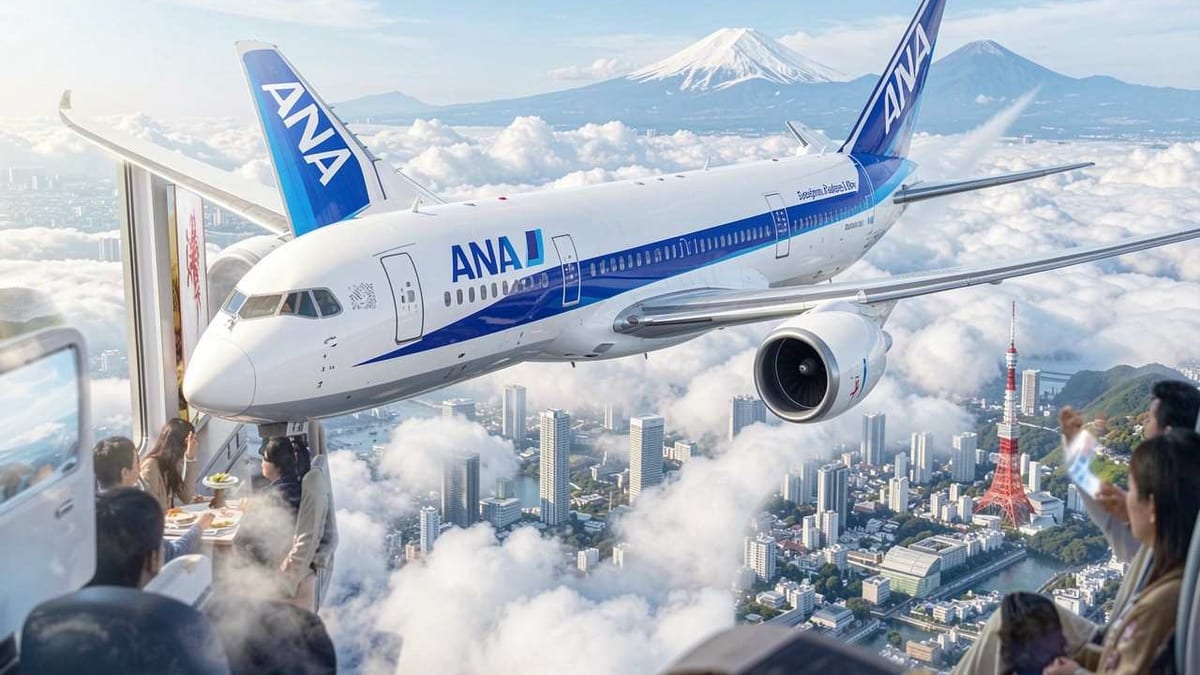
Image by Travel and Tour World – Tourism, Airline, Destination, MICE, Gobal Travel Market, Hotel news that you will find only over here.
New 787-9 Orders Anchor ANA’s Post-Pandemic Growth
Publicly available planning documents show that ANA Holdings has committed heavily to the Boeing 787-9 as the backbone of its future international network. In 2025 the group confirmed additional orders and options for the type, on top of an already sizable Dreamliner fleet, with deliveries scheduled to begin arriving in the 2026 fiscal year. The aircraft are earmarked primarily for international passenger services, particularly on routes linking Asia with North America.
According to company presentations and press material, ANA is targeting about mid-single‑digit growth in international available seat capacity around the middle of the decade, with the 787-9 central to that expansion. The model’s range and fuel efficiency allow the airline to add frequencies on mature routes while exploring new city pairs without returning to the larger, less efficient widebodies that dominated the pre-pandemic era.
Network forecasts released in Japan indicate that the airline is also using the 787-9 as a replacement for aging Boeing 777 aircraft on some long-haul routes. This shift is designed to cut operating costs and emissions per seat while improving the onboard product. In turn, this helps ANA compete more effectively for long-haul leisure and premium demand into Japan, especially from North America and nearby Asian markets.
Cabin Upgrades Aim at High-Value Leisure and Business Travelers
The new 787-9 deliveries are not only about fleet size; they also bring an updated onboard experience. ANA has detailed plans to introduce a refreshed long-haul cabin on these aircraft, including the “THE Room FX” business-class seat and completely new premium economy and economy class products. These cabins are scheduled to debut on international 787-9 services from August 2026, aligning with the broader network ramp-up.
Seat maker information and airline announcements describe a premium economy and economy cabin with revised ergonomics and additional legroom compared with older layouts, reflecting an effort to appeal to long-haul leisure travelers who are increasingly sensitive to comfort on flights of ten hours or more. For ANA, improving the experience in the back of the aircraft is crucial, as inbound tourism to Japan is heavily leisure-oriented even on intercontinental routes.
On the business side, the new 787-9s are positioned as a step up from earlier Dreamliner interiors, with higher privacy and more flexible seating for corporate travelers. That aligns with ANA’s strategy to capture premium demand on routes from major business centers in the United States and East Asia to Tokyo, while still dedicating most of the additional capacity to the robust inbound tourism market.
More Seats from the United States, South Korea and Taiwan
ANA’s published flight plans for the 2026 fiscal year suggest that the airline will concentrate much of its incremental 787-9 capacity on North American and regional Asian routes. The United States remains the largest long-haul market for Japan, and the airline has highlighted strong Asia–North America demand in recent order announcements. As Narita and Haneda airports both refine their long-haul portfolios, ANA is positioning the 787-9 to support added frequencies and potentially new city pairs linking Tokyo with US gateways.
In Northeast Asia, routes from South Korea and Taiwan to Tokyo and other Japanese cities are expected to benefit from capacity increases and schedule fine-tuning as new aircraft arrive and older jets are redeployed. Public timetable information and planning releases point to a focus on improving connectivity through Tokyo for short- and medium-haul flights that feed longer sectors on the 787-9, which could mean more options and better timed departures for travelers from Seoul and Taipei heading into Japan or onward to North America.
The airline’s decision to wind down separate branding such as AirJapan and consolidate more operations under the main ANA banner also brings additional 787 capacity into the core network. As those aircraft are integrated, ANA gains flexibility to shift Dreamliners onto routes where demand from neighboring Asian markets is strongest, including popular city pairs linking South Korea and Taiwan with major Japanese hubs.
Hospitality and Regional Economies Stand to Gain
Japan’s tourism and hospitality industries are watching these aviation shifts closely. Government statistics show that visitor numbers have rebounded strongly, with travelers from the United States, South Korea and Taiwan among the fastest-growing segments. Additional seats on ANA’s 787-9s are expected to support that recovery, particularly for regional destinations that rely on connections via Tokyo rather than nonstop international service.
More widebody capacity into Japan typically feeds higher hotel occupancy, restaurant spending and demand for tours and local experiences across the country. Regional cities accessible via domestic connections from Tokyo can benefit when long-haul schedules are expanded, because tour operators and online travel agencies gain more flexibility to package flights with accommodation and rail passes. ANA’s focus on a common long-haul platform in the 787-9 may make it easier to coordinate such offerings across multiple source markets.
Local tourism boards in prefectures popular with overseas visitors, such as Hokkaido, Okinawa and the Kansai region, are placing renewed emphasis on attracting longer stays and repeat visitors rather than just volume. Increased frequency and better connectivity from core markets like the United States, South Korea and Taiwan, facilitated by ANA’s Dreamliner expansion, can support that shift by giving travelers more choice on travel dates and easier access to secondary airports via Tokyo.
Competitive Pressures and Infrastructure Shape the Next Phase
ANA’s 787-9 strategy is unfolding against a backdrop of intense regional competition and constrained airport infrastructure. Rival carriers in East Asia and North America are also adding capacity and new products, while Tokyo’s two main airports continue to balance domestic and international demand. ANA’s planning materials highlight expected increases in Narita’s long-term slot capacity toward the end of the decade, but in the near term, much of the growth relies on careful scheduling and upgauging existing flights with more efficient aircraft.
The emphasis on the 787-9 reflects these realities. The aircraft’s lower fuel burn per seat and flexible range profile allow ANA to pursue incremental expansion rather than large, risky capacity bets. It also gives the airline scope to adjust to economic swings or changes in travel patterns, such as surges in leisure demand from particular countries or shifts in corporate travel budgets.
For travelers, the practical impact is likely to be a gradual increase in choice rather than a sudden wave of new routes. More frequencies on established transpacific and regional services, updated cabins on long-haul Dreamliners, and tighter integration of feeder flights from South Korea and Taiwan all point to a more seamless journey into Japan. For Japan’s hotels, restaurants and attractions, that measured ramp-up in seats could help sustain the tourism rebound while avoiding the sharp peaks and troughs that strained the sector before the pandemic.