

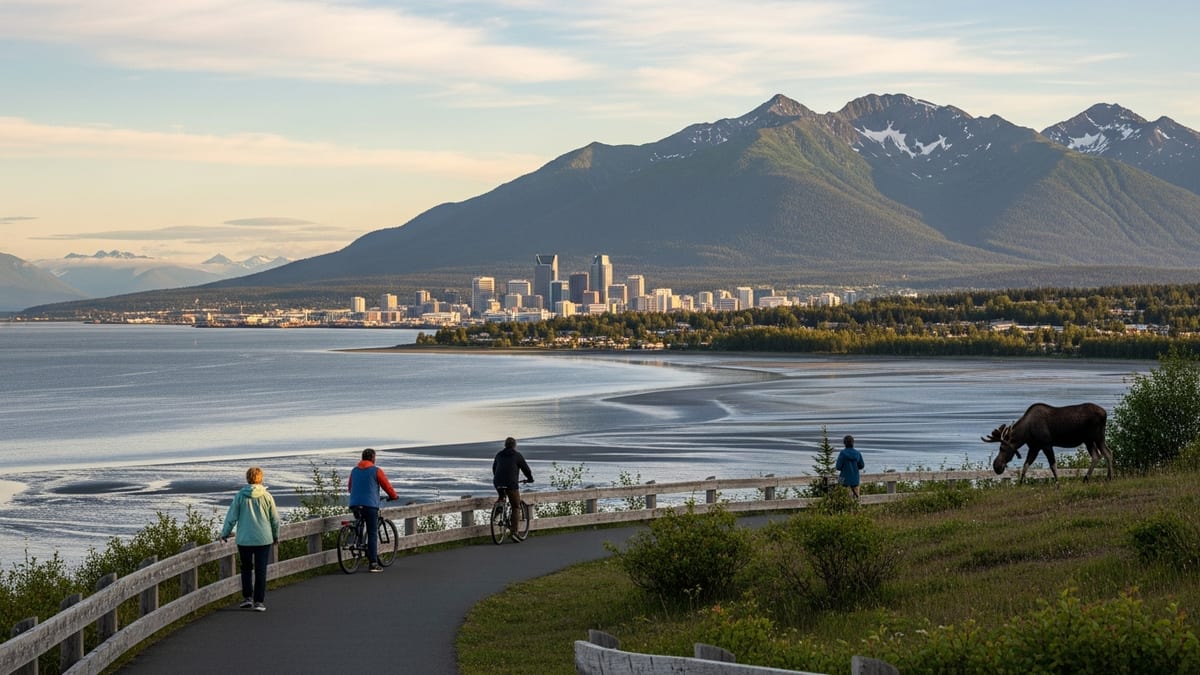
Anchorage is the rare city where high-rise hotels share a skyline with snow-capped peaks, where an after-dinner stroll might include a moose sighting, and where the rhythms of urban life still bend to the changing seasons. Alaska’s largest city is the main gateway to the state for most visitors, yet many travelers only skim its surface before rushing off to Denali or cruise ports.
Spend a few days here and you will find a place with deep Indigenous roots, an impressive arts and food scene, and fast access to glaciers, wildlife and wilderness. This guide covers what to see and do in Anchorage today, plus the practical details to know before you go.
Understanding Anchorage: The Gateway to Alaska
Anchorage sits on Cook Inlet, backed by the Chugach Mountains and surrounded by parkland that blurs the line between city and wilderness. With roughly 290,000 residents, it holds about 40 percent of Alaska’s population, yet it still feels close to the elements. Summer brings long days, wildflowers and salmon running up urban creeks, while winter means snow-draped spruce trees, northern lights potential and several months of true cold. The city functions year-round, so unlike some cruise ports or smaller towns, restaurants and attractions generally stay open in every season.
The city’s modern history is short and dramatic. Anchorage boomed during World War II as a military hub, survived the devastating 1964 Good Friday earthquake, and has grown into a transportation and energy center for the state. Beneath that relatively recent story is a much older one. This is Dena’ina Ełnena, the homeland of the Dena’ina Athabascan people, whose presence and knowledge continue to shape the region. Many of the best experiences in Anchorage today revolve around learning from Alaska Native cultures, whether through major institutions or small artist-owned shops.
Anchorage is also a logistical crossroads. Ted Stevens Anchorage International Airport is one of the world’s busiest cargo airports, but for travelers it mainly means a surprising number of flight options, particularly in summer. The city anchors the road network that leads north toward Denali and Fairbanks and south toward the Kenai Peninsula, while the Alaska Railroad runs from its depot downtown. With this connectivity and a dense cluster of hotels and services, Anchorage makes a practical home base before, between or after more remote adventures.
Finally, Anchorage is an urban-wildlife interface in the truest sense. Local authorities estimate hundreds of black and brown bears and around 1,600 moose share the broader municipality with people. Recent summers have seen bear encounters on popular trails that prompted temporary closures and safety warnings, a reminder that when you step onto a trail here you are back in wild country. That proximity to nature is part of Anchorage’s appeal, but it also demands that visitors respect local guidelines and prepare accordingly.
Top Sights and Experiences in Anchorage
If you have limited time, start with Anchorage’s signature cultural institutions. The Anchorage Museum in the heart of downtown is the city’s flagship museum and one of the premier cultural spaces in the state. It blends art, history, science and Indigenous perspectives, with exhibits that explore the North’s environment and the many peoples who live here. It is an ideal place to get oriented to Alaska’s landscapes and histories before you venture farther afield, and it offers hands-on science galleries that keep kids engaged on a rainy or cold day.
About ten miles from downtown, the Alaska Native Heritage Center offers one of the most comprehensive introductions to Alaska’s Indigenous cultures. Opened in 1999, the center sits on a wooded lakeside campus and highlights the heritage of 11 major cultural groups through indoor exhibits, performances and outdoor village sites. In summer, expect dance demonstrations, storytelling, youth-led tours and artists selling work directly. It is far more immersive than a quick museum stop and gives valuable context for everything you see elsewhere in the state.
An easy way to see Anchorage’s natural setting without leaving town is to walk or bike a portion of the Tony Knowles Coastal Trail. This paved path traces the shoreline from downtown through parks and forests, with frequent views of the Alaska Range across Cook Inlet on clear days. In winter, portions become popular for fat-tire biking and cross-country skiing. Keep an eye out for moose browsing along the trail and for bald eagles overhead. For farther-reaching views and a stronger chance at northern lights on dark nights, locals favor spots like Point Woronzof Park, where the trees open toward the water and the mountains beyond.
Anchorage is also a launchpad for classic Alaska day trips that feel far more remote than the mileage suggests. Summer visitors frequently book flightseeing tours that depart from Lake Hood, the busy floatplane base near the airport, to view nearby glaciers or even Denali from the air. Others opt for guided hiking and wildlife tours into Chugach State Park, which begins essentially at the city’s edge. Whether you stay mostly in town or dip into the surrounding wilderness, plan at least two full days to experience both cultural and outdoor highlights without rushing.
Seasons, Weather and When to Visit
Anchorage is a true four-season destination, but what you experience will differ dramatically depending on the month. From roughly mid-May through early September, the city is green and lively. June and July bring very long daylight, with sunsets that blur into sunrises and only a few hours of twilight at night. Temperatures are often mild rather than hot, frequently in the 50s and 60s Fahrenheit, but sunny spells can feel warm. This is prime season for hiking, biking, fishing and marine day trips from nearby ports. It is also the busiest and most expensive time to visit, so book lodging and car rentals well in advance.
Late August and September are shoulder months with shifting moods. Early in this period you still enjoy decent daylight and chances to hike in lighter layers. As fall progresses, cottonwood and birch forests turn yellow and the mountains pick up the first dustings of snow. Prices can drop after Labor Day and crowds thin out, though some seasonal businesses outside Anchorage start to close for the year. For many travelers, this period offers the best compromise between outdoor access and quieter travel, along with the first realistic opportunities to see the northern lights if skies are clear at night.
Winter in Anchorage, from roughly November through March, is for travelers who embrace the cold. Expect subfreezing temperatures, short days in midwinter and plenty of snow, though frequent thaws can make conditions variable. The rewards include winter festivals like February’s Fur Rendezvous, when the city leans into its northern identity with snow sculptures, quirky events and street celebrations. This period is also prime for northern lights chasing on clear, dark nights in and around Anchorage, as well as for cross-country skiing and fat biking on the city’s extensive trail system.
Spring, from April into early May, is transitional and sometimes overlooked. Locals call the earliest part of this season “breakup,” when snow recedes, streets turn slushy and trails can be muddy. Travel costs are often lower and daylight increases quickly. If you want to visit Anchorage on a budget while still catching some snow in the mountains for skiing, late March and early April can work well. Regardless of the season, pack layers, including a waterproof shell and a warm hat and gloves, since weather changes quickly and evenings can be cool even in high summer.
Nature, Wildlife and Outdoor Adventures
One of Anchorage’s biggest strengths is how quickly you can reach wild landscapes. Chugach State Park, which borders the city to the east, offers hundreds of miles of trails for all levels. Popular outings include the Flattop Mountain area, where a steep but short summit trail and gentler surrounding routes deliver panoramic views. Farther into the park, longer hikes trace valleys and ridgelines, and winter brings opportunities for backcountry skiing and snowshoeing. Because this is real mountain terrain with changeable weather and active wildlife, visitors should carry maps or navigation apps, dress for sudden temperature shifts and tell someone their plans.
For gentler excursions, Anchorage’s greenbelt trails and city parks provide plenty of options. Point Woronzof Park and nearby Kincaid Park are known for views of Denali on clear days, coastal bluffs and frequent moose sightings. The Tony Knowles Coastal Trail threads through these spaces and makes it easy to piece together short walks and longer bike rides without ever leaving the path. In winter, sections of the city’s trail network are groomed for Nordic skiing. Rentals and lessons are available locally for visitors who want to try the sport against a backdrop of spruce forest and mountain views.
Wildlife encounters are both likely and tightly managed here. Moose commonly wander residential streets and park trails, and both black and brown bears are present in the broader Anchorage area. In recent years, local officials have issued warnings and temporarily closed some trails after hikers were mauled by bears in areas near salmon streams and mountain foothills. Those incidents underscore the importance of following local advice: avoid hiking alone near active salmon runs, make noise so you do not surprise animals, keep dogs leashed, carry bear spray where recommended and know how to respond to encounters. Ask local visitor centers or gear shops about current conditions before setting out.
If you prefer your wildlife at a bit more distance, consider organized tours. Day cruises that depart from ports a short drive away, such as Whittier or Seward, can be arranged through Anchorage-based operators and offer chances to see glaciers calving into the sea, along with whales, sea otters and seabirds. Closer to town, guided bike tours, fat bike excursions on snow, and naturalist-led hikes provide insight into local ecology and history while keeping logistics simple. Whatever you choose, build some flexibility into your itinerary. Weather can delay flights and boat trips, especially in shoulder seasons and winter, and the best experiences often come from seizing unexpectedly clear days.
Culture, Food and Urban Life
Anchorage may be the practical hub of Alaska, but it is also a cultural one. In addition to the Anchorage Museum and Alaska Native Heritage Center, the city hosts a variety of smaller galleries, theaters and events that showcase local talent. The Anchorage International Film Festival each December brings independent films and filmmakers to town, drawing a mix of residents and visitors and adding a creative spark to the dark season. Live music appears in bars, small venues and summer outdoor stages, with lineups that often blend local bands with touring acts passing through on the way to or from the Lower 48.
The city’s food scene reflects its role as both a port and a crossroads. Visitors can expect fresh seafood, particularly salmon, halibut and cod, featured in restaurants ranging from casual fish shacks to polished dining rooms. Many chefs emphasize Alaska-grown produce in summer, when farmers markets also spring up around the city. You will find everything from reindeer sausage at street stands to globally influenced cuisine shaped by Anchorage’s diverse population. Coffee culture is strong, with drive-through stands and independent cafes scattered across neighborhoods, an advantage on cold or sleepy mornings.
Anchorage is also a town that appreciates a good winter gathering. February’s Fur Rendezvous, often shortened to Fur Rondy, is the signature winter festival and has been running in some form since the 1930s. Timed to align with traditional fur trade gatherings, it now includes events such as parades, snow sculptures and community races. Later in winter, the ceremonial start of the Iditarod Trail Sled Dog Race often takes place in Anchorage, turning downtown streets into snowy chutes lined with cheering spectators and sled dog teams. Travelers who time visits to coincide with these events will see the city at its most celebratory.
In daily life, Anchorage feels like a blend of big-box convenience and distinctly Alaskan quirks. Major national retailers share streets with local outdoor gear shops that understand the specifics of coastal Alaska weather. Bars and breweries pour a growing number of local beers, and many establishments have laid-back dress codes that make hiking pants and fleece perfectly acceptable. While downtown has a higher concentration of hotels and visitor services, neighborhoods like Spenard and Midtown hold some of the city’s most interesting restaurants, music venues and shops. If you have time, explore beyond the core to get a fuller sense of Anchorage life.
Getting Around, Safety and Practical Tips
Most visitors arrive by air at Ted Stevens Anchorage International Airport, which sits only a few miles from downtown. Taxis, rideshare services and some hotel shuttles connect the terminals to the city. Anchorage’s municipal bus system, People Mover, offers an inexpensive way to travel between the airport, downtown and many neighborhoods. A standard adult single ride is currently around two dollars, with day passes available for a modest fee. Recent changes approved by the city have made rides free for youth 18 and under on People Mover buses, a benefit that extends to visiting young people as well as residents. If you plan to rely on buses, check service frequencies for your routes, which are generally higher on weekdays.
That said, many travelers choose to rent a car. Anchorage is spread out, and a vehicle makes it easier to reach trailheads, viewpoints and neighboring towns on your own schedule. Winter driving requires more caution, and even in summer you should budget extra time for road construction or wildlife on the roads. Parking in downtown Anchorage is a mix of metered spots, surface lots and hotel garages. Pay attention to posted rules; snow removal operations in winter can trigger temporary parking restrictions on certain streets.
Anchorage is generally safe for visitors, but like any city it has areas and situations that call for extra awareness. Downtown can feel quiet at night outside of the main visitor season, and you should take the usual urban precautions, such as keeping valuables out of sight in vehicles and staying in well-lit areas if walking late. Public health and social service challenges, including visible homelessness, are part of the city landscape. Treat people with respect and follow any advice from hotel staff about which routes are best after dark. On trails and in parks, the larger concerns involve terrain, weather and wildlife, so make conservative decisions if conditions change or you are uncertain.
Finally, some practical Anchorage-specific tips can make your visit smoother. Summer travelers should pack sleep masks or choose accommodations with blackout curtains to cope with near-constant daylight, which can disrupt sleep. Winter visitors will want insulated boots with good traction, along with layered clothing that includes a base layer, midlayer and windproof shell. Mobile coverage is good in most of the urban area but can drop off quickly as you move into the mountains. For longer hikes or drives into remote areas, let someone know your plan and expected return time. Tipping customs mirror those in the rest of the United States, and credit cards are widely accepted.
Planning Your Anchorage Itinerary
The right amount of time in Anchorage depends on your broader Alaska itinerary, but even a short stay deserves thoughtful planning. If you have only one full day in the city, focus on the essentials: spend a few hours at the Anchorage Museum, walk part of the Tony Knowles Coastal Trail from near downtown for views and fresh air, and sample local seafood or Alaska-grown dishes at dinner. With two days, add a visit to the Alaska Native Heritage Center during its operating season and build in a half-day for a nearby hike or guided outdoor excursion in Chugach State Park or along the coast.
Travelers with three or more days in Anchorage can slow the pace and diversify experiences. Consider adding a scenic drive along Turnagain Arm on the Seward Highway, where mountains plunge toward the tide flats and beluga whales are sometimes seen in late summer. In winter, you might devote one evening to a northern lights tour that takes you to darker vantage points outside town, depending on solar activity and cloud cover. Families can add a stop at smaller attractions such as the Alaska Museum of Science and Nature, which offers kid-friendly exhibits on dinosaurs, ice age animals and regional geology.
Anchorage also works well as a hub between larger adventures. Many travelers spend their first nights here after arriving on long flights, using the city to adjust to time zones and gather any last-minute gear before heading off to Denali, the Kenai Peninsula or fly-in lodges. On the return, a final stay in Anchorage gives you one more chance to pick up artwork from Alaska Native artists, visit any museums you missed and enjoy a proper meal before your flight home. If flights or ferries are delayed by weather, as sometimes happens in Alaska, having flexible time in Anchorage can keep your overall trip on track.
When planning, check which seasonal events overlap with your dates. Winter festivals, the film festival, summer solstice celebrations and other happenings can add memorable experiences but may also affect hotel availability. Booking key elements such as accommodation, rental vehicles and any must-do tours well in advance is wise in peak seasons. At the same time, leave some space in your schedule for spontaneous discoveries. Anchorage rewards unhurried wandering, whether that means stumbling into a neighborhood cafe, pausing to watch a moose in a park or stopping along the shoreline to watch the light shift over distant mountains.
The Takeaway
Anchorage is more than a layover on the way to somewhere else. It is a place where contemporary city life and deep-rooted cultures unfold in the shadow of mountains, with wild spaces just beyond the cul-de-sac and runway. Spend a little time here and you can absorb a broad sweep of Alaska in one compact package: Indigenous histories and current voices, artistic innovation, working harbors, boreal forests, urban trails and genuine encounters with weather and wildlife.
For travelers, the key is to approach Anchorage with curiosity and respect. Use the city’s excellent museums and cultural centers to learn about the land and its peoples, then step outside into parks and trails prepared for real wilderness conditions. Balance marquee experiences, such as coastal drives and flightseeing tours, with everyday pleasures like a good cup of coffee on a cold morning or a sunset walk along the inlet. If you plan with the seasons in mind, pack smart layers, pay attention to local safety advice and give yourself enough time, Anchorage will reward you with a richer understanding of Alaska and memories shaped as much by small moments as by big landscapes.
FAQ
Q1. How many days should I spend in Anchorage?
Most travelers do well with two to three full days in Anchorage, which allows time for the major museums, a visit to the Alaska Native Heritage Center in season, and at least one significant outdoor excursion. If you are using the city as a base for day trips to nearby glaciers or coastal drives, consider adding an extra day.
Q2. Is Anchorage safe for tourists?
Anchorage is generally safe, especially in main visitor areas, but it is still a city and standard precautions apply. Be aware of your surroundings at night, secure valuables in vehicles and follow local advice about which routes are best after dark. On trails and in parks, the larger risks come from terrain, weather and wildlife, so prepare appropriately and heed any posted warnings or closures.
Q3. Do I need a car in Anchorage?
You can explore downtown Anchorage and some attractions using a combination of walking, taxis, rideshares and the People Mover bus system. However, a rental car makes it much easier to reach trailheads, viewpoints and neighboring communities at your own pace. For itineraries that include hiking in Chugach State Park or day trips along Turnagain Arm, a car is strongly recommended.
Q4. When is the best time to see the northern lights in Anchorage?
The northern lights are typically visible from Anchorage between roughly late August and early April when the nights are dark enough, but displays depend on both solar activity and clear skies. Peak chances are in midwinter, when nights are longest. Booking at least a few nights and considering a guided aurora tour that takes you to darker viewpoints outside the city will improve your odds.
Q5. Can I see wildlife without leaving Anchorage?
Yes. Moose are commonly spotted in parks and even in some residential areas, and bald eagles are frequently seen along the coast and near waterways. From certain viewpoints you may see beluga whales in Turnagain Arm during parts of late summer. Remember that even in the city these are wild animals; give them plenty of space and follow local guidelines for safe viewing.
Q6. What should I pack for a trip to Anchorage?
Regardless of season, pack layers. Include a moisture-wicking base layer, a warm midlayer such as fleece or wool, and a windproof, waterproof shell. Comfortable walking shoes or light hikers are essential in summer, while winter visitors will want insulated boots with good traction, a warm hat, gloves and possibly traction devices for icy sidewalks. A sleep mask can be helpful in summer, when daylight lingers late into the night.
Q7. How do I get from the airport to downtown Anchorage?
Ted Stevens Anchorage International Airport lies only a few miles from downtown. Options include taxis, rideshare services, hotel shuttles for certain properties and the People Mover bus, which connects the airport with central Anchorage on specific routes. Travel time to downtown is typically 15 to 20 minutes by car, depending on traffic and weather conditions.
Q8. Are there any cultural considerations I should keep in mind?
Anchorage is home to many Alaska Native people and to residents from across the state and world. Approach cultural experiences with respect, listen more than you speak, and support local artists and businesses when you can. When visiting cultural centers or attending performances, follow posted guidelines about photography and recording, and remember that these are not just attractions but living communities and traditions.
Q9. What festivals or events are worth planning around?
February’s Fur Rendezvous is Anchorage’s signature winter festival, featuring parades, outdoor events and community gatherings that embrace the season. The ceremonial start of the Iditarod Trail Sled Dog Race, typically held in Anchorage, is another major draw. In December, the Anchorage International Film Festival brings independent cinema to the city. In summer, solstice celebrations and smaller community events enliven parks and downtown streets.
Q10. Is Anchorage a good base for exploring other parts of Alaska?
Anchorage makes an excellent base thanks to its airport, road and rail connections and wide range of services. Many travelers start and end their trips here, using the city as a hub between journeys to Denali, the Kenai Peninsula, coastal communities and fly-in wilderness lodges. With its combination of cultural attractions and easy access to outdoor adventures, it fits naturally into most Alaska itineraries.