

Angola is one of Africa’s least visited countries, a vast and varied land where long-empty beaches, misty highlands and raw urban energy coexist. After decades in the shadow of civil war and oil politics, the country is pivoting toward tourism, opening its borders to more visitors and promoting a different story to the outside world.
For travelers willing to do some homework and travel with eyes wide open, Angola offers a rare mix of frontier feeling, genuine cultural encounters and big-ticket landscapes that you will often have almost to yourself.
Opening Up: Visas, Airports and First Impressions
For years, Angola’s strict visa regime and high costs kept it firmly off the backpacker trail. That is changing. Since late 2023 the government has exempted citizens of nearly a hundred countries, including the United States and much of Europe, from tourist visa requirements for stays of up to 30 days per entry and 90 days per year. On arrival you generally need a passport with at least six months’ validity, proof of onward travel and, depending on your airline or routing, evidence of recent vaccination, particularly against yellow fever. The new policy is deliberately designed to jump-start a tourism industry that currently accounts for only a small slice of national income.
This liberalization coincides with a major upgrade in infrastructure. In November 2024 Luanda inaugurated a new international airport capable of handling around 15 million passengers a year, replacing the cramped facility that long shaped first impressions of the country. The new terminal, more in line with regional hubs elsewhere in Africa, is intended as both a gateway for tourists and a statement of intent that Angola is serious about positioning itself as a regional aviation and tourism player.
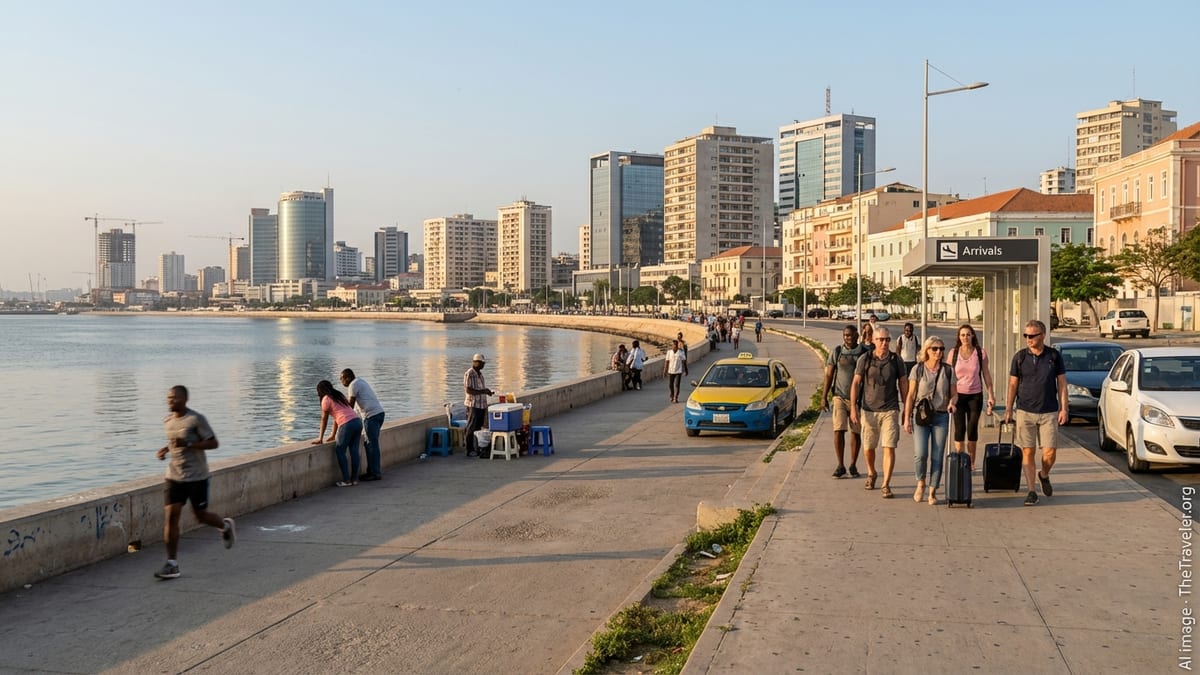
Even with these improvements, arriving in Luanda can feel intense. Immigration and customs officials have been known to ask intrusive questions or request informal “fees,” and procedures can be slow. Staying calm, having your documents in order, and politely but firmly declining unofficial payments helps. Once through, the heat, sea air and crowds at the arrivals hall offer an immediate taste of life in a city that is equal parts Atlantic port, oil boomtown and African megacity.
Visas, Money and Practical Logistics
Although many nationalities no longer require a tourist visa for short leisure trips, business and work travel remain tightly regulated. If you intend to work, volunteer or conduct journalism, you must secure the correct visa in advance. Overstaying even a tourist stay can bring steep daily fines in kwanzas and delays on departure, so respect the 30-day limit and retain boarding passes, entry stamps and accommodation receipts as proof of your movements if needed.
The official currency is the kwanza, and Angola has a long history of inflation and currency volatility. Recently, inflation has eased somewhat as the central bank has acted to stabilize the kwanza, but prices for imported goods remain high by regional standards. Cash is still king outside major cities. In Luanda, international bank cards are accepted at many upscale hotels and a growing number of restaurants and supermarkets, but technical glitches are common. Bring a debit or credit card from at least two different providers, together with a supply of crisp US dollars or euros to exchange at banks or reputable foreign exchange counters on arrival.
Daily travel budgets in Angola tend to be higher than in neighboring countries. Fuel subsidies do not always translate into cheap transport, and many midrange accommodations are priced for corporate rather than leisure travelers. A realistic midrange budget in Luanda might rival or exceed that of Southern Europe, while rural travel can be significantly more affordable if you are willing to stay in simple guesthouses and eat local food. Pre-booking domestic flights and long-distance transfers is wise, as seat availability can be limited and road journeys slower than they look on a map.
Safety, Health and Responsible Travel
Angola is not a low-risk destination, but the picture is nuanced. Most visits pass without major incident, yet crime and health challenges require serious preparation. International advisories currently urge travelers to exercise increased caution because of violent and opportunistic crime in urban areas. In Luanda, armed robberies, carjackings and theft do occur, particularly after dark. Sensible precautions include arranging reliable airport transfers, using private taxis or vetted ride services rather than hailing vehicles on the street, avoiding flashy jewelry or visible high-end electronics, and sticking to well-lit, busy areas at night.
Health infrastructure outside a handful of private clinics in Luanda is limited. Pharmacies are often understocked, so travelers should bring a robust personal medical kit, including prescription medications, antimalarials, oral rehydration salts and basic first-aid supplies. Angola experiences periodic outbreaks of infectious disease. A long-running risk of yellow fever makes vaccination strongly recommended and, for some routes, effectively compulsory. More recently, a significant cholera outbreak has affected most provinces, including Luanda and coastal hubs, reinforcing the importance of meticulous food and water hygiene.
Insect-borne diseases such as malaria and dengue are present year-round. Sleep under treated nets where provided, use repellent and consider wearing long sleeves and trousers in the evenings. Before travel, consult a specialist travel clinic at least six to eight weeks in advance to review vaccinations, including hepatitis A and B, typhoid, tetanus, polio and yellow fever. Comprehensive travel insurance that covers emergency evacuation is particularly important in a country where reliable advanced medical care may require air transfer to South Africa or Europe.
Luanda: Capital of Contrasts
Luanda, sprawling along the Atlantic coast, is many visitors’ first and sometimes only glimpse of Angola. It is a city of sharp contrasts, where gleaming glass towers overlook informal settlements and traffic-choked avenues skirt a breezy promenade along the bay. For years it was dubbed one of the most expensive cities in the world for expatriates, and vestiges of that era remain in high-end restaurants, rooftop bars and luxury towers funded by the oil boom. Yet under the surface is a deeply Angolan city shaped by centuries of colonial history, independence struggles and postwar migration.
The historic heart is the Cidade Alta, the old upper town where Portuguese-era buildings house government ministries and the presidential palace. Below, in the lower city, landmarks such as the Fortaleza de São Miguel, a 16th-century fortress with sweeping views of the bay, and the Memorial António Agostinho Neto, a striking modernist monument to the country’s first president, provide insight into Angola’s layered political narrative. Along the shore, the revamped Marginal promenade invites evening strolls as Luandans jog, fish and socialize in the cooling breeze.
Luanda’s cultural life is one of its biggest draws. The city pulses with kizomba and semba rhythms spilling out of bars and dance halls, and weekends often bring live music, church gatherings and family barbecues to public spaces. Food reflects Angola’s blend of African, Portuguese and Brazilian influences: expect hearty moamba de galinha (chicken stew), grilled fish, seafood along the Ilha do Cabo peninsula, and street-side grilled meat skewers. For visitors, the key is to explore with local guidance, choosing central, reputable accommodation and building in time to simply observe daily life in a city that rarely slows down.
Beyond the Capital: Coasts, Highlands and Desert
It is once you leave Luanda that Angola’s potential as a nature destination becomes clear. South of the capital, the coast combines long, empty beaches with cliffs and dunes. Popular with Luandans, Cabo Ledo is known for its surf-friendly waves and laid-back resorts, making it an accessible first coastal escape. Further down the coast, towns such as Benguela and Lobito bear traces of their colonial past in faded architecture and port-side promenades. Lobito’s restinga, a narrow peninsula fringed by the sea, is atmospheric in the late afternoon light when fishermen haul in their nets and families stroll.
The interior highlands offer a different mood altogether. The road up the Serra da Leba, with its gravity-defying switchbacks carved into the escarpment, is among Angola’s most photographed sights. From its viewpoints, the landscape drops away into a haze of valleys, and the engineering feat of the serpentine roadway becomes fully apparent. The nearby city of Lubango, ringed by mountains and overlooked by a towering Christ the King statue reminiscent of Rio de Janeiro, is a useful base for exploring southern Angola’s cooler plateaus, cultural communities and waterfalls.
In the southwest, the coastal city of Namibe marks the edge of an otherworldly desert where red rock formations, oasis palm groves and the iconic Welwitschia mirabilis plant create a surreal scene. These ancient plants, some believed to be more than a thousand years old, cling to life with just two leaves, making them biological curiosities and symbols of endurance. Desert excursions from Namibe are often organized with local guides and may involve long drives on gravel roads, so it is important to travel in well-maintained vehicles, carry extra water and respect the fragility of this environment.
Nature and Wildlife: Kissama, Kalandula and Beyond
Angola’s war years took a heavy toll on wildlife, but conservation efforts are slowly rewriting the story. Within a day’s drive of Luanda, Kissama National Park stretches between the Atlantic Ocean and the Cuanza and Longa rivers, protecting vast tracts of savanna, woodland and wetlands. Once severely depleted, the park has seen gradual rewilding, including the reintroduction of elephants and other large mammals. Today, visitors may spot antelope, monkeys, birdlife and, with luck, elephant or buffalo on guided game drives, although densities remain far lower than in better-known safari destinations.
Farther inland, the Kalandula Falls on the Lucala River are among Africa’s most impressive waterfalls by volume, soaring more than 100 meters high and nearly 400 meters wide. Spray rises from the horseshoe-shaped cascade, and during the rainy season the roar carries through surrounding forests and farmland. Infrastructure around the falls is still basic, with a handful of lodges and viewpoints, but part of the magic lies in the relative lack of crowds. This is a place where, at sunrise or sunset, you may share the view only with local villagers and the occasional goat.
Other protected areas, including remote national parks near the borders with Namibia and the Democratic Republic of Congo, are slowly gaining attention from adventurous travelers and specialist tour operators. Reaching them usually requires charter flights or long, rough road journeys. For now, most nature-focused trips concentrate on combining Kissama, the coastal regions, the southern highlands and Kalandula as a circuit, balancing reasonable access with a sense of exploration.
Culture, History and Everyday Encounters
For many visitors, the most enduring memories of Angola come not from its landscapes but from its people and stories. This is a country with a complex history of kingdoms, Portuguese colonization, the Atlantic slave trade, a bitter independence struggle and a long civil war that ended only in 2002. In Luanda, the Museum of Slavery on the coast south of the city is a stark reminder of the human toll of that trade, housed in a former chapel where enslaved people were once baptized before being shipped across the Atlantic.
Away from the capital, Angola’s cultural mosaic becomes more visible. In the south, around Lubango and toward the Namibian border, communities of Herero, Himba and other groups maintain distinct traditions, from ochre body adornment to elaborate hairstyles and cattle-centered livelihoods. Visiting these communities should always be arranged with sensitive, ethical guides who prioritize consent, fair compensation and genuine exchange over staged encounters. Bringing small, thoughtful gifts such as school supplies rather than cash handouts, and always asking before taking photographs, shows respect.
Language can be both a barrier and a doorway. Portuguese is the official language and dominates media, education and administration, while dozens of Bantu languages, such as Umbundu, Kimbundu and Kikongo, are spoken in homes and markets. English is less widely used than in many African countries, though younger Angolans in cities increasingly have some proficiency. Learning a few words of Portuguese, greeting people courteously and being patient with communication goes a long way. Angolans generally appreciate genuine curiosity, and chance conversations in taxis, guesthouses or roadside cafés can yield insights you will not find in any guidebook.
Costs, Seasons and Planning Your Route
Angola’s seasons are defined less by temperature than by rainfall. The main rainy season typically runs from about October to April, with heavier downpours in many inland areas, while the dry season extends from roughly May to September. Coastal regions, especially around Luanda and the southwest deserts, have relatively stable, warm conditions moderated by the Benguela current. Inland highlands can be cooler, especially at night. For general touring, many travelers favor the dry months when roads are in better condition and outdoor activities are less likely to be disrupted by storms.
Because the country’s tourism industry is still in its infancy, there is a premium on reliable logistics. Domestic flights link Luanda with cities such as Lubango, Benguela and Soyo, but schedules can change and delays are not uncommon. Long-distance buses exist yet are challenging for those without local language skills and experience. Many visitors therefore arrange private transport through local operators, particularly for remote routes like the Serra da Leba and Namibe desert or rural detours to Kalandula Falls. Booking several weeks in advance is advisable during local holiday periods and when events in Luanda increase internal travel.
Accommodation options range from high-end international hotels in Luanda to basic guesthouses and family-run lodges elsewhere. Outside major cities, do not expect international standards. Power cuts and patchy internet are part of the experience, and hot water or air conditioning may be intermittent. Packing a flexible attitude, a headlamp, spare batteries and downloaded offline maps helps. Because formal souvenirs are still relatively scarce outside a few craft markets, many travelers find that photographs, journal entries and friendships become their main mementos of time spent in Angola.
The Takeaway
Angola is not a typical African holiday destination. It demands more preparation, flexibility and tolerance for ambiguity than many of its neighbors. Crime risks, health challenges and uneven infrastructure are real issues that any responsible traveler must weigh. Yet for those who do their homework and travel with trusted local partners, the rewards are considerable: dramatic scenery without busloads of tourists, wildlife beginning to reclaim once-silent parks, and a culture-rich society still defining its postwar identity.
What sets Angola apart is its sense of possibility. Visa liberalization and new transport infrastructure are clear signs that the country wants visitors and recognizes tourism’s potential as a diversified source of income beyond oil and diamonds. At the same time, communities across Angola are finding ways to share their heritage, music, food and landscapes on their own terms. Traveling here now means witnessing a country in transition, where change is visible from year to year.
If you are drawn to destinations that feel real rather than packaged, where you may need to improvise and where the line between traveler and participant can blur, Angola is worth serious consideration. Approach it with humility, curiosity and respect, and you are likely to come away with a deeper appreciation not only of one of Africa’s least visited countries, but also of how travel itself can evolve as new places step onto the global tourism map.
FAQ
Q1: Do I need a visa to visit Angola as a tourist?
You may not need a visa if you are a citizen of one of the nearly 100 countries included in Angola’s tourist visa exemption program, which allows stays of up to 30 days per entry and 90 days per year. Requirements vary by nationality, so always check the latest rules with Angolan authorities or your foreign ministry before you travel.
Q2: Is Angola safe for travelers right now?
Most visits to Angola are trouble-free, but crime levels in urban areas, particularly Luanda, are a concern. Authorities and foreign governments advise travelers to exercise increased caution, especially at night. Using reputable accommodation, pre-arranged transport, avoiding displays of wealth and staying informed about local conditions significantly reduces risk.
Q3: What health precautions should I take before visiting?
Consult a travel health clinic well in advance of your trip. Vaccinations commonly recommended for Angola include yellow fever, hepatitis A and B, typhoid, tetanus and polio. Malaria prophylaxis is usually advised, and strict food and water hygiene is essential because of cholera and other waterborne illness risks.
Q4: When is the best time of year to travel to Angola?
The dry season, roughly from May to September, is generally considered the most comfortable time to visit, with less rain, better road conditions and clearer skies for sightseeing. The rainy season from about October to April can still be rewarding, but heavy showers may affect travel plans, especially in rural areas.
Q5: How expensive is Angola compared with other African destinations?
Angola is more expensive than many of its neighbors, especially in Luanda, where hotels, dining and transport can approach or exceed prices in European cities. Costs drop outside the capital, but travelers should still budget for higher-than-expected expenses and build in a financial cushion for contingencies.
Q6: What are the must-see highlights for a first-time visitor?
Popular highlights include Luanda’s historic core and waterfront, nearby Kissama National Park for an introduction to Angola’s wildlife, the coastal resorts and surf of Cabo Ledo, the highland scenery and Serra da Leba road near Lubango, the desert landscapes around Namibe, and the impressive Kalandula Falls inland.
Q7: Can I get by with English, or do I need Portuguese?
English is spoken in some hotels, by tour operators and among parts of the younger urban population, but Portuguese is the main language of communication. Learning basic Portuguese phrases, carrying a translation app and being patient with communication will greatly improve your experience.
Q8: How should I handle money and payments while traveling?
The local currency is the kwanza. In Luanda, larger hotels and some restaurants accept international cards, but systems can fail without warning. Outside major cities, cash is often the only option. Bring at least two bank cards and a reserve of foreign currency to exchange at banks or official counters, and avoid informal street money changers.
Q9: Is independent travel feasible, or do I need a tour operator?
Experienced, resourceful travelers can move around Angola independently, especially between larger cities, but the limited tourism infrastructure, language barrier and complex logistics mean that many visitors prefer to use a reputable local operator for at least part of their trip. Organized support is particularly valuable for remote destinations and desert or safari excursions.
Q10: What kind of traveler will enjoy Angola the most?
Angola suits curious, adaptable travelers who value authentic experiences over polished tourism and who are willing to accept some discomfort and uncertainty in exchange for genuine discovery. If you enjoy frontier-style travel, learning from local people and exploring places before they become mainstream destinations, Angola is likely to be rewarding.