

More news on this day
Romanian airline AnimaWings is set to launch six weekly flights between London Gatwick and Bucharest Otopeni from March 22, 2026, using new Airbus A220-300 aircraft and adding fresh capacity on one of the busiest links between the UK and Romania.
Get the latest news straight to your inbox!
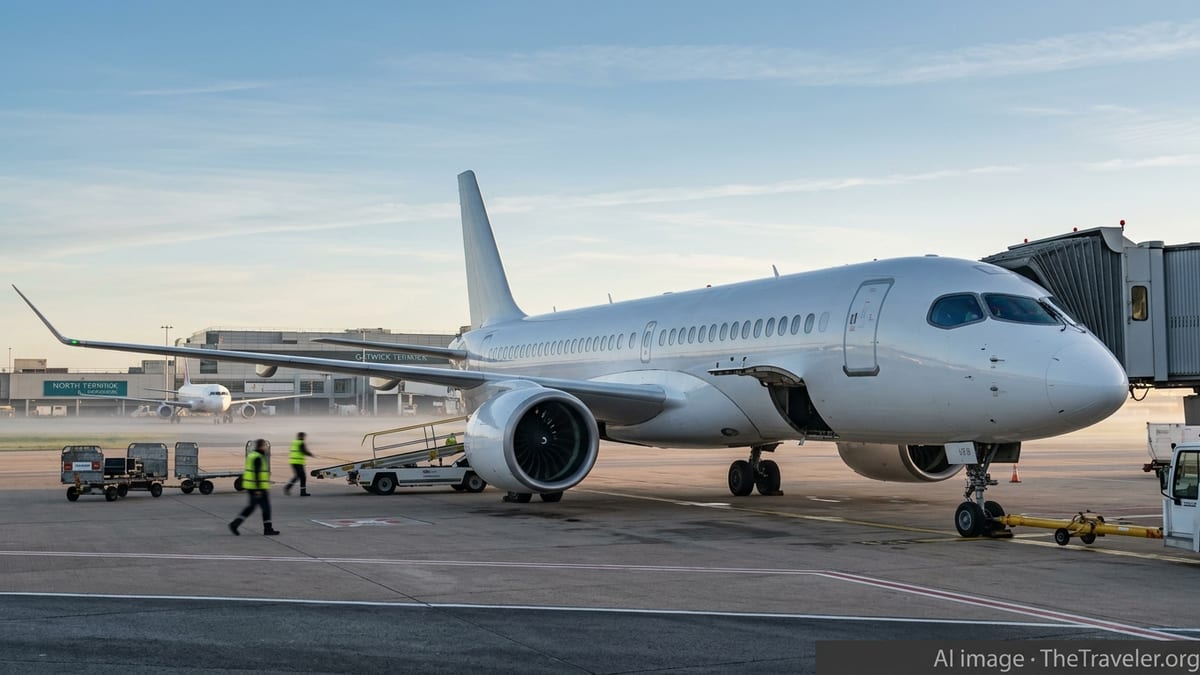
New Player on a Busy UK–Romania Corridor
Publicly available scheduling information indicates that AnimaWings will inaugurate its London Gatwick–Bucharest service on March 22, 2026, with six flights per week. The route will connect Gatwick, the UK’s second-busiest airport, with Henri Coandă International Airport, the main gateway to the Romanian capital.
The airline enters a market already served by established low-cost and full-service competitors from other London airports, adding another option for travelers heading to Romania’s political and cultural center. The service from Gatwick is positioned to appeal to passengers south of central London and across the wider South of England catchment area.
For Bucharest, the additional connectivity strengthens its role as a regional hub, feeding both inbound tourism and outbound traffic. The new flights are expected to attract city-break visitors, VFR travelers, and business passengers seeking alternatives to more congested London airports.
While final slot timings and detailed frequency patterns may still evolve as the launch date approaches, the planned six weekly rotations are designed to offer near-daily access and to fit within typical weekend and weekday travel patterns.
Airbus A220-300 at the Center of the Expansion
AnimaWings plans to operate the Gatwick–Bucharest route with Airbus A220-300 aircraft, the latest-generation narrowbody that has been steadily expanding its footprint at European airports. The model is marketed as one of the most efficient small single-aisle jets currently in service, with lower fuel burn and reduced noise footprints compared with older designs.
The cabin layout of the A220-300, featuring a 2-3 seating configuration and relatively wide seats for a single-aisle jet, is expected to be a key selling point on the route. Passengers traveling between London and Bucharest typically face flight times of around three hours, making onboard comfort, overhead bin space, and noise levels noticeable differentiators.
Industry data on in-service A220 fleets highlights the aircraft’s strong operational reliability and suitability for dense European routes of this length. For Gatwick, the arrival of additional A220 operations fits into a broader trend of airlines deploying newer, quieter types at the airport, reflecting both environmental and passenger-experience priorities.
For AnimaWings, the deployment of the A220-300 on a high-profile international link from the UK offers an opportunity to showcase the airline’s product to a wider audience, including connecting travelers who may combine Bucharest with onward destinations in Romania or the wider region.
Strategic Boost for London Gatwick’s Network
The planned launch comes as Gatwick continues to rebuild and broaden its route network, with recent route-development materials highlighting new airlines and fresh city pairs scheduled into 2026. Additional services to major Central and Eastern European capitals are part of the airport’s effort to diversify beyond traditional holiday and short-haul leisure markets.
The Bucharest addition strengthens Gatwick’s role as a gateway to Eastern Europe, offering more choice for passengers who might otherwise need to route via Heathrow, Luton, or Stansted. For travelers based in Sussex, Surrey, Kent, and the wider South Coast, a direct link to Bucharest from Gatwick reduces surface travel times and can simplify trip planning.
From the airline’s perspective, operating into Gatwick may provide a balance of strong local demand and manageable congestion levels. The airport’s single-runway operation has been handling growing traffic while promoting the use of newer, more efficient fleets, creating an environment where airlines operating modern types such as the A220 can differentiate on both environmental and customer-experience grounds.
As capacity builds through 2026, the new Romania link will sit alongside a widening set of destinations from Gatwick, giving UK travelers more opportunities to explore cities that blend history, culture, and emerging business ties.
Gateway to Romania’s Cultural Heart
Bucharest has been steadily raising its profile as a European city-break destination, with its mix of Belle Époque architecture, wide boulevards, interwar modernism, and lively café culture. The city serves as a launchpad for exploring Romania’s broader cultural heritage, from medieval Transylvanian towns to Carpathian mountain landscapes and wine regions.
The new Gatwick connection is likely to appeal to travelers interested in short urban stays centered on museums, galleries, and a growing restaurant scene. Bucharest’s Old Town, its concert halls, and its cultural institutions are within easy reach of the airport, making the route attractive for weekend getaways and cultural events.
For the sizable Romanian community living in the UK, additional capacity between London and Bucharest provides more options for visiting friends and relatives, particularly during holiday peaks. Competitive fares and additional frequencies can help smooth demand spikes, giving passengers more flexibility in both directions.
Tourism bodies and travel agencies are expected to incorporate the new route into their packaging and promotion, highlighting Bucharest as both a standalone destination and a convenient starting point for multi-day itineraries across Romania.
What Travelers Can Expect When Services Begin
Timetables published ahead of the launch indicate that the six weekly flights are expected to be structured to capture both leisure and short-stay business demand, with departures likely to favor times that allow same-day arrivals and evening returns. Exact schedules and operating days can be subject to adjustment closer to March 2026 as airport slot coordination and seasonal demand patterns are finalized.
On board, passengers can expect the defining features of the A220-300, including large windows, comparatively generous hand-luggage storage in the overhead bins, and a quieter cabin environment than many older-generation aircraft commonly used on European routes. Seating configurations typically offer a combination of pairs and trios across the cabin, reducing the number of middle seats on each row.
Fares on the new route are expected to align with the competitive nature of the UK–Romania market, where price-sensitive leisure and VFR traffic plays a major role. As launch approaches, promotional fares and advance-purchase deals are likely to appear on booking platforms, giving early planners scope to secure lower prices.
Travelers considering the new service are advised to monitor schedule updates and seasonal adjustments as spring 2026 nears, particularly around school holidays and peak travel periods, when demand between the UK and Romania traditionally increases.