

More news on this day
An anonymous security threat prompted the evacuation of Terminal 1 at Raleigh–Durham International Airport early Monday, causing significant delays for Southwest Airlines passengers and rippling disruptions through one of the Triangle’s busiest morning travel periods.
Get the latest news straight to your inbox!
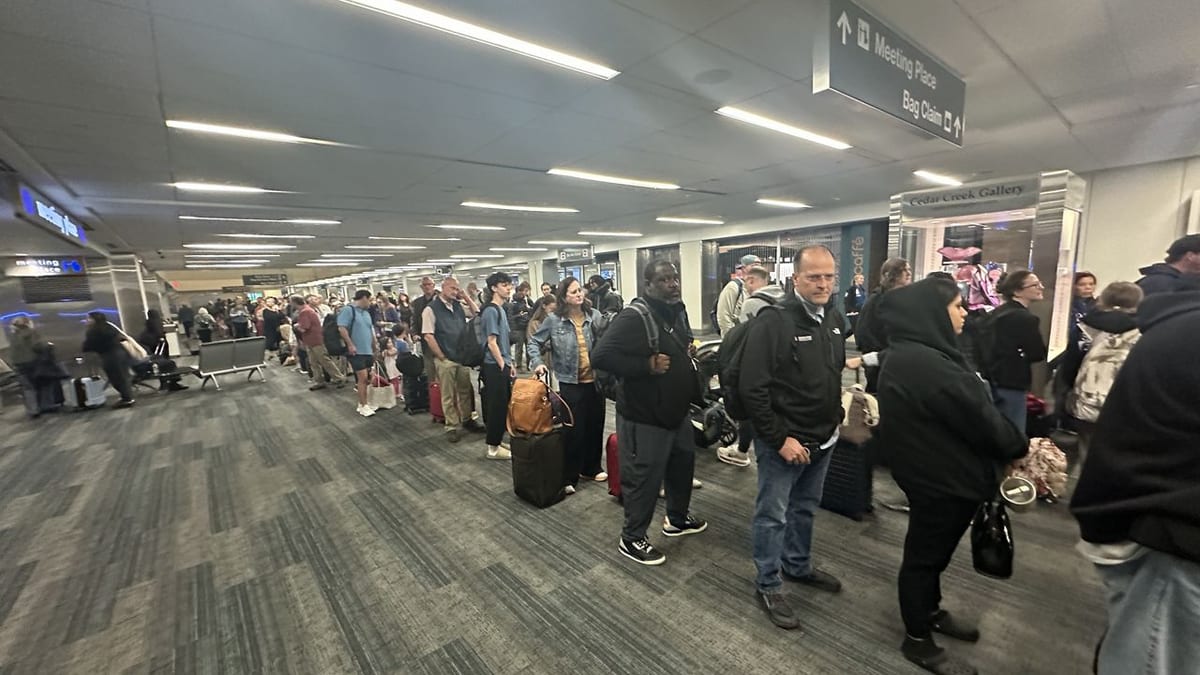
Image by Spectrum News
Early Morning Evacuation Disrupts Terminal 1
Publicly available posts and local coverage indicate that Terminal 1 at Raleigh–Durham International Airport was cleared of passengers in the pre-dawn hours of March 30 after an anonymous threat was received. The incident unfolded during the airport’s early morning rush, when a concentrated wave of departures typically leaves within a short window.
Accounts from travelers on the scene describe being directed out of the building around 4:30 a.m., with some passengers turned back at the top of the escalators and sent toward the parking deck. Social media timelines show the first public mentions of a full terminal evacuation appearing shortly before 5 a.m., suggesting a rapid decision to empty the facility while the threat was assessed.
Terminal 1 at RDU primarily serves Southwest Airlines, which concentrates a number of early flights to major domestic destinations. The evacuation effectively halted that stream of departures, leaving some travelers waiting curbside or in parking areas while law enforcement and security teams swept the building.
While details about the nature of the anonymous threat had not been publicly released by mid-morning, reports indicate that operations in Terminal 2 continued, underscoring that the disruption was confined to the older of the airport’s two main passenger facilities.
Flight Delays for Southwest and Morning Departures
The evacuation translated quickly into a backlog of delayed departures from Terminal 1. Travelers posting online described a 6 a.m. Southwest flight pushed back to approximately 8:45 a.m., with other early morning departures also rescheduled as the terminal remained closed and security checks were repeated once the building reopened.
With aircraft parked at gates and boarding suspended, passengers who had already arrived airside before the evacuation were unable to deplane promptly. At least one account described a flight that landed around 6 a.m. but remained on the tarmac, highlighting how an incident focused on the terminal interior can still trap arriving passengers on board.
The delays emerged at a time when early morning flights from RDU are especially time sensitive. Regional travel patterns show a large share of daily departures leaving before 9 a.m., so disruptions in this window tend to cascade as aircraft and crews rotate to subsequent legs. Even after the immediate security concern is resolved, those knock-on effects can linger into midday.
Airline tracking data and passenger reports suggest that once operations restarted, carriers attempted to consolidate and retime flights to reduce cancellations. For some travelers, that meant longer lines but ultimately same-day departures; others faced missed connections and rebookings through alternative hubs.
Security Response and Terminal Access Challenges
Witness accounts referenced visible police and canine units in and around Terminal 1 as the threat was investigated. Airport communications channels emphasized that only one terminal was affected, and publicly available information showed that Terminal 2 security screening and departures were largely operating as normal.
Even so, passengers reported significant congestion in shared areas such as roadways and parking decks. One early account described the Terminal 1 parking deck being closed while the evacuation unfolded, forcing drivers to circle or divert to other facilities. That created additional stress for travelers trying to determine whether their flights were still operating.
The split experience between the two terminals created a stark contrast. Travelers departing from Terminal 2 in the same time period reported moving through security in a matter of minutes, even as crowds from Terminal 1 later funneled back through a single checkpoint once the all clear was given. The mix of delayed passengers and a resumed regular schedule produced what some described as unusually long queues for a terminal that typically offers relatively short wait times.
Local discussion highlighted the particular vulnerability of smaller single-airline terminals when sudden security events occur. With all of Southwest’s RDU operations concentrated in Terminal 1, any extended closure directly affects a large portion of the carrier’s daily schedule and offers limited flexibility to reroute passengers within the same airport.
Impact on Triangle Travelers and Regional Connectivity
The timing of the anonymous threat meant that many affected passengers were business travelers, families beginning spring trips, and residents connecting through larger hubs. Early morning flights from RDU frequently feed into national networks at Atlanta, Baltimore, Chicago, and other major airports, so missed departures in Raleigh can translate into missed connections across the country.
Reports from travelers described scrambling to secure alternative routings, including attempts to switch from Southwest in Terminal 1 to other airlines in Terminal 2 once it became clear that delays would stretch for hours. In some cases, passengers opted to abandon same-day travel rather than face uncertain standby lists later in the day.
The disruption also underscored RDU’s growing importance as a regional gateway. The airport has seen sustained increases in passenger volumes and expanded service in recent years, which magnifies the effect of any interruption. Even a localized security incident in one terminal can influence travel times, arrival plans, and onward connections for residents across the Triangle area.
Travel forums and local discussion boards quickly filled with advice for those holding later morning and midday tickets, with many urging prospective passengers to leave additional time for check in and security screening, given the backlog at Terminal 1.
What Early Morning Passengers Should Know Going Forward
For future travelers using RDU, the incident serves as a reminder that early morning departures, while often favored for their reliability, concentrate risk if an unexpected security event unfolds. A significant share of the airport’s daily flights depart before mid-morning, making those hours especially sensitive to any terminal closure or extended screening process.
Publicly available travel guidance continues to emphasize the value of arriving at the airport at least two hours before domestic departures, particularly for flights leaving before 8 a.m. In light of the Terminal 1 evacuation, local commentary suggests that travelers on Southwest may wish to add an extra buffer during the busiest weekday mornings, when lines can quickly grow if any checkpoint is temporarily shut down.
Passengers are also encouraged, based on published travel advice, to monitor both airline notifications and airport social media feeds closely in the hours before leaving home. While Monday’s anonymous threat at RDU was an isolated event, similar disruptions at other airports have shown that up to date digital information can make the difference between waiting in a terminal during an evolving incident and safely delaying departure from home.
As RDU continues to manage rising passenger volumes and a changing national security environment, Monday’s evacuation of Terminal 1 illustrates how quickly routine travel can be upended. For early morning passengers in particular, building flexibility into itineraries and allowing generous lead time remains one of the most effective ways to navigate unforeseen disruptions.