

More news on this day
Turkiye is reinforcing its reputation as a resilient, reliable destination for international visitors, with Antalya’s expanding profile now standing alongside Istanbul, Bodrum, Izmir and Cappadocia as the country leverages record tourism figures to project stability amid heightened regional tensions.
Get the latest news straight to your inbox!
Record Tourism Underscores Perception of Stability
Recent tourism data shows Turkiye maintaining strong momentum even as conflict and political uncertainty in surrounding regions weigh on global travel sentiment. Trade and government statistics compiled for 2024 and 2025 indicate the country set new records for both international arrivals and tourism revenue, building on its position among the world’s top destinations by visitor numbers and income.
According to publicly available figures for 2024, Turkiye welcomed more than 60 million international visitors and generated tourism revenues above 60 billion dollars, surpassing pre-pandemic benchmarks and consolidating its role as a major global tourism hub. Sector-focused outlets reporting on 2025 performance note that revenue has continued to grow, helped by higher per-visitor spending, even where some source markets have softened.
Industry analyses describe Turkiye’s tourism sector as “crisis-resistant,” pointing to its ability to keep attracting visitors despite pressures ranging from the Russia–Ukraine war to conflicts in the Middle East. Reports highlight that diversified source markets, modern air connectivity and a wide spread of destinations across the country have helped cushion localized shocks and maintain the broader perception of Turkiye as accessible and reliably open to visitors.
At the same time, observers acknowledge challenges, including rising prices, climate-related pressures in peak summer months and occasional dips in arrivals from key European markets. Even so, macro-level data and travel advisories from several Western countries continue to place Turkiye in a generally safe category for tourism, framing risks as comparable to other major Mediterranean destinations.
Antalya’s Rising Role as a Mediterranean Anchor
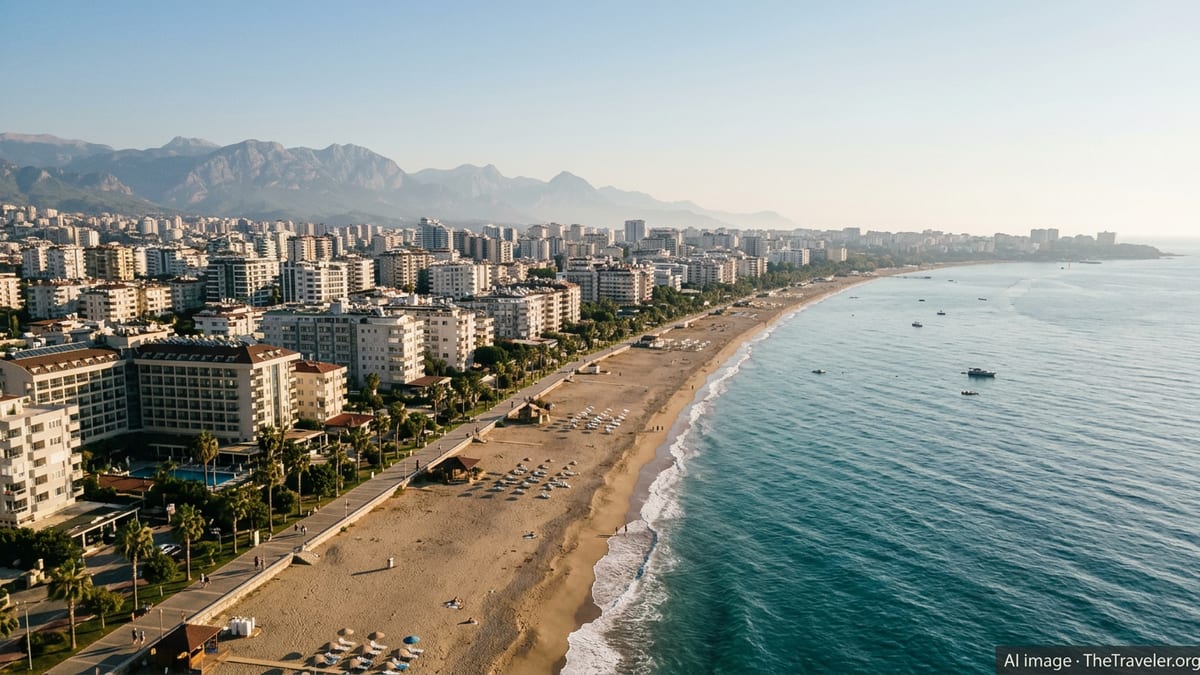
Antalya, long known as Turkiye’s “capital of tourism,” is emerging as an even more prominent symbol of the country’s stability narrative. Located on the Mediterranean coast, the province has repeatedly broken its own visitor records since the lifting of global travel restrictions, with local media and sector specialists forecasting tens of millions of arrivals annually across its resort zones.
Travel risk assessments published in early 2026 describe Antalya as one of Turkiye’s safest large tourism cities, noting low rates of serious crime against visitors relative to urban size and visitor volume. Tourism is identified as the backbone of the local economy, which has incentivized sustained investment in resort security, regulated beaches and upgraded hotel infrastructure. Independent safety-rating platforms routinely classify Antalya as a low-risk destination for most tourists, while still advising standard big-city precautions.
Antalya has also benefited from extensive infrastructure improvements, including ongoing expansion of its international airport, which handles a high volume of direct seasonal flights from Europe, Russia and the Middle East. Coverage in regional business and travel outlets points to new runways and terminals as critical to managing projected traffic of up to 20 million visitors in the coming years, even as authorities grapple with side effects such as road congestion and pressure on urban services.
Local tourism associations and analysts, quoted in sector reports, note that regional conflicts and economic headwinds have occasionally slowed bookings from specific source countries. However, they also point to rapid substitution from alternative markets and increasing interest from Gulf, Central European and domestic travelers, which together keep hotel occupancy comparatively high for much of the year.
New Istanbul, Bodrum and Izmir: Multi-City Gateway Strategy
Antalya’s ascendancy is reinforced by the continued growth of other flagship Turkish destinations, especially Istanbul, Bodrum and Izmir. The new Istanbul Airport has established itself as one of the world’s largest aviation hubs, with Turkish Airlines and other carriers using it as a central stopover point between Europe, Asia, Africa and the Americas. Travel commentary from 2025 and 2026 highlights the airport’s scale and connectivity as a key factor drawing transit passengers to extend layovers into short city stays.
Within Istanbul, widely read travel reports describe a city that feels comparatively safe for a metropolis of its size, with busy, walkable districts such as Beyoğlu and Kadıköy remaining popular with visitors. Enhanced metro links to the airport and ongoing investments in public realm improvements have helped support a narrative of urban resilience, even as the city negotiates political volatility and large demonstrations at intervals.
On the Aegean coast, Bodrum and Izmir contribute to a diversified tourism map that spreads visitor flows across different regions and seasons. Bodrum continues to attract higher-spending international yacht travelers and boutique-hotel guests, while Izmir functions as both an economic hub and a jumping-off point for coastal resorts and heritage sites. Travel and investment briefings portray these cities as relatively steady markets, benefiting from established tourism infrastructure and repeat visitors who view them as familiar, low-drama options in a turbulent neighborhood.
This multi-city gateway structure, anchored in Istanbul and paired with coastal centers like Antalya, Bodrum and Izmir, is often cited in tourism-industry analyses as a strategic advantage. It allows Turkiye to pivot marketing efforts rapidly, promoting different regions according to seasonal, climatic or geopolitical conditions, thereby reinforcing the impression of continuity and choice for international travelers.
Cappadocia and Inland Regions Showcase Diversification
Beyond the coast, Cappadocia has become a powerful symbol of Turkiye’s tourism diversification, demonstrating that the country’s appeal extends well past sea-and-sun offerings. Research highlighted by regional tourism news in 2024 indicated that Cappadocia generated more than 2 billion dollars in tourism revenue, despite a season that local stakeholders characterized as below expectations.
Analysts attribute Cappadocia’s resilience to several factors: its unique landscapes, a growing portfolio of boutique cave hotels and increased connectivity, including direct flights linking the region to coastal hubs such as Bodrum and Dalaman. The area’s inclusion in international restaurant guides and its rising profile as a gastronomy destination have also helped lengthen stays beyond a single night, which was once the norm for many tour itineraries.
Cappadocia’s example is frequently cited in broader assessments of Turkiye’s tourism strategy, which emphasize the push to develop year-round, experience-led travel products. Hot-air ballooning, hiking, wine tourism and cultural festivals, combined with improvements in domestic air networks, mean that visitors can move more easily between Istanbul or Antalya and inland regions in a single trip. This dispersal of visitors is viewed as both an economic opportunity and a way to reduce pressure on heavily trafficked coastal districts.
In policy and investment commentary, Cappadocia is increasingly grouped with cities like Antalya, Istanbul, Bodrum and Izmir as part of a national portfolio of “world-stage” destinations. Together, they offer a mix of heritage, nature, urban culture and resort lifestyles that analysts say helps Turkiye differentiate itself from Mediterranean competitors that remain more heavily concentrated in single coastal regions.
Balancing Regional Tensions with Safety Messaging
Turkiye’s tourism success is unfolding against a backdrop of ongoing regional tensions, from conflicts in neighboring countries to periodic diplomatic disputes with key source markets. In 2025, for example, figures on travel between India and Turkiye showed a sharp decline in bookings following a bilateral political rift, while coverage of protests and isolated security incidents within Turkiye periodically raised traveler questions.
Despite these pressures, comparative safety assessments produced by travel-insurance companies, advisory services and government travel notices generally continue to rate most of Turkiye, including Istanbul, Antalya, Bodrum, Izmir and Cappadocia, as suitable for tourism with standard caution. Analysts note that these ratings are similar to those applied to other high-traffic destinations around the Mediterranean, suggesting that Turkiye is not viewed as uniquely exposed, even though it sits closer to several active conflict zones.
Publicly available commentary from tourism strategists stresses that clear communication around localized risks is central to preserving Turkiye’s appeal as a safe haven. This has included highlighting that major tourism corridors remain far from active front lines, emphasizing incident response capacity in major cities and underscoring the role of tourism as a vital economic sector that is prioritized in national planning.
Looking ahead to the 2026 season, sector forecasts point to a complex environment of higher prices, climate-related strain during peak months and continued geopolitical uncertainty. Yet most outlooks still position Turkiye as a leading global destination, with Antalya’s growing prominence alongside Istanbul, Bodrum, Izmir and Cappadocia reinforcing the image of a country that, despite turbulence on its doorstep, continues to function as a relatively stable and welcoming base for international travelers.