

More news on this day
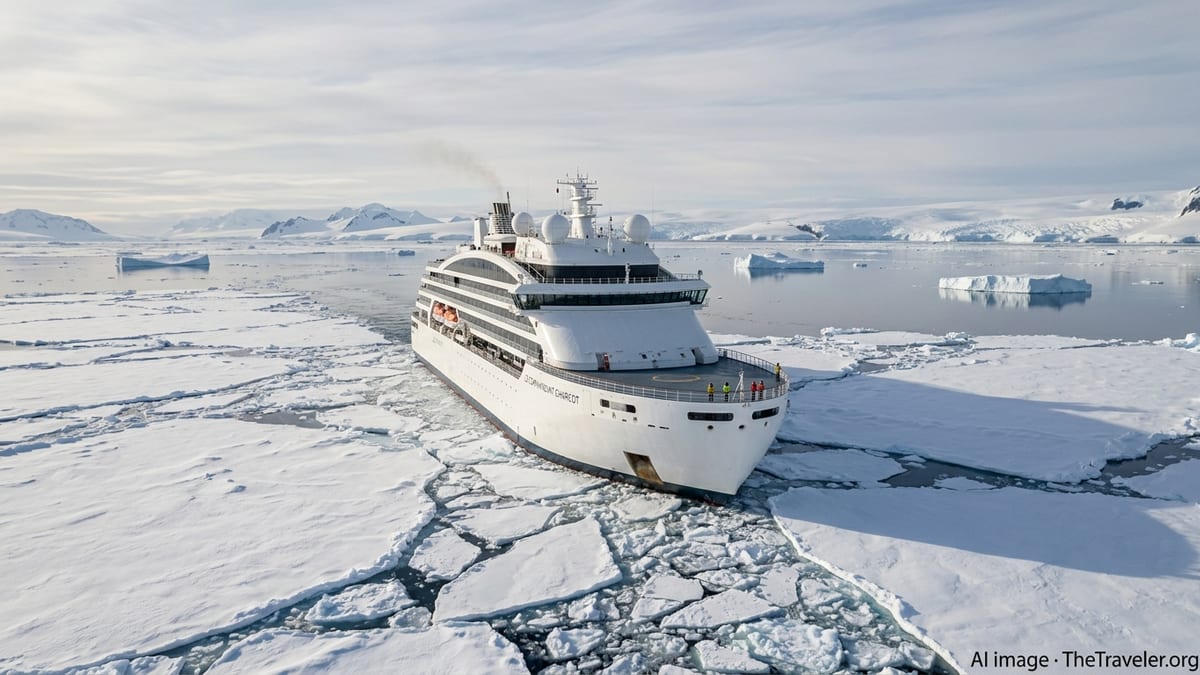
A new generation of polar cruising is putting Argentina back in the spotlight as a gateway to the White Continent, with Ponant’s icebreaking Le Commandant Charcot offering an unusually intimate and technically advanced way to reach Antarctica.
Get the latest news straight to your inbox!
A Luxury Icebreaker Rewriting the Antarctica Playbook
Le Commandant Charcot is widely described in industry reports as the first true luxury icebreaker dedicated to passenger expeditions, combining a Polar Class 2 hull with high-end amenities more often associated with boutique ocean liners than scientific vessels. The ship was delivered to Ponant in 2021 and is designed to push deeper into pack ice than conventional expedition ships, opening routes in the Weddell Sea, Ross Sea and other rarely visited sectors of Antarctica.
Technical documentation from the builder Vard and coverage in maritime trade publications indicate that the vessel can operate in ice up to around 2.5 meters thick, with the ability to work through heavier pressure ridges. This capability allows itineraries that venture well beyond the Antarctic Peninsula’s usual cruise corridor, often in late season when sea ice can be more challenging.
Capacity is limited to around 270 guests, according to Ponant’s public specifications, which keeps the scale closer to a small expedition ship than a mainstream cruise liner. Public areas and cabins are positioned around large windows to maximize views of sea ice, wildlife and changing polar light, reinforcing the sense of an observation platform designed for remote environments.
At the same time, the ship has been fitted out with a spa, multiple dining venues and indoor-outdoor lounges, a combination that aims to deliver comfort between landings and Zodiac outings. Operators present the vessel as part research platform, part exploration ship and part floating hotel, reflecting a broader trend toward high-comfort expedition cruising.
From Buenos Aires to Ushuaia: Argentina’s Critical Gateway Role
Most Antarctica voyages still funnel through southern South America, and Argentina occupies a central position in that network. Ushuaia, capital of Tierra del Fuego, is frequently described in operator materials and media coverage as the principal “gateway city” for the Antarctic Peninsula, with ships such as Le Commandant Charcot embarking and disembarking passengers there during the austral summer.
Itineraries marketed for current and upcoming seasons typically include charter or scheduled flights from Buenos Aires to Ushuaia, with passengers overnighting in the Argentine capital before continuing south. This two-step journey reflects the limited capacity of Ushuaia’s airport and the logistical challenge of moving several hundred passengers and crew at a time to the end of the continent.
Tourism analysis focused on Antarctica notes that local economic benefits flow primarily to Ushuaia’s port, hotels and logistics companies, as provisioning, bunkering and crew changes cluster around the city. The growth of high-end expedition products such as Le Commandant Charcot has reinforced that role, bringing higher-spend visitors who often add pre- or post-cruise stays in Buenos Aires for culture, food and wine.
Recent reports from Argentine and international outlets have also highlighted the vulnerability of this gateway to extreme weather. Strong winds and rough seas in the Beagle Channel can disrupt berthing schedules and flight connections, underlining the need for flexible planning when routing trips that rely on narrow weather windows and complex charters.
On Board and On the Ice: What the Voyage Is Really Like
Publicly available itineraries and marketing materials for Le Commandant Charcot’s Antarctic program outline a pattern familiar to expedition travelers, but extended by the ship’s icebreaking reach. After crossing the Drake Passage from Ushuaia, the vessel typically spends well over a week deep in Antarctic waters, with daily landings or Zodiac cruises as conditions allow.
Activities commonly promoted include shore hikes, wildlife viewing, kayaking and Zodiac safaris among icebergs. On some departures, specialized options such as polar plunges, snowshoeing or even scientific interpretation sessions are also highlighted. The PC2 rating means that, where regulations and sea ice permit, the ship can navigate into bays and channels choked with ice that would stop lighter expedition vessels.
On board, the experience is framed as a blend of French hospitality and informal expedition atmosphere. Open decks and observation lounges are central to the voyage, with announcements and programming oriented around wildlife sightings and changing ice conditions rather than typical cruise entertainment. Passengers are frequently encouraged in operator communications to spend time on deck during transits for chances to see whales, seals and penguin colonies from the ship itself.
The Antarctic summer season generally runs from November through March, and program descriptions show that Le Commandant Charcot alternates between classic Antarctic Peninsula routes, longer itineraries that push south of the Antarctic Circle and occasional grand expeditions, including partial or near-circumnavigations of the continent linking Ushuaia with ports such as Hobart.
Environmental Frameworks and Hybrid Technology
Antarctic tourism continues to face scrutiny over its environmental footprint, and Le Commandant Charcot has been positioned by Ponant and maritime analysts as a response to those concerns. The ship uses a hybrid propulsion system combining liquefied natural gas and electric power, with high-capacity batteries that can support low-emission or silent running in sensitive areas.
Shipbuilding releases from Fincantieri and Vard describe the vessel as the first large cruise ship of its kind to adopt this LNG hybrid arrangement in a polar icebreaking hull. Advocates argue that this reduces local emissions, supports more efficient fuel use and can minimize underwater noise in wildlife-rich waters compared with conventional diesel-powered tonnage of similar size.
In parallel, Le Commandant Charcot’s operations fall under the wider framework set by the International Association of Antarctica Tour Operators, which promotes voluntary guidelines such as limits on the number of visitors ashore at one time, biosecurity measures to prevent the introduction of non-native species and protocols for wildlife approach distances. IAATO also highlights restrictions on ships with more than 500 passenger berths making landings, a rule that effectively favors smaller expedition ships and supports the operational model used by Ponant.
Environmental researchers, however, continue to point to the overall carbon footprint of polar tourism, noting that flights to South America and the energy required to operate any vessel in ice contribute significantly to greenhouse gas emissions. In that context, hybrid propulsion and strict landing protocols are presented in public debates as mitigation steps rather than complete solutions.
Planning a Life-Changing but Logistically Demanding Journey
For travelers, publicly available booking information and specialist agency advice emphasize that an Antarctica trip on Le Commandant Charcot is both a major financial commitment and a journey that demands careful timing. Fares are typically positioned at the top end of the expedition market, reflecting the ship’s technical capabilities, limited capacity and luxury service level.
Industry observers recommend booking at least a year in advance for peak-season departures between December and February, when wildlife activity, daylight and ice conditions are at their most favorable around the Antarctic Peninsula. Shoulder-season voyages at the start and end of the summer can offer more dramatic ice but also carry higher risks of weather-related changes to the program, especially in the Drake Passage and around Ushuaia.
Travel planning usually involves coordinating international flights into Buenos Aires, domestic or charter flights to Ushuaia, pre-cruise hotel stays and comprehensive travel insurance that accounts for the unique risks of polar travel. Many operators and agencies also encourage adding time in Argentina before or after the voyage to buffer against delays and to explore Patagonia or the country’s wine regions.
For those able to navigate the logistics and cost, Le Commandant Charcot represents one of the most technically advanced and immersive ways currently available to experience Antarctica, linking Argentina’s far south with some of the most remote sea ice and wildlife habitats on Earth.