

On the northern tip of Wisconsin, where Lake Superior feels more like an inland ocean, the Apostle Islands offer a mix of sculpted sandstone sea caves, lonely lighthouses, quiet beaches, and deep Northwoods solitude. This chain of islands and wild shoreline forms Apostle Islands National Lakeshore, a place that rewards patient travelers with big-sky horizons, glowing sunsets, and some of the Midwest’s most dramatic waterborne adventures.
Getting Oriented: Where and What Are the Apostle Islands
Apostle Islands National Lakeshore protects 21 islands and a stretch of mainland shoreline off the tip of Wisconsin’s Bayfield Peninsula. Although maps make Lake Superior look like one more Great Lake, it behaves more like a small sea, with powerful storms, cold water, and long distances between safe harbors. The islands sit just offshore from the town of Bayfield, the region’s main visitor hub, and spread east and west along the coast in a broken crescent of forested land and exposed sandstone cliffs.
The national lakeshore is best known for three things: its honeycomb of sandstone sea caves, a collection of historic lighthouses on six different islands, and broad views of Lake Superior’s huge, often steel-blue expanse. You will not find a single visitor center complex dominating the landscape. Instead, you move between small harbors, docks, and trailheads scattered around the peninsula, then head out by boat or on foot to explore.
Despite the park’s island focus, a significant portion of the scenery is accessible without a private boat. Mainland viewpoints, scheduled sightseeing cruises, local water taxis, and guided kayak trips provide realistic options for first-time visitors. That said, distances are real, weather is a constant factor, and planning ahead makes the difference between a rushed day trip and a memorable stay.
Because the park spreads across open water, conditions and access change more quickly than at many inland national parks. Ferry schedules, tour routes, and campsite availability shift with the season and with Lake Superior’s moods. Build some flexibility into your itinerary, and always confirm current details with local operators and the National Park Service shortly before you travel.
Sea Caves and Ice Caves: Signature Sandstone Formations
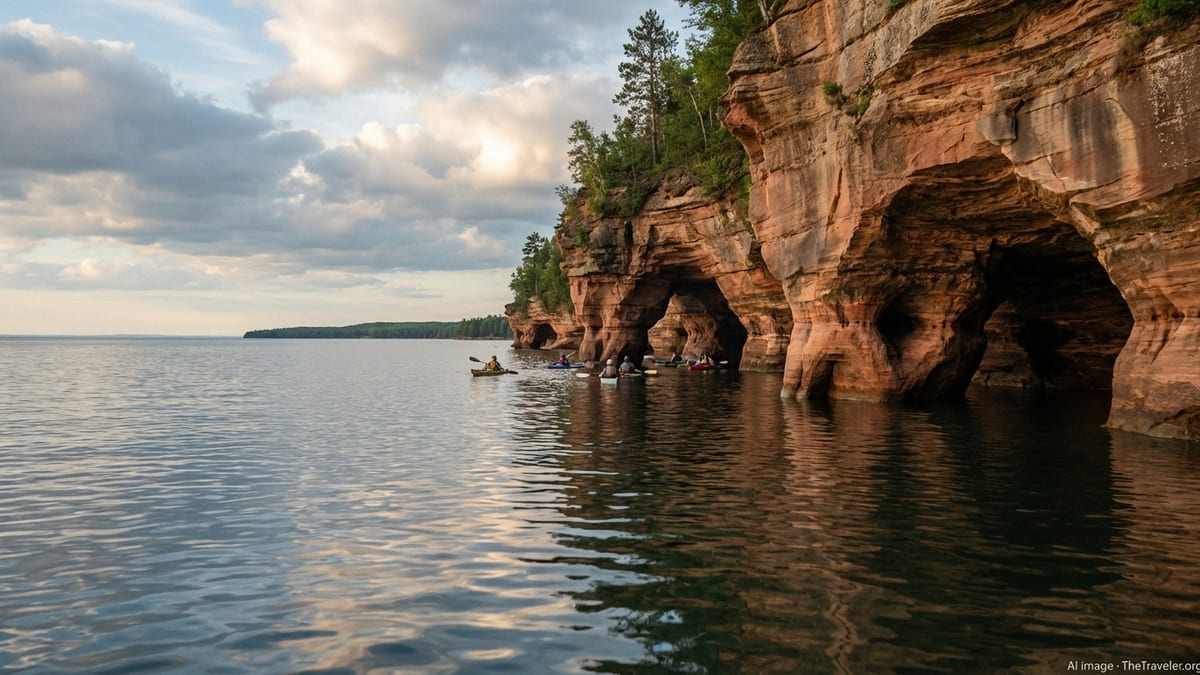
The Apostle Islands’ sea caves are the park’s most iconic feature. Over thousands of years, waves and ice have carved arches, tunnels, and honeycombed alcoves into reddish-brown sandstone cliffs along several islands and sections of mainland shoreline. In summer and early fall, visitors explore these formations primarily by kayak or small boat, gliding beneath overhangs and into echoing chambers where lake water slaps against rock.
The most famous sea caves line the mainland cliffs near Meyers Beach on the park’s western side. From the surface of Lake Superior, this stretch of shoreline looks like a series of stone cathedrals, with pillars, narrow passages, and high ceilings streaked in iron-rich colors. When lake levels and winds cooperate, paddlers can weave through tight openings and drift in protected grottoes. Similar caves ring Sand Island and Devils Island, although those require a longer boat ride to reach.
In certain winters, the same formations become the celebrated “ice caves.” When Lake Superior freezes solid along the shoreline and conditions remain calm and bitterly cold, waves stop breaking and instead build up curtains of ice. Water seeps from the cliffs to create frozen waterfalls, while spray forms delicate icicles and thick, translucent columns. The result is a temporary world of ice vaults and blue-green light that draws thousands of visitors in the rare years when it is safe to walk there.
Access to the ice caves is never guaranteed in a given winter and is increasingly rare. Even in cold years, wind or waves can break up seemingly solid ice overnight, forcing park staff to close the route. Consider the ice caves a bonus rather than a guaranteed attraction. If you plan a winter visit, make sure you are also interested in snowshoeing, skiing, or simply enjoying Lake Superior’s stark shoreline, in case the ice never reaches safe conditions.
Exploring by Water: Kayaks, Cruises, and Water Taxis
For most visitors, getting onto the water is the defining Apostle Islands experience. Guided kayak tours operate during the main season, typically late spring through early fall, with the longest schedules clustered in midsummer. Outfitters based in Bayfield, Cornucopia, and other small harbors provide boats, gear, and local guides, which is often the safest approach for first-time Lake Superior paddlers.
Kayaking the mainland sea caves near Meyers Beach is one of the region’s marquee trips. In calm conditions, even beginners can manage short guided outings close to shore. On windier or choppier days, guides may adjust routes, shorten tours, or cancel entirely. Lake Superior’s water stays cold even in July, and sudden changes in wind direction can turn flat water into steep waves in a surprisingly short time. Paddlers should dress for immersion and be prepared to follow guide instructions closely.
Sightseeing cruises offer a drier way to see lighthouses, cliffs, and outer islands. Commercial boat tours based in Bayfield typically run set routes past the islands, sometimes focusing on lighthouse history and sometimes on scenery more broadly. These trips are a good choice for families, photographers who prefer stable platforms, and travelers who want an overview before committing to longer adventures. Routes and frequency vary through the season, with the fullest schedules in high summer.
Independent travelers can use local water taxis to reach specific islands for day hikes or camping. Water taxis are smaller passenger boats that operate on more flexible schedules and can drop you near trailheads or less-visited shorelines. Booking in advance is important, particularly in July and August. Because operators adapt to changing lake conditions, departure times and pick-up points may shift; build padding into your plans so you are not trying to catch the last shuttle of the evening or a tight same-day drive after your return.
Lighthouses and Maritime History
The Apostle Islands hold one of the densest collections of historic lighthouses in the National Park System, with eight towers spread across six islands. For more than a century, these lights guided ore boats, freight carriers, and passenger steamers through tricky waters filled with reefs, shoals, and sudden fog banks. Today, the lighthouses anchor many sightseeing cruises and remain some of the park’s most photogenic landmarks.
Raspberry Island’s lighthouse, set on a grassy bluff with sweeping views of Lake Superior, has been carefully restored to evoke its early twentieth-century appearance. Its white tower and red-roofed keeper’s quarters make it one of the park’s classic postcard scenes. Volunteer interpreters and park rangers often lead tours inside during the main season, providing a window into the daily routines of keepers who once lived in relative isolation, watching for storms and ship lights.
On Sand Island, a sturdy brownstone lighthouse stands above rocky shoreline and nearby sea caves. The masonry reflects the same sandstone that forms the caves, and the building’s compact footprint speaks to the need for durability in a place where waves and ice constantly test the shore. Farther out, Devils Island Light sits at the exposed northern edge of the archipelago. Its cliffs and caves are among the most dramatic in the park, and when lake conditions allow, sightseeing boats sometimes nose close enough for views into the cathedral-like openings.
Not every lighthouse can be easily entered or toured, and access can shift from year to year as restoration work and staffing levels change. Some towers remain active navigation aids with limited interior visitation, while others are primarily exterior viewpoints from cruise decks or distant shorelines. Check which lights are featured on current boat tour itineraries, and consider lighthouse-focused cruises if maritime history is a highlight of your trip.
Seasonal Travel: When to Go and What to Expect
The Apostle Islands experience pronounced seasons, each offering a different style of visit. Summer brings the most reliable access to boat tours, water taxis, kayak trips, and island campgrounds. July and August are busiest, with relatively mild air temperatures and long daylight hours that favor evening cruises and sunset paddles. Lake Superior’s water remains cold, though, and fog or thunderstorms can still sweep across the lake, so flexibility stays important even in high season.
Late spring and early fall appeal to travelers who prefer cooler weather and thinner crowds. In May and early June, some services may still be ramping up, but forests turn quickly green and migratory birds fill the islands and shoreline. September and early October are prime months for fall color, with maples and birches on the Bayfield Peninsula and islands putting on a vivid show above the blue lake. Water-based tours usually continue into this period, though some routes may shorten as daylight wanes.
Winter is the quietest and most unpredictable season. Snow, ice, and wind can make travel challenging, but they also transform the landscape. The possibility of accessing the ice caves along the mainland cliffs tends to draw attention, yet such opportunities have been rare in recent decades and often brief. Even in a promising winter, a single strong weather system can break up ice that had taken weeks to form, closing the route again with little notice. Travelers focused on winter should treat the ice caves as a welcome surprise rather than the main reason to come.
Spring shoulder periods around late March and April are often dominated by lingering ice, muddy trails, and rapidly changing weather. Boat-based services are limited, and lake conditions can be harsh. This can be a rewarding time for seasoned Great Lakes travelers who enjoy solitude, but most first-time visitors find summer through early fall more comfortable and practical.
Hiking, Camping, and Life on the Islands
While many visitors experience the Apostle Islands primarily from boats, hiking and camping introduce a slower, more immersive rhythm. Trails wind through mixed forests of pine, birch, and maple, cross open clearings, and skirt shorelines where waves carve at the sandstone. Distances tend to be modest rather than epic, but the combination of island isolation and Lake Superior weather keeps outings memorable.
On the mainland, the Meyers Beach area offers a popular cliff-top hiking trail that parallels the sea caves from above during the snow-free season. The path undulates through forest and over boardwalks, arriving at viewpoints where you can look down into arches and see kayaks threading the formations below when the lake is calm. Elsewhere, shorter nature trails and beach walks near Little Sand Bay and other access points provide options for visitors who are not planning long boat rides.
Islands such as Stockton, Oak, and Sand offer backcountry-style camping and networked footpaths. Some sites sit near pebble or sand beaches, while others lie tucked into the trees, protected from wind. Reaching these campgrounds generally requires arranging a boat shuttle or using your own sea kayak, then carrying in all equipment and supplies. Reservations are typically required during the main season, and campers should be prepared for cool nights, mosquitoes in early summer, and the possibility of weather delays on both arrival and departure days.
Because island facilities are basic and distances to services are significant, visitors should follow leave-no-trace principles closely. That includes packing out all trash, minimizing campfire impacts where allowed, and being careful with food storage to avoid attracting wildlife. Simple choices such as washing dishes well away from the shoreline and using designated toilet facilities help protect the fragile island ecosystems and keep the experience pleasant for future travelers.
Safety, Weather, and Responsible Travel
Lake Superior’s beauty comes with real risks, and respectful planning is part of any Apostle Islands trip. The lake is famously cold; even in mid-summer, nearshore water temperatures can feel frigid, and sudden immersion can quickly lead to hypothermia. Wind shifts can generate steep, closely spaced waves that challenge small craft. Fog can reduce visibility to a few boat lengths. All of this means that conditions which look benign from a harbor or parking lot can be more serious once you are exposed on the water.
For paddlers, using proper cold-water gear, staying close to shore when appropriate, and going with experienced guides reduces those risks. Even strong inland kayakers often underestimate how different Lake Superior feels, especially near cliffs where reflecting waves collide from several directions. Wearing a life jacket at all times and listening carefully to safety briefings is essential. If a guide or boat captain cancels or reroutes a trip because of conditions, view that as part of how the lake works rather than as an inconvenience.
On land, weather can shift quickly from sun to rain or from calm to strong wind. Temperatures along the shore are often cooler than inland forecasts suggest, and a damp breeze can make relatively mild days feel raw. Packing layers, waterproof outerwear, and reliable footwear is wise even in midsummer. In winter, the considerations are more serious: anyone attempting to hike on lake ice must be prepared for bitter wind, uneven footing, limited shelter, and sparse cell service. The National Park Service emphasizes that ice is never completely safe and may close the ice cave route without warning if conditions deteriorate.
Responsible travel also means being mindful of the region’s small communities and fragile shorelines. Parking is limited at several access points, including Meyers Beach during major winter events, so shuttles and satellite lots are often used to spread out crowds. Obeying posted parking rules, packing out trash, staying off sensitive vegetation near cliffs, and keeping noise down at campsites all help preserve the area’s character. By planning ahead and traveling thoughtfully, you support both the ecosystems and the year-round residents who make visits possible.
Practical Planning: Access, Fees, and Local Logistics
Planning an Apostle Islands trip usually starts in Bayfield or nearby communities on the Bayfield Peninsula. These small towns offer lodging, restaurants, gear shops, and marinas, and they serve as staging points for cruises, kayak tours, and water taxis. Lodging ranges from small inns and motels to vacation rentals and campgrounds. During peak summer weeks and any rare winter ice cave openings, accommodations can book up quickly, so advance reservations are wise.
Access to specific features of the national lakeshore often involves layered logistics. For example, visiting the mainland sea caves might combine a drive to the Meyers Beach area, a hike along the bluff-top trail, or a guided kayak trip launching nearby when lake conditions allow. Reaching an island campground could require a scheduled water taxi in the morning, a day of hiking, then a return trip a few days later. During winter ice cave events, on-site parking at Meyers Beach is typically restricted or unavailable, with visitors directed to satellite lots and shuttles run by local transit providers.
The National Park Service may charge modest fees for certain services or special winter events, such as per-person charges when the ice caves are open, in addition to any commercial tour costs or local shuttle fares. These fees help cover management, staffing, and facilities needed to handle surges of visitors. Because details can change from year to year, especially as agencies fine-tune shuttle systems and crowd management, it is important to check current guidance close to your travel dates.
Cell phone coverage across the park is patchy, especially once you move away from Bayfield and other communities or head onto the water. Travelers should not assume continuous navigation or communication through mobile apps. Carrying printed maps, confirming meeting times and pickup locations ahead of time, and letting someone know your itinerary are all sensible precautions. Thinking through backup plans, such as what you will do if weather delays a boat pickup, is part of traveling responsibly in this semi-remote landscape.
The Takeaway
Apostle Islands National Lakeshore rewards travelers who appreciate wild shorelines, patient planning, and the drama of a Great Lake in constant motion. Its carved sea caves, weathered lighthouses, and wide horizons provide a distinctive counterpoint to the mountain and desert landscapes that dominate many U.S. park itineraries. Whether you explore by kayak, cruise boat, hiking trail, or winter snowshoe, the through-line is Lake Superior itself, always present at the edge of your vision and always shaping your plans.
If you come in summer or fall, expect to balance bucket-list experiences like paddling the mainland caves with quieter moments on beaches and forest trails. In winter, expect uncertainty and treat any opportunity to see the ice caves as a rare privilege rather than a guaranteed event. In every season, approach the islands with humility: respect for the weather, the water, and the communities that call this coastline home.
With realistic expectations, flexible itineraries, and a willingness to adapt to the lake’s moods, travelers can piece together an Apostle Islands visit that feels both adventurous and deeply restorative. You may arrive chasing a single photograph or experience, but it is often the slower details, from wind in the pines to the distant pulse of waves under the cliffs, that linger longest after you leave.
FAQ
Q1. Where are the Apostle Islands and how do I get there?
The Apostle Islands sit off the Bayfield Peninsula in northern Wisconsin on Lake Superior. Most visitors drive to the town of Bayfield or nearby communities, then join boat tours, water taxis, or kayak trips that depart from local harbors.
Q2. When is the best time of year to visit the Apostle Islands?
For most travelers, the most practical window is late spring through early fall, when boat tours, water taxis, and kayak outfitters operate regular schedules. July and August bring the warmest weather and longest days, while September and early October offer fall color and slightly thinner crowds.
Q3. Can I count on seeing the Apostle Islands ice caves in winter?
No. Access to the ice caves is highly unpredictable and has only been possible in select winters when thick, stable lake ice forms and calm conditions persist. Even in promising years, a single storm can close the route with little notice, so the caves should be considered an occasional bonus rather than a guarantee.
Q4. Do I need kayaking experience to see the sea caves?
Not necessarily. Several local outfitters offer guided trips to the mainland sea caves that are suitable for beginners in calm conditions, providing all necessary gear and safety briefings. However, Lake Superior can change quickly, and guides may cancel or adjust tours if waves, wind, or fog make paddling unsafe.
Q5. Are there lighthouses I can tour inside?
In many seasons, lighthouses such as Raspberry Island Light and Sand Island Light offer ranger- or volunteer-led tours that bring visitors inside restored structures. Availability varies with staffing, maintenance work, and boat schedules, so it is wise to confirm which lights are open for interior visits during the dates you plan to travel.
Q6. Is camping available on the islands?
Yes. Several islands feature designated campgrounds and individual sites that can be reached by water taxi, private boat, or sea kayak. Reservations are typically required during peak season, and campers should be self-sufficient, prepared for cool nights, and ready for possible weather delays that affect boat pickups.
Q7. How cold is the water in Lake Superior during summer?
Even in midsummer, Lake Superior remains cold compared with many inland lakes, and sudden immersion can be a shock. Nearshore temperatures can feel chilly enough to discourage prolonged swimming, and paddlers are encouraged to dress for cold-water conditions rather than just the air temperature.
Q8. Do I need a car once I arrive in Bayfield?
A car is useful for reaching trailheads, smaller harbors, and viewpoints along the Bayfield Peninsula, especially if you plan to visit the Meyers Beach area or explore multiple towns. Within Bayfield itself, many docks, shops, and some lodging are walkable, but regional transit options are limited outside special shuttle operations for major events.
Q9. Are the Apostle Islands suitable for young children or less mobile travelers?
Yes, with thoughtful planning. Sightseeing cruises from Bayfield provide comfortable seating, shelter, and narration suitable for families and visitors who prefer not to hike or paddle. Some mainland viewpoints and short walks near harbors offer scenery without long climbs, though true wilderness trails and island landings can involve uneven ground and limited facilities.
Q10. What should I pack for an Apostle Islands trip?
Plan on layered clothing, a wind- and waterproof outer jacket, sturdy footwear, sun protection, and a warm hat even in summer. If you expect to paddle or spend long days on the water, add quick-drying layers, a lightweight insulating piece, and a small dry bag for essentials. In winter, upgrade to full cold-weather gear, traction devices for footwear, and extra supplies in case weather delays your return.