

More news on this day
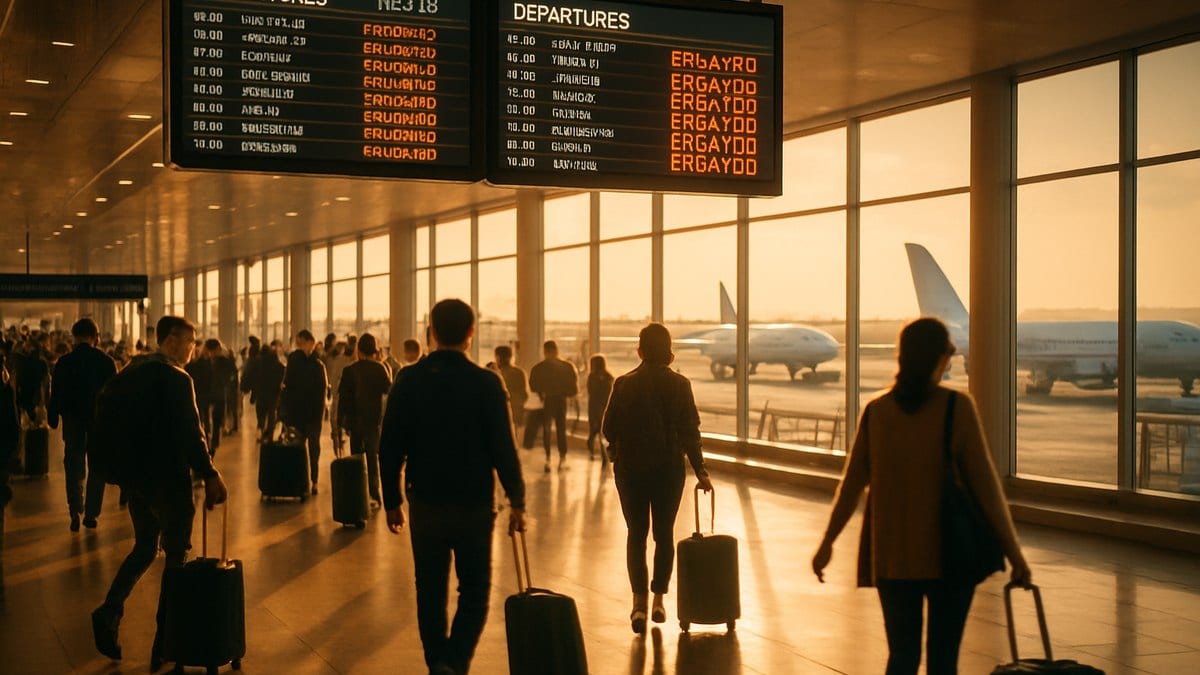
Flight disruptions centered on Philadelphia International Airport in early April 2026 are rippling across major Northeast hubs, as a mix of unsettled weather, airspace constraints and staffing strains fuels another round of delays for already weary travelers.
Get the latest news straight to your inbox!
April Weather and Operational Strains Converge at PHL
Publicly available tracking data and industry reports indicate that Philadelphia International Airport has emerged as a recurring trouble spot in April, with clusters of delays building on several days in the second week of the month. On April 9 and April 10, national tallies of disruptions listed Philadelphia among a group of major U.S. airports experiencing elevated delay levels, even as overall cancellation counts remained comparatively modest.
Coverage from aviation-focused outlets describes a pattern in which only a handful of flights at Philadelphia were canceled outright while dozens departed late, contributing to more than 2,000 delays nationwide on some days. The figures underscore how even limited schedule slippage at a large connecting airport can trigger broader knock-on effects across the network, affecting passengers who may never set foot in Philadelphia.
Weather-linked constraints are a key part of the story. An early April summary of Federal Aviation Administration delay programs highlighted low cloud ceilings and intermittent instrument-only flying conditions in the Mid-Atlantic and Northeast corridor, noting that Philadelphia and other major airports periodically fell below visual-approach thresholds. Those conditions tend to reduce the number of arrivals and departures that can be handled per hour, creating queues both on the ground and in holding patterns aloft.
At the same time, Philadelphia is operating during a period of heightened sensitivity to staffing and infrastructure issues. Recent federal construction and capacity planning documents flag the airport for reduced runway and taxiway flexibility during portions of 2026, meaning that any bout of adverse weather or airspace congestion is more likely to result in measurable delay.
Cascading Disruptions Across New York, Boston and Washington
The bottlenecks at Philadelphia are magnified by its role in the densely trafficked Northeast corridor, where air routes and schedules are tightly intertwined. During the first half of April, weather and visibility constraints extended from the Mid-Atlantic into New York and New England, with delay summaries pointing to New York’s major airports, Boston Logan and the Washington region as frequent participants in the same FAA traffic management initiatives that affected Philadelphia.
When Philadelphia’s arrival and departure rates are cut back, flights destined for or originating from New York, Boston and Washington often face indirect fallout. Aircraft and crews that operate multi-leg patterns through multiple hubs can arrive late into one city and then depart late from another, compounding delays throughout the day. Industry commentary on recent operations has emphasized that these network effects are especially pronounced on routes linking Philadelphia with other large coastal airports, where slots are already tightly scheduled.
Flight-status dashboards viewed on April 10 and April 12 show how these dynamics play out in practice. On several occasions, Philadelphia reported a few dozen delayed flights at the same time that New York and Boston registered similar buildups, reflecting a shared exposure to the same bands of low clouds, scattered thunderstorms further south and periodic air traffic control flow restrictions. As has often been the case in this corridor, relatively short-haul shuttle flights between cities like Philadelphia, New York, Boston and Washington suffered disproportionate delays because their turnaround times leave little room to recover from earlier disruptions.
Travel industry coverage notes that, while the scale of this month’s problems does not match the most severe winter storms of January or February, the April pattern is particularly frustrating for travelers who expected smoother operations with the end of peak snow season. Instead, they are encountering a different mix of springtime challenges that still translate into missed connections and extended gate holds.
Airlines at the Center: American, Spirit and Frontier Under Pressure
Several carriers with a strong presence at Philadelphia have shouldered much of the operational strain. Travel and aviation news outlets report that on multiple April days, American Airlines, Spirit Airlines and Frontier Airlines collectively accounted for the majority of late departures and a handful of cancellations at Philadelphia, disrupting itineraries to domestic destinations such as Chicago, Orlando and Nashville, as well as long-haul routes to London and San Juan.
One April 10 snapshot described 10 cancellations and numerous delays tied to these three airlines at Philadelphia alone, while a national roundup two days earlier logged dozens of delayed departures from the airport as part of a broader wave of more than 2,000 flight delays across the United States. A separate report on April 12 highlighted another spike in disruptions at Philadelphia, with around 60 flights delayed and a small number canceled, again largely concentrated among the same carriers.
American Airlines’ role as the dominant operator at Philadelphia means even incremental schedule issues can reverberate widely. Aircraft that begin the day at Philadelphia often continue to other hubs such as Chicago, Dallas or New York-area airports, so a delay on an early morning departure can propagate into missed connections several legs later. Low-cost carriers like Spirit and Frontier, which typically run tighter aircraft utilization and fewer spare planes, may have even less flexibility to recover once their schedules fall out of alignment.
Analysts observing the April disruptions point out that these carriers are still contending with systemwide challenges that predate this month’s issues, including uneven staffing recovery, high load factors and lingering maintenance backlogs. Philadelphia’s April weather and capacity constraints have effectively exposed those vulnerabilities in a concentrated way, turning what might otherwise have been manageable slowdowns into more visible clusters of delays.
Security Staffing, Passenger Experience and Longer Lead Times
Compounding the operational strain in the air, passengers at Philadelphia have faced ground-side challenges, particularly at security checkpoints. Recent local news coverage and traveler accounts describe Transportation Security Administration staffing gaps that prompted the temporary closure or consolidation of some checkpoints in late March and early April, driving wait times sharply higher at certain hours.
In early April, airport information channels began advising departing passengers to arrive at least two and a half hours before domestic departures and three and a half hours ahead of international flights, a notable increase from pre-2026 guidance. That recommendation reflects both the possibility of longer security lines and the heightened risk that even minor upstream disruptions in check-in or baggage drop could cause travelers to miss flights already operating under tightened departure windows.
Social media posts and discussion forums have captured scenes of crowded pre-security halls at Philadelphia, as travelers navigate rerouted queues and temporarily shuttered screening lanes. While some days pass relatively smoothly, sporadic surges in early-morning and late-afternoon demand have coincided with periods of constrained checkpoint capacity, leaving passengers to race from security to their gate while departure boards already show creeping delays.
These ground-side strains feed back into the airborne picture. Late-arriving passengers can delay boarding, and disruptions in baggage screening can slow aircraft loading, making it harder for airlines to depart on time even when air traffic and weather conditions have improved. The result is a system in which security staffing shortfalls, weather constraints and airline scheduling decisions reinforce one another, keeping on-time performance under pressure.
Network Outlook for the Remainder of April
Looking ahead to the rest of April 2026, publicly available FAA planning documents and airline schedule data suggest that Philadelphia and the broader Northeast corridor will remain sensitive to any renewed bouts of low ceilings or convective weather. Seasonal forecasts point to a typical spring pattern of changeable conditions, with intermittent storms and shifting wind patterns that can force runway configuration changes at major airports.
Industry observers note that congestion risks are particularly acute on Fridays and Sundays, when leisure and business travel demand converges. On those peak days, even minor delays on early-morning departures from Philadelphia can quickly consume remaining schedule buffers, amplifying the chance that disruptions will cascade into New York, Boston, Washington and beyond by afternoon.
Travel advisers are therefore urging passengers with April itineraries through Philadelphia and neighboring hubs to build additional margin into their plans. Common recommendations include scheduling longer connection windows, avoiding the tightest banked connections through Northeast hubs and tracking flight status closely in the 24 hours leading up to departure. Many suggest considering midday flights, which may have a better chance of operating after the morning peak of weather or security bottlenecks.
For airlines and airport operators, the April disruptions at Philadelphia serve as another reminder of how quickly the Northeast network can seize up when multiple stressors converge. As carriers work through spring break traffic and pivot toward the busy summer season, their ability to shore up staffing, refine schedules and coordinate closely with air traffic managers in this corridor will be central to keeping future bouts of turbulence in the air and on the ground from spiraling into more prolonged chaos.