

More news on this day
Early April has brought a new wave of aviation turmoil across the Asia Pacific region, as a tangle of Middle East airspace restrictions, holiday peaks and lingering operational strains has triggered widespread flight cancellations, rolling delays and last minute rerouting for thousands of travelers.
Get the latest news straight to your inbox!
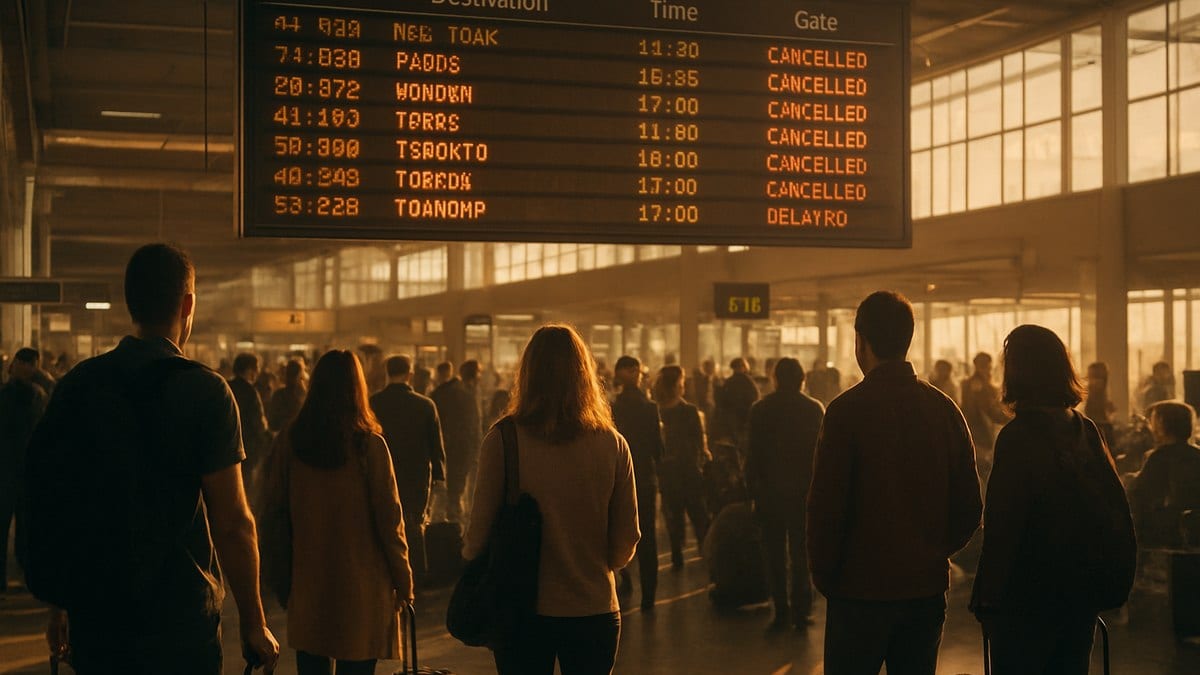
Middle East Turmoil Ripples Across Asian Hubs
Publicly available aviation data and industry advisories indicate that ongoing conflict and airspace restrictions in parts of the Middle East are continuing to disrupt east–west traffic flows, with major knock on effects at Asian gateways. Carriers that normally route services between Asia and Europe or the Gulf through affected corridors have been forced to operate longer routings, consolidate frequencies or suspend some flights altogether, tightening capacity across the first week of April.
KPMG regional analysis published in March highlighted “massive global cancellations” linked to missile risks and restricted airspace over parts of the Middle East, with hubs such as Dubai, Abu Dhabi and Doha facing heavy congestion as airlines rework schedules. Those strains are now feeding into April operations across Asia Pacific, reducing aircraft and crew availability and pushing irregular operations into previously unaffected routes.
Travel industry coverage points to Singapore Airlines, Gulf carriers and several Asian airlines adjusting or cancelling services that normally connect Southeast and East Asia with Europe and the Middle East. Passengers with itineraries transiting Gulf hubs in early April are reporting last minute schedule changes, extended layovers and involuntary rerouting via secondary European or Central Asian airports as airlines attempt to keep networks functioning on altered flight paths.
In the Philippines, published reports show that Philippine Airlines has suspended services on its Manila to Riyadh route through at least 8 April because of security uncertainties in regional airspace. Other carriers serving the Gulf and Levant from Asian cities have trimmed frequencies or shifted timings, narrowing options for migrant workers and leisure travelers who rely heavily on these links.
Holy Week Peak and Adjusted Schedules in the Philippines
The calendar has compounded the disruption in the Philippines, where Holy Week traditionally brings one of the busiest travel periods of the year. Travel security advisories for the country warn of significant congestion and potential delays from 2 to 6 April, with Ninoy Aquino International Airport in Manila and more than 40 other airports expected to experience heavy passenger loads, longer queues and operational strain.
Airport and airline planning has attempted to anticipate the surge. AirAsia Philippines and its Malaysian sister carrier have moved all international flights from Manila’s Terminal 3 to Terminal 1 as of 1 April, a shift designed to create more capacity and improve passenger flow during the peak period. However, the terminal change has also introduced added complexity for travelers already dealing with altered flight times and tight connections.
At the same time, international schedules into and out of the Philippines remain affected by the broader Middle East crisis. Travel trade media report that the Philippine government has extended humanitarian visa relief for foreign nationals stranded in the country because of canceled or severely delayed international flights. Major airports including Manila, Cebu and Clark are operating with adjusted long haul schedules as airlines reconfigure their networks, which has increased the risk of missed onward connections for Asia-bound passengers.
Online traveler forums focused on the Philippines reflect a wave of short notice itinerary changes as airlines consolidate services, particularly on routes touching the Middle East or using alternative hubs. Some passengers report being rebooked onto indirect routings through Southeast Asian or East Asian hubs with layovers stretching into double digits, while others are choosing to postpone or cancel trips altogether amid uncertainty about further disruptions later in April.
Knock-On Effects From March Meltdowns
The April disruption follows directly on the heels of severe operational turbulence in late March, when multiple Asian hubs experienced mass delays and cancellations triggered by a combination of adverse weather, ground handling bottlenecks and the first wave of Middle East related reroutings. Independent aviation tracking compiled during the final week of March recorded hundreds of cancellations and several thousand delays across key airports in China, Japan, Thailand and Gulf states.
Coverage by regional travel outlets described that late March episode as one of the most far reaching aviation crises in recent years for Asia linked traffic, with passengers stranded for days at some hubs. Airlines that managed to avoid outright cancellations still logged unusually high delay rates as congested skies and overburdened ground infrastructure slowed aircraft turnaround times.
Although carriers spent the final days of March working through stranded backlogs, the hangover from those irregular operations has carried into April. Aircraft and crews remain out of position after complex recovery flying, and maintenance windows compressed by emergency deployments are now reappearing as short notice schedule adjustments. Network planners are also continuing to factor in longer great circle routings around restricted airspace, which effectively reduces available capacity and makes schedules more fragile when fresh weather or technical issues arise.
Analysts quoted in regional aviation commentary note that while Asia Pacific traffic volumes have largely recovered to or surpassed pre pandemic levels, the resilience of airline and airport operations has not kept pace. The current April wave of disruptions is being viewed as another test of how well the region’s aviation system can absorb overlapping shocks from geopolitics, seasonal peaks and local bottlenecks.
Japan and North Asia Feel the Strain
North Asian markets have also been drawn into the April flight chaos through a mix of structural and short term factors. Japan in particular is adjusting to network changes following the late March wind down of Air Japan, the hybrid low cost arm of ANA that officially ceased operations around 28 March as part of a group restructuring. The removal of that brand has prompted some retiming and consolidation on routes linking Tokyo Narita with Southeast Asia, adding to uncertainty for travelers who booked months in advance.
In parallel, traveler reports show that some itineraries linking Japan with China and onward to Europe have been disrupted, with passengers citing cancellations on certain China Eastern services and rebookings via alternative Chinese or Hong Kong carriers. The broader reshaping of Asia to Europe corridors because of Middle East constraints has heightened competition for seats on remaining routings via East Asia, which in turn is increasing pressure on airports in Tokyo, Seoul, Shanghai and Hong Kong.
Japan’s main airlines continue to publish rolling advisories for weather related and operational disruptions, although in early April many of the most acute delays have stemmed not from domestic storms but from congestion elsewhere in the network. Long haul services into Japan that previously passed through Gulf hubs are arriving later or operating on revised schedules, narrowing connection windows for regional feeders and creating a cascade of late running flights.
Travel planning communities for residents in Japan illustrate how volatile the situation has become for those with imminent departures to Europe. Contributors describe having to rebook entire itineraries from Gulf carriers to East Asian airlines, often at significantly higher prices, after April flights via Doha or other Middle East hubs were canceled. The uncertainty has left some households weighing whether to advance, delay or entirely reroute long planned relocations and extended trips.
Travelers Face Tough Choices and Limited Recourse
For individual travelers, the April turmoil across Asia Pacific is translating into difficult decisions and, in some cases, unexpected expenses. Consumer rights organizations and air passenger advocacy groups are reminding passengers to check airline policies on rebooking, refunds and duty of care, noting that eligibility can vary depending on whether a disruption is attributed to weather, security risks or operational choices by the carrier.
Guidance from travel insurers and advisory firms stresses the importance of monitoring airline waiver programs and keeping documentation of any cancellations or long delays, including airline emails and app notifications. Some insurers are treating the Middle East crisis and associated airspace closures as excluded events, which can limit compensation options even when disruptions cascade into Asia only indirectly.
In major Asian markets such as Japan, Singapore and the Philippines, regulators and consumer protection frameworks provide varying levels of recourse, but travelers may still face long waits for refunds or alternative flights given the scale of current disruptions. Publicly available information from airports and tourism authorities continues to encourage passengers to arrive early, reconfirm flights frequently and prepare for possible overnight stays if connections are missed.
With no immediate resolution to the geopolitical tensions that sparked the latest round of global aviation instability, and with more holiday peaks approaching in parts of Asia later in April, industry observers warn that irregular operations could persist in the region for weeks. For now, Asia Pacific travelers are navigating a patchwork of last minute schedule changes, congested hubs and limited spare capacity as April flight chaos continues to unfold.