

More news on this day
Thousands of airline passengers across the United States are facing mounting disruption in April 2026, as spring storms, surging holiday demand and a fragile aviation network combine to trigger cascading delays and cancellations at major hubs from Atlanta and Chicago to New York, Dallas and Los Angeles.
Get the latest news straight to your inbox!
Storm Systems and Easter Demand Collide
Publicly available flight-tracking data and recent travel industry coverage indicate that the current wave of disruption accelerated from March’s severe weather patterns into the first full week of April. A powerful series of storm systems bringing thunderstorms, heavy rain and gusty winds swept across the South and East, intersecting with the Easter holiday rush and early spring break traffic.
Reports show that on March 31, 2026, more than 3,000 U.S. flights were delayed and over 100 were canceled nationwide, setting the stage for mounting backlogs as aircraft and crews fell out of position. Coverage from aviation-focused outlets notes that severe thunderstorms and regional flooding across multiple states limited takeoffs and landings, creating what some analyses describe as gridlock conditions at key connection points.
By the first days of April, the strain on the system had intensified. National summaries for April 1 and April 5 describe many thousands of delays and hundreds of cancellations over just a few days, with some single days seeing more than 6,000 delayed departures globally and large shares of those touching U.S. airports. Travel reports emphasize that once the network slipped behind schedule, limited spare aircraft and tightly scheduled crews left airlines with little flexibility to recover.
Travel commentary also highlights the broader seasonal context. Forecasts published in March suggested that U.S. carriers expected to transport close to three million passengers a day during the March to April window, a level that left little margin for error when weather, airspace congestion and operational constraints converged.
Major Hubs Bear the Brunt
The worst impacts in early April are concentrated at the country’s largest hub airports, where problems at a few critical facilities ripple quickly through the national network. Data compiled in recent days points to significant disruption at Atlanta, Chicago, New York City’s airports, Dallas–Fort Worth, Houston, Orlando, Los Angeles, Boston, Seattle and Newark.
On April 7, 2026, one review of nationwide statistics found that more than 4,300 flights were delayed and over 200 canceled, leaving thousands of passengers stranded or forced into long, rolling queues for rebooking. Hartsfield–Jackson Atlanta International Airport recorded dozens of cancellations and more than 200 delays that day, while Orlando and Chicago O’Hare also logged several hundred late departures and arrivals combined.
New York’s airports have been particularly exposed to compounding problems. According to published analyses, early-morning fog and embedded storms on April 5 triggered a ground stop at LaGuardia during one of its busiest departure windows, creating a backlog that continued to affect schedules for days. Additional cancellations and delays at John F. Kennedy International Airport and Newark Liberty International Airport added pressure to an already constrained Northeast corridor.
In Chicago, Easter weekend weather placed O’Hare at the center of the crisis. A detailed breakdown of one key April travel day shows more than 250 delays and roughly 50 cancellations at the airport alone, making it the most heavily affected facility in the country at that time. Because O’Hare serves as a central hub for multiple major carriers, disruption there quickly cascaded onto flights throughout the Midwest, South and West Coast.
Airlines Struggle with Capacity and Crew Constraints
The operational side of the turmoil is drawing increasing attention from analysts who argue that weather, while a major trigger, does not fully explain the scale of the disruption. Recent coverage notes that many carriers entered the spring travel period with tightly stretched schedules, high aircraft utilization and ongoing staffing challenges in some work groups.
Industry and investor reports describe how airlines have pursued aggressive schedules to capitalize on strong demand, particularly around holiday and school break periods. With planes flying close to full and turnaround times compressed, even minor disruptions can have outsized effects, especially when they occur at hub airports that feed dozens of onward connections.
Several analyses highlight crew availability as a persistent weak point. When severe weather forces large numbers of cancellations or extended delays, pilots and flight attendants can quickly reach duty-time limits under federal safety rules. Once those limits are reached, flights must be delayed further or canceled outright, even if weather conditions improve. Observers note that in early April, a series of rolling disruptions has repeatedly pushed crews and aircraft out of position, complicating recovery efforts.
Operational commentary also points to maintenance and aircraft routing limitations. With fleets heavily committed, pulling an aircraft for unscheduled repairs can mean fewer backup options when storms close runways or when traffic control initiatives restrict airspace capacity. These structural constraints, combined with surging demand, have contributed to the perception among travelers that relatively localized weather problems are now more likely to trigger nationwide chaos.
Passenger Impact: Long Lines, Missed Connections and Overnight Stays
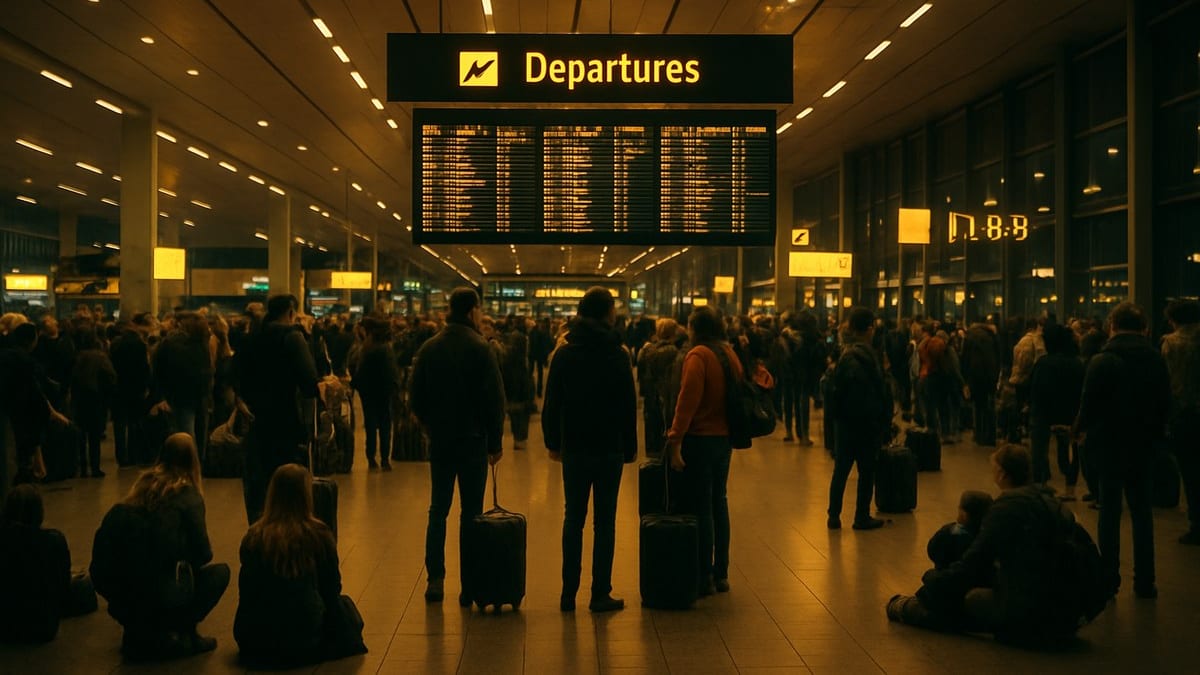
The human impact of the April 2026 chaos is evident in crowded terminals, long customer service lines and mounting social media accounts of missed events, vacations and work obligations. Travel publications and local news outlets report that thousands of passengers have spent hours waiting to speak with agents or secure alternative flights, while others have slept in concourses after hotels near major hubs quickly sold out.
Flight data recaps describe particular pain points for travelers relying on complex itineraries. With many hub-to-hub and regional feeder legs delayed or canceled, travelers have lost same-day connections to smaller cities, sometimes facing waits of a day or more for the next available seat. At times, large backlogs have developed at rebooking desks in Chicago, Dallas, Atlanta and New York, where displaced travelers from multiple disrupted waves compete for limited inventory.
Coverage of recent days also notes that some passengers have found themselves separated from checked baggage for extended periods as airlines rush to reposition aircraft and crews. When flights are rerouted or canceled at short notice, luggage can continue on its original path or remain at an intermediate hub, adding to passenger frustration and complicating recovery once travelers finally reach their destinations.
Consumer advocates quoted in travel reporting emphasize that, under current U.S. rules, airlines are generally not required to provide financial compensation for weather-related delays, even when passengers incur significant extra costs for meals, hotels and alternative transport. This reality has renewed debate about passenger protections as high-demand travel periods collide with a more volatile operating environment.
What Comes Next for Spring Travel
With April only just underway, travel analysts are closely watching whether the U.S. aviation system can stabilize before the next major holiday peaks. Forecasts point to continued unsettled weather in several regions, including the possibility of additional severe thunderstorms in the central and eastern states, which could prolong or renew disruption at major hubs.
Airlines have begun issuing flexible rebooking waivers tied to specific storm systems and regions, according to public advisories and customer alerts. These waivers typically allow affected passengers to change travel dates without paying additional change fees, provided they rebook within a limited window and keep the same origin and destination. While such measures can reduce airport crowding and spread demand over several days, their effectiveness depends on travelers receiving and acting on the information quickly.
Industry observers suggest that carriers may also trim schedules or adjust aircraft deployment on the margins to create more slack in the system, especially at chronically congested hubs. However, with strong demand and tight capacity, there is limited appetite to reduce flying significantly, which leaves the network vulnerable when the next round of storms moves in.
For travelers, recent coverage underscores familiar advice that has taken on renewed urgency this spring: build longer connection times, travel with carry-on luggage when possible, monitor flight status closely through official channels and consider backup plans in case disruption strands them at a hub airport. As April 2026 progresses, the experience of the past week suggests that even a short-lived bout of bad weather can quickly escalate into nationwide flight chaos when the system is already running at its limits.