

More news on this day
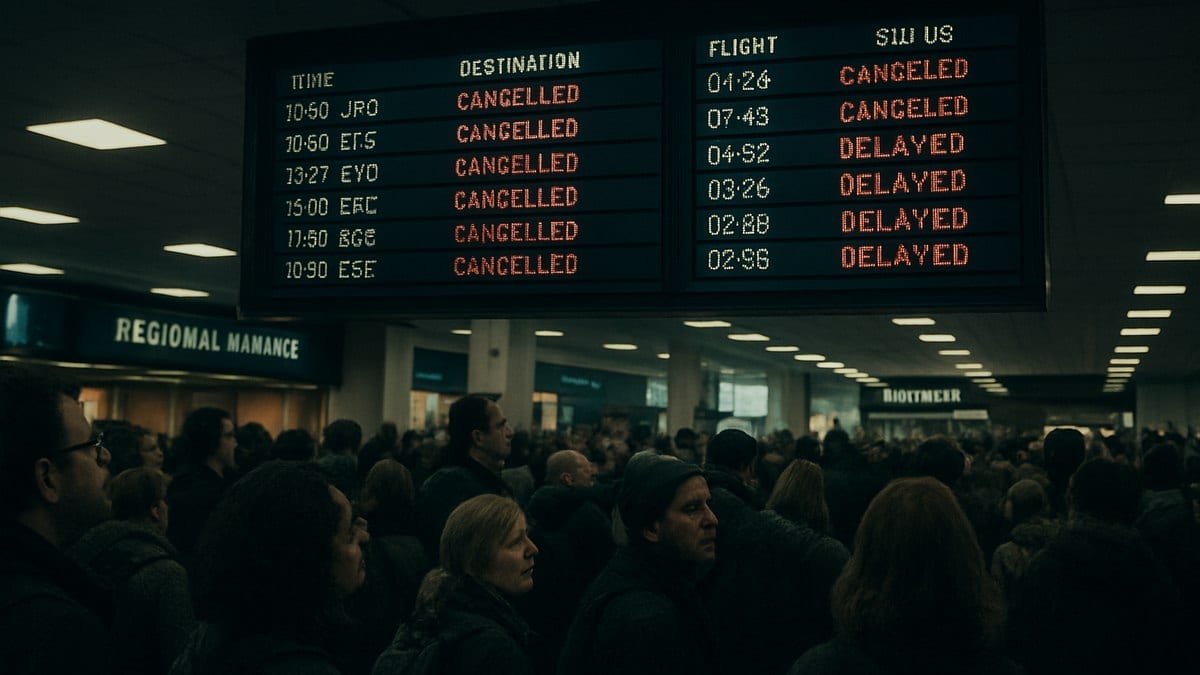
Hundreds of air travelers across the United Arab Emirates, Egypt and Afghanistan have been left stranded in early April 2026 as a wave of flight cancellations ripples through a region already struggling with war-related airspace closures and operational cutbacks.
Get the latest news straight to your inbox!
Regional Conflict Keeps Airspace Volatile
The latest disruption follows weeks of instability across Middle Eastern skies after the outbreak of open conflict involving the United States, Israel and Iran at the end of February 2026. Airspace closures and rerouted corridors have progressively tightened capacity for carriers that rely on hubs in the Gulf and wider region. Publicly available aviation advisories indicate that skies over or near Iran, Iraq, Israel, Syria, Bahrain and parts of the Gulf have faced intermittent closures or severe restrictions, forcing airlines to extend block times or cancel rotations altogether.
By early March, analysts tracking global schedules were already counting several thousand cancellations tied directly to these closures, with knock-on effects stretching into Europe and Asia. As April begins, that pressure has shifted from being a largely network-level problem to an acute passenger experience issue, with travellers in cities such as Dubai and Cairo reporting long queues at customer service desks, limited rebooking options and overnight stays arranged at short notice.
In the United Arab Emirates, major hubs in Dubai and Abu Dhabi remain operational but are working through a patchwork of suspended routes and curtailed frequencies. Public guidance from carriers describes a reduced schedule through at least mid-April, particularly on services that would normally cross the most affected airspace, increasing the likelihood of last-minute cancellations as conditions change.
Further east, disruptions have spilled into Afghanistan-linked routes. Flights between Gulf hubs and Kabul, including some services operated by low-cost and regional carriers, have appeared repeatedly on daily cancellation tallies compiled by travel industry outlets. With fewer alternative connections into Afghanistan, each cancellation strands passengers for longer stretches, especially migrant workers and family visitors moving between South Asia and the Gulf.
UAE Hubs Face Rolling Cancellations and Reduced Schedules
Dubai International and Abu Dhabi International, among the busiest hubs for international transfers, entered April with flight banks already thinned. Coverage from regional newspapers and aviation specialists shows airlines operating at reduced capacity compared with late February, with longer routings and contingency fuel requirements limiting how many aircraft can be cycled through each day.
Specific tally reports from early April list dozens of delays and a smaller but still significant number of cancellations across the two airports, particularly on routes linking the UAE to Saudi Arabia, Kuwait, Qatar and points in Europe. On some days, delay totals in the broader Gulf region have exceeded 500 flights, magnifying the effect of each cancellation as misconnected passengers fill up the remaining seats.
Travel advisories focused on the UAE have highlighted particular pinch points on Cairo, Jeddah, Riyadh and Dhaka services, where cancellations and time changes have been concentrated. Some Egypt Air, Gulf Air and Saudia flights into Dubai and Abu Dhabi were removed from schedules or turned back in the first week of April, with passengers in both directions scrambling for alternative itineraries, as indicated by airport operations summaries and local media reports.
Airlines serving the UAE are offering varying degrees of flexibility. Publicly posted policies from several Gulf and international carriers outline options including free rebooking within a limited window, refunds for unused segments and, in some cases, rerouting via unaffected hubs. However, with capacity constrained and demand for alternative routes rising, many stranded passengers are finding that the earliest available seats fall days rather than hours after their original travel dates.
Egypt Sees Disruptions at Cairo and Beyond
Egypt, whose airspace remains formally open, has nonetheless emerged as another focal point of disruption. Operational data aggregated by travel trade publications for early April show Cairo International Airport recording some of the region’s heaviest delay numbers, alongside a steady stream of cancellations that align with shifting Middle East routings.
On April 6, one widely circulated operational snapshot counted more than 170 delays and multiple cancellations at Cairo alone, affecting EgyptAir and a mix of foreign carriers that use the city as a gateway between Africa, the Gulf and Europe. Additional delays and cancellations at other Egyptian airports compounded the disruption, as aircraft and crews ended up out of position following days of uneven operations.
Route patterns suggest that services linking Cairo with Dubai, Istanbul, Riyadh and various European cities have borne the brunt of these adjustments. When Gulf and Turkish hubs compress their schedules, connecting banks in Cairo lose onward options, creating a domino effect in which even flights technically able to operate may be cancelled because they can no longer deliver viable connections for most ticketed passengers.
Passengers departing Egypt have reported particularly long waits for rebooking when their journeys depended on transiting the Gulf. Publicly available guidance from consumer and compensation platforms recommends documenting the disruption carefully, as some travellers on itineraries involving European or UK carriers may be entitled to statutory compensation in addition to refunds or vouchers, depending on the precise routing and cause cited for the cancellation.
Afghanistan Routes Exposed as Network Weak Link
Afghanistan’s limited commercial connectivity has made cancellations on Gulf–Kabul routes especially disruptive in April. Flight monitoring reports and regional travel coverage list repeated cancellations of services between Dubai and Kabul, including on carriers such as FlyDubai, at a time when overland alternatives remain constrained by security and logistical concerns.
Each grounded rotation on these routes has an outsized effect, as there are relatively few daily flights into Afghanistan compared with other regional destinations. Migrant workers, students and family visitors often rely on single-ticket itineraries that hinge on one Gulf connection, meaning that a cancelled sector can invalidate the entire journey and require complex rebooking across multiple carriers.
Observers of the Afghanistan aviation market note that the country’s limited airport infrastructure and constrained ground transport options make extended airport stays particularly challenging. Where larger hubs might offer extensive hotel and transit support, Afghan airports have less capacity to absorb stranded passengers, amplifying the impact of any cancellation that strands travellers mid-journey.
Humanitarian organizations tracking mobility in and out of Afghanistan have also highlighted that disruptions on commercial flights complicate the movement of aid workers and medical cases. While many such movements use chartered or special flights, the reduction of regular commercial capacity narrows backup options when those services are delayed or rerouted due to the same regional security environment affecting public schedules.
Airlines, Travelers Adjust as Uncertainty Persists
Across the UAE, Egypt and Afghanistan, airlines are attempting to balance safety requirements, regulatory constraints and commercial realities as April unfolds. Several flag carriers and low-cost operators have publicly extended flexible booking policies for passengers traveling to or through the wider Middle East, often waiving change fees through the end of the month on itineraries touching the most affected destinations.
Aviation analysts caution that the situation remains fluid. As airspace restrictions evolve and military activity shifts, routings that are viable one day may become impractical or prohibited the next. Public commentary from industry experts encourages travelers with April and May departures to monitor their bookings closely, use airline mobile apps to track schedule changes and, where possible, build in longer connection times to reduce the risk of missed onward flights.
Consumer advocates also point to the importance of understanding contractual rights. Depending on the operating airline, point of departure and reason for cancellation, passengers may be entitled to hotel accommodation, meal vouchers or cash compensation, especially when traveling from or within jurisdictions with strong air passenger protection rules. Guidance from legal and consumer platforms suggests keeping receipts, screenshots of delay notifications and any written explanations provided at the airport.
For now, the prospect of rapid normalization appears uncertain. Capacity cuts across Gulf and regional carriers, combined with continued geopolitical tensions, suggest that travelers heading to or through the UAE, Egypt and Afghanistan in April 2026 may need to plan for potential disruption. With schedules under constant review, publicly available data indicates that cancellations, while affecting a minority of flights overall, are likely to remain concentrated on a handful of high-risk corridors that have already left hundreds of passengers stranded in recent days.