

More news on this day
Spring travel across the United States is running into fresh turbulence as early April brings renewed flight disruptions at Boston Logan International Airport and several major hubs, with stormy weather and tightly wound airline schedules combining to delay and cancel thousands of journeys.
Get the latest news straight to your inbox!
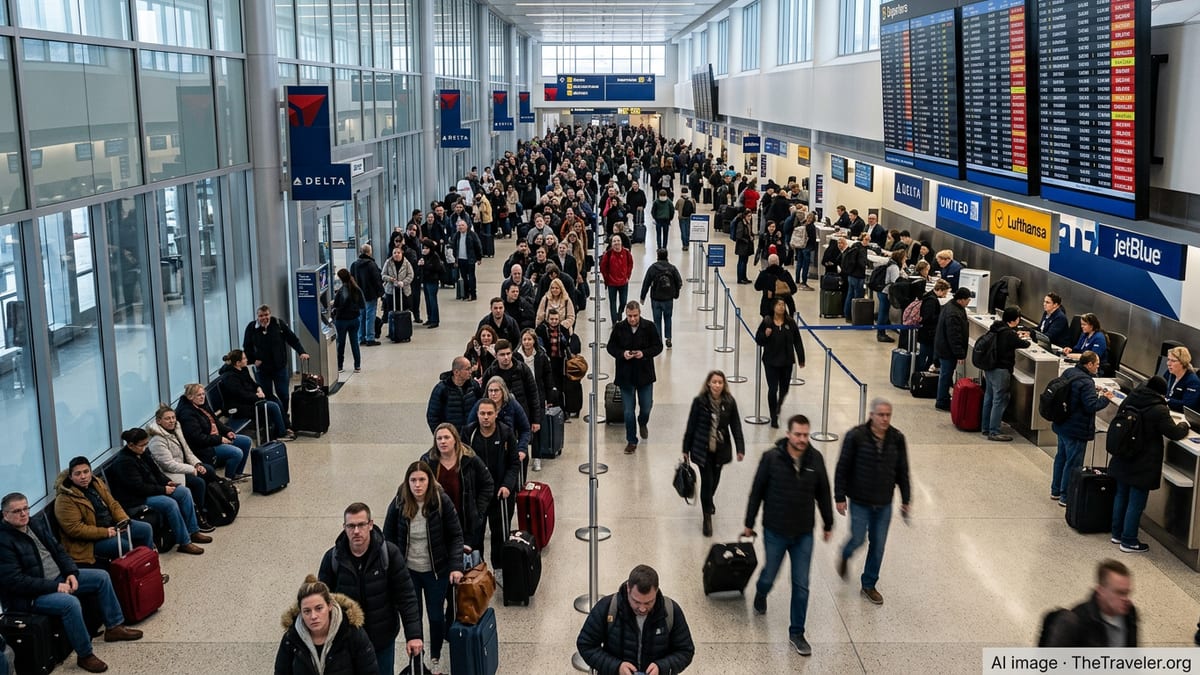
Storm Systems and a Fragile Spring Flight Network
Weather systems sweeping across the Midwest and East Coast in late March and early April have set the stage for the latest round of flight disruptions. Publicly available aviation tracking data for March 31 and April 1 indicate that thunderstorms and heavy rain triggered more than three thousand delays and over one hundred cancellations nationwide, as airports struggled to maintain normal operations during shifting storm bands.
Coverage focused on national delay statistics shows that the ripple effects from these systems did not stay confined to a single city. Chicago O’Hare, New York area airports, Atlanta, and other large hubs repeatedly appeared among the most affected facilities, with congestion at one location often spilling over into others as aircraft and crews were displaced from their planned rotations.
Those cascading impacts are now extending into the first days of April. Industry observers note that airlines are operating dense schedules designed around peak spring demand, which leaves little slack when bad weather forces temporary ground stops, slows departures, or reduces arrival rates. Once early flights are pushed back, knock‑on delays can persist well into the evening as aircraft arrive late for subsequent legs.
For travelers, this means that even routes far from the worst weather can experience delays as they wait for inbound aircraft that were held or diverted hours earlier in another region. The result has been a patchwork of disruptions that can be difficult to predict from local forecasts alone.
Boston Logan Faces Delays Amid Wider East Coast Strain
Boston Logan has so far avoided the extreme gridlock seen at some other hubs, but reports from flight‑tracking summaries and operational status pages show a noticeable uptick in delays linked to the same storm pattern affecting the broader network. On some recent days, Logan has logged dozens of delayed departures and arrivals, placing it within national disruption rankings even when cancellation counts remain relatively modest.
National summaries covering March 31 listed Logan among the airports experiencing elevated delay levels, with more than eighty flights running late and additional services affected by ground congestion. Although the totals were lower than at Chicago or New York, this volume is significant for an airport that also handles diversions from other Northeast hubs when weather and airspace constraints tighten.
Operational documentation from the Massachusetts Port Authority indicates that Logan’s complex runway layout and constrained airfield can magnify the impact of irregular operations. During diversion events or periods of heavy congestion, the airport’s tarmac delay contingency planning assumes that aircraft may face limits on available taxiways and gates, making it harder to recover quickly once inbound traffic begins to bunch up.
At the same time, recent local coverage highlights that Massport and federal security agencies have been working to keep staffing at Logan stable heading into the busy spring and summer seasons. A new real‑time security line tracker, announced in late March and expected to go live in mid‑April, is being promoted as one way to help passengers plan their arrival times and avoid unnecessary time in crowded queues when flights are running behind schedule.
Chicago, New York and Other Hubs Drive Cascading Disruptions
While Boston contends with its own operational constraints, the most severe disruptions at the start of April have centered on other large nodes in the U.S. aviation grid. Recent coverage from travel news outlets describes how thunderstorms around Chicago O’Hare prompted ground stops and flow restrictions on April 2, temporarily halting many arrivals and departures and pushing delay totals into the four‑figure range.
Those constraints at O’Hare have radiated outward as aircraft arriving from or departing to Boston, New York, Atlanta, Dallas and other destinations ran behind schedule. Publicly available information shows that when a hub of Chicago’s size slows down, dozens of connecting banks can be affected in quick succession, creating long lines at customer service desks and complicating rebooking efforts across multiple airlines.
New York area airports and Atlanta have experienced similar weather‑related slowdowns in recent weeks, including storms that coincided with the late‑March blizzard system impacting parts of the Midwest and Northeast. Travel advisories and waiver programs circulated by major carriers in March and early April referenced both Midwestern and East Coast thunderstorms, giving passengers the option to shift itineraries away from the worst‑affected days.
Even airports far from the current storm tracks are not immune. San Francisco International, for example, recently saw its permitted arrival rate temporarily trimmed by federal air traffic managers because of local conditions, a reminder that the April disruption picture spans multiple regions and does not follow a single coast‑to‑coast weather line.
Passengers Confront Longer Travel Days and Uncertain Connections
The practical impact for travelers through Boston Logan and other U.S. hubs has been longer travel days, tighter connections, and in some cases unplanned overnights. Flight‑tracking dashboards and consumer‑oriented legal sites report that, on several recent days, national delay counts have risen well into the thousands by mid‑afternoon, with average departure holds at some airports stretching to an hour or more.
During these peaks, passengers connecting through Logan from the Midwest or Southeast can arrive to find their onward flights already delayed or, in some cases, closed out as airlines preemptively consolidate lightly booked departures. Downline airports then see arrivals bunching up once holding patterns clear, briefly overwhelming gate space and baggage systems before operations stabilize again.
Publicly available guidance from transportation agencies and consumer advocates emphasizes that, while airlines are required to communicate clearly about significant delays and cancellations, specific compensation and care policies vary widely by carrier. Travelers are encouraged to consult airline customer service plans, rebooking rules, and hotel or meal voucher policies before departure, particularly during seasons known for volatile weather.
Travel blogs and passenger forums also point to the importance of monitoring both the departure flight and the inbound aircraft that will operate it. When the aircraft is arriving from a hub already affected by storms or air traffic restrictions, the odds of a knock‑on delay rise sharply, even if conditions appear calm at the local airport.
What April Travelers Through Boston and US Hubs Can Do Now
With the early‑April weather pattern still active and peak spring travel yet to hit full stride, forecasters and aviation analysts expect further bouts of disruption in the coming days. For those planning journeys through Boston Logan or major hubs such as Chicago, New York, Atlanta, Dallas, or San Francisco, preparation and flexibility are being framed as the best defenses against an unexpectedly long day in the terminal.
Travel experts routinely suggest booking earlier flights in the day, when schedules have more room to absorb small delays before they cascade into missed connections. Where possible, travelers connecting through historically congested hubs may benefit from longer layovers, trading extra ground time for a higher likelihood of making the next flight if storms flare or air traffic programs are introduced.
At Logan specifically, the forthcoming security wait‑time tracker is expected to give passengers more precise information on when to arrive for screening, which may help reduce stress when departure boards begin to fill with yellow and red delay indicators. Combining that tool with airline apps, text alerts, and airport social media channels can provide a more complete real‑time picture of changing conditions.
Ultimately, early April is underscoring how interconnected the U.S. air travel system has become. A thunderstorm cell over Chicago or low clouds over New York can ripple outward to affect flights at Boston Logan and beyond, turning a single localized weather event into a national story of missed connections, rolling delays, and crowded gate areas as spring travel gets under way.