

More news on this day
Flight disruption data from early April 2026 shows a sharp rise in delays and cancellations across at least seven countries, as weather systems, airspace constraints and staffing strains converge at the start of the busy spring travel period.
Get the latest news straight to your inbox!
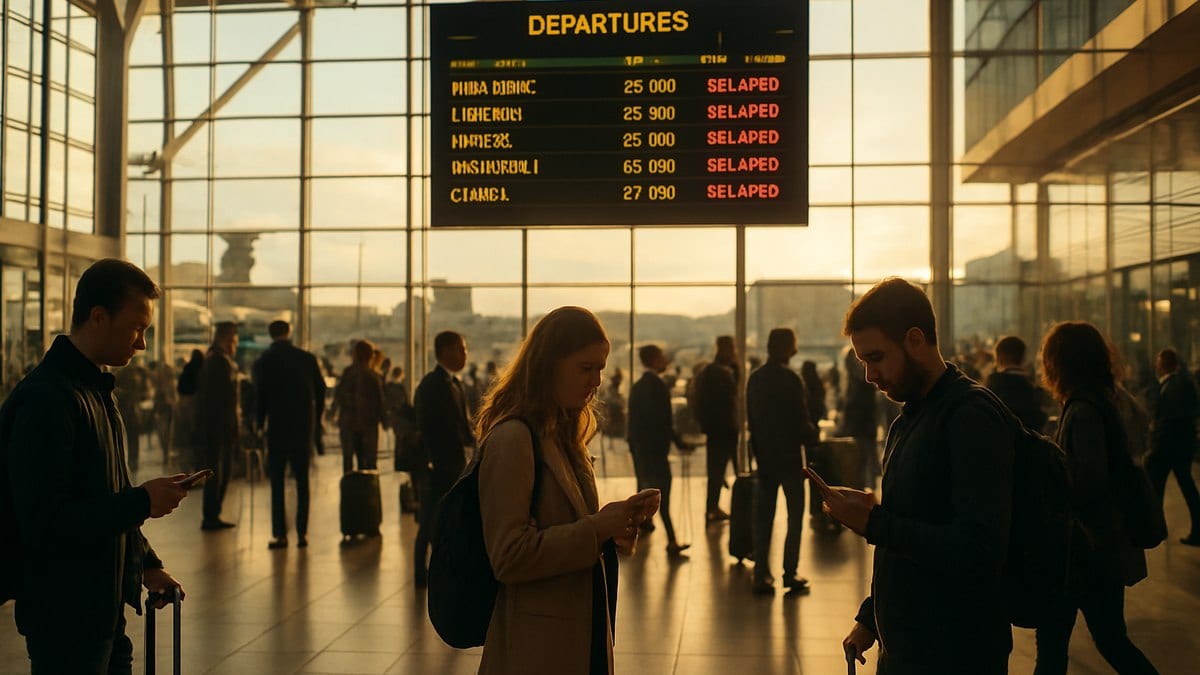
United States Hubs Struggle With Weather and Congestion
In the United States, a patchwork of storms, low cloud ceilings and congested hub airports has triggered widespread delays and rolling cancellations during the first half of April. Travel performance reports and flight tracking data point to particular stress at major nodes including New York, Boston, Orlando and Detroit, where reduced visibility and intermittent instrument flight rules conditions have curtailed operations.
Coverage of Detroit Metropolitan Wayne County Airport on 11 April described a day of significant disruption, with knock-on effects across domestic and transborder networks as aircraft and crews fell out of position. Weather-linked delay summaries published by aviation agencies also highlight expanded lists of affected airports, suggesting that what begins as a localized event at one hub is rippling quickly through the national system.
Industry analyses underline how tightly scheduled operations leave limited room to absorb such shocks. Tight aircraft utilization and strict crew duty-time limits mean that even modest weather events early in the day can cascade into evening cancellations, particularly on long-haul and banked hub flights. For travelers, this has translated into missed connections, overnight stays and crowded rebooking desks at some of the country’s busiest airports.
Europe Sees Repeated Waves of April Disruption
Across Europe, early April 2026 has brought several consecutive waves of flight disruption, compounding concerns that the region’s aviation system remains fragile ahead of the summer peak. Travel-focused outlets report that hundreds of flights have been delayed or canceled in recent days, affecting major hubs in Italy, France, the Netherlands, Germany, Spain and the United Kingdom.
Data compiled by route and compensation platforms shows that on 5 April a surge of weather and airspace restrictions contributed to dozens of cancellations and hundreds of delays across the continent. A further disruption pulse on 7 April reportedly produced more than 1,400 delays and around 20 cancellations in a single day, with Rome Fiumicino and Milan Malpensa among the hardest-hit airports as thunderstorms and staffing constraints slowed operations.
Additional reporting from European travel publications in the second week of April describes a pattern of smaller, persistent disruption events. In one 24 hour period, at least 79 flights were recorded as significantly delayed and nine canceled across multiple countries, underlining how recurrent storms, lingering staffing gaps and air traffic control bottlenecks are keeping punctuality under pressure.
Historical trend reviews published ahead of the 2026 season suggested that en route air traffic control delays in Europe have more than doubled over the past decade, even as traffic growth has been comparatively modest. The April figures now emerging appear to align with those concerns, indicating that structural capacity limits continue to amplify the impact of each new weather or industrial challenge.
Middle East Airspace Restrictions Hit Asia and Oceania Connections
Beyond North America and Europe, the ongoing closure or restriction of portions of Middle East airspace is adding a further layer of complexity for airlines in April 2026. Analytical pieces from aviation consultancies note that carriers have been forced to reroute long-haul services linking Europe and Asia, as well as South Asia and Oceania, resulting in extended flight times, higher fuel burn and altered schedules.
Publicly available updates from major Asian carriers indicate that flights to and from West Asia are operating at reduced levels compared with normal spring timetables. One April briefing described around 30 scheduled and charter services operating in a key West Asia market, a figure characterized as well below pre-disruption norms. Several airports in Southeast Asia have reported a limited number of cancellations on Gulf routes, even while maintaining regular service on Europe-bound flights.
Industry commentary suggests that these airspace detours are contributing indirectly to disruptions in at least three of the seven affected countries, by tightening aircraft and crew availability and compressing turnaround windows. Longer routings also expose services to a wider range of weather patterns, increasing the likelihood of turbulence-related re-routings, fuel tech stops or crew duty-time exceedances that can, in turn, lead to late arrivals and missed onward connections.
Asia-Pacific Networks Still Recovering From March Shock
The Asia-Pacific region entered April already under strain. In March, a significant disruption episode resulted in hundreds of cancellations and more than two thousand delays across major airports from Tokyo to Dubai, according to figures compiled by aviation data services. That event was linked to a rare mix of monsoon rains, typhoon activity, geopolitical tensions and aircraft rotation problems.
As April progresses, regional carriers are still adjusting networks in response to that March shock and ongoing fuel, crew and airspace constraints. Reports focusing on South and Southeast Asia point to concerns over jet fuel availability and potential schedule cuts in some domestic markets, with travelers closely watching for signs of further reductions spilling into international routes.
Travel planning discussions and regional news coverage suggest that while core intercontinental services are largely being maintained, sporadic cancellations and rescheduling are occurring on selected routes. The cumulative effect is contributing to a broader April disruption picture in at least two additional countries within the Asia-Pacific sphere, particularly where airlines rely on tight connection banks through regional hubs.
Seven Nations, Shared Vulnerabilities for Spring Travelers
Taken together, developments in the United States, multiple European states and key Asia-Pacific and Middle Eastern markets show how flight disruption in April 2026 is spanning at least seven countries and several aviation regions. While the immediate triggers vary from thunderstorms and low cloud to industrial actions, staffing shortfalls and airspace closures, the underlying vulnerabilities share common themes.
Analyses from travel and aviation observers emphasize three recurring factors. First, airline and airport networks are operating with limited spare capacity after years of cost-cutting and demand recovery, which means that even minor shocks can have outsized consequences. Second, weather volatility in the late winter and early spring period is intersecting with the resumption of strong leisure and business demand, concentrating risk in a narrow seasonal window. Third, ongoing geopolitical tensions are forcing route changes that lengthen flight times and tighten the availability of aircraft and crews.
For travelers planning April and early summer journeys, publicly available guidance stresses the importance of monitoring flights closely, allowing generous connection times and preparing contingencies for overnight stays or alternative routings. With disruption indicators rising across seven nations at once, the early weeks of April 2026 are shaping up as a critical test of how well the global air travel system can balance full aircraft, complex weather and constrained airspace without tipping into prolonged chaos.