

More news on this day
Thousands of travelers across Asia-Pacific are facing a turbulent start to April as more than 3,000 flight delays and over 150 cancellations stack up at major hubs from Tokyo and Hong Kong to Shanghai, Seoul, Singapore and Sydney, according to aggregated aviation data and recent industry coverage.
Get the latest news straight to your inbox!
Stormy Skies and Network Strain Converge
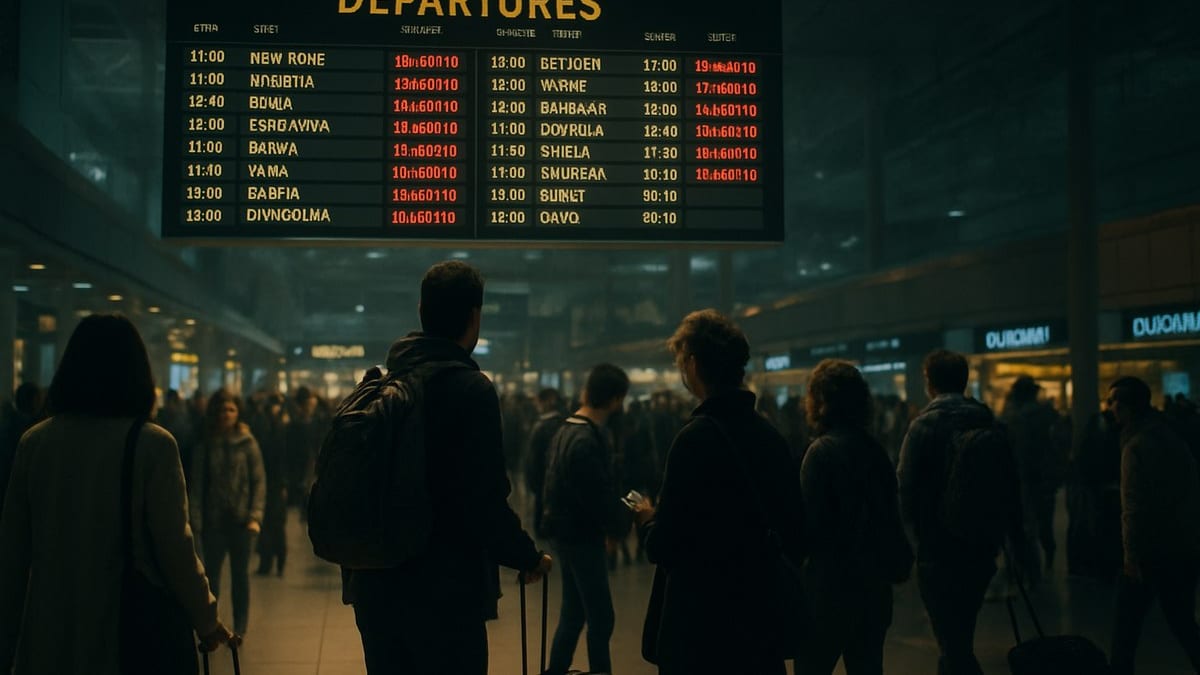
Publicly available flight tracking figures and airport departure boards for the opening week of April indicate a sharp spike in irregular operations across Asia-Pacific. One recent tally covering a single disruptive day counted 3,072 delays and 154 cancellations at key airports including Tokyo Haneda and Narita, Hong Kong International, Guangzhou Baiyun, Incheon, Shenzhen, Beijing Capital and Daxing, Manila and Singapore Changi. The figures highlight how quickly a localized disruption can ripple through the region’s dense web of hubs.
Travel and aviation reports link the current wave of problems to a combination of spring thunderstorms, low visibility, and air traffic control constraints in parts of China, Japan and the Korean Peninsula. A storm line near Shanghai and eastern China during the first week of April temporarily halted departures at Shanghai Pudong and slowed flows at neighboring hubs, contributing to a broader bottleneck just as early holiday and business travel demand picks up.
Industry commentary also points to the lingering impact of earlier disruption spikes in late March, when several hundred cancellations and more than 5,000 delays were logged in a single day across Asia-Pacific and the Middle East. Those events left aircraft and crews out of position, meaning some of the delays and cancellations now seen in early April reflect knock on effects as airlines attempt to reset complex schedules.
With many carriers operating at high load factors following a strong first quarter, spare capacity to absorb irregular operations is limited. Observers note that when fleets and crew rosters are already stretched, even a brief weather or systems incident can cascade into widespread delays across multiple days and airports.
Key Hubs From Tokyo to Hong Kong Bear the Brunt
The latest data suggest that North Asian and Chinese gateways have carried much of the disruption burden in recent days. Tokyo Haneda alone has been associated with hundreds of delayed departures and a double digit number of cancellations in a single day, while nearby Narita has also reported elevated congestion on departure boards. Together, the two airports form one of the region’s busiest metro air systems, so operational stress quickly filters through to domestic and international routes.
Hong Kong International is another focal point, with several hundred delays registered in one recent snapshot as carriers including Cathay Pacific and regional partners navigated weather constraints and airspace crowding. South Korean hub Seoul Incheon has similarly reported more than 200 delays on peak disruption days, underlining how conditions in one part of Northeast Asia can influence flows throughout the wider network.
Across mainland China, Guangzhou, Shenzhen, Hangzhou, Kunming and other large airports have reported triple digit delay counts and clusters of cancellations, reflecting both local weather and congestion in key corridors. Beijing Capital and Beijing Daxing have each logged dozens of disrupted flights on the worst days, adding pressure to an already busy northern China airspace structure.
Southeast Asian and Pacific hubs have not been spared. Manila has seen over one hundred delays on peak days, while Singapore Changi has reported moderate but persistent schedule slippage as late arriving aircraft from North Asia upset carefully timed wave patterns. In Australia, recent reporting shows Sydney, Melbourne and Brisbane dealing with their own spike in delays and cancellations, affecting Qantas, international partners and regional operators as they contend with weather, staffing and knock on congestion.
Middle East Airspace Constraints Add a Hidden Squeeze
Complicating the picture are ongoing airspace restrictions and geopolitical tensions over parts of the Middle East, which continue to affect routings between Asia, Europe and Africa. Travel advisories from regulators and service providers in March warned that closures and capacity limits along key corridors could lead to rerouting, extended flight times, delays and occasional cancellations for Asia based carriers operating long haul services.
Operational updates from logistics and airline partners in late March and early April describe constrained capacity on some westbound sectors, with flights forced to take longer tracks or operate within narrower slots. While these issues may not always appear directly in daily delay tables for Asian hubs, they tighten overall scheduling margins and reduce the flexibility airlines have to recover from local weather or technical incidents.
Financial analysts tracking the sector suggest that prolonged airspace detours, combined with elevated fuel prices, leave carriers with fewer options when deciding whether to hold flights for connecting passengers, swap aircraft, or cancel services outright. The result is a more fragile operating environment in which small shocks more easily translate into cancellations, particularly on thinner or lower priority routes.
For travelers, the Middle East factor often surfaces as an indirect cause of disruption on Asia originating itineraries to Europe or North America. Longer block times can lead to missed connections, crew duty time limits and last minute schedule reshuffles that reverberate back through Asian hubs even on otherwise clear weather days.
Travelers Face Missed Connections and Rising Costs
The human impact of the April flight turmoil is visible in crowded terminals, long rebooking lines and social media accounts of missed holidays and business meetings. With more than 3,000 delays registered in a single recent day, even relatively short hold ups of one to two hours can create a domino effect of missed connections at multi hub itineraries, particularly across complex networks linking secondary Asian cities to long haul flights.
Consumer and financial coverage notes that the disruption risk is arriving just as fares on many Asia routes are climbing. Strong demand for travel in the April to June period, coupled with constrained capacity and higher fuel costs, has pushed up ticket prices on both regional and intercontinental services. Some analyses warn that extended disruption patterns through April could further tighten available seats, especially on popular holiday and business corridors, and add to upward pressure on last minute fares.
Travel insurance providers and passenger rights advocates are urging travelers to review policy terms carefully. Many Asia originating flights are not covered by European style compensation regimes, and delays attributed to weather, air traffic management or security issues are often excluded from cash compensation, even when hotels or meal vouchers may be offered on a goodwill basis.
Financial writers also highlight the potential strain on household budgets as travelers absorb additional nights of accommodation, meals, replacement tickets and lost prepaid expenses. For those connecting through multiple hubs, each additional segment in the journey increases the number of points where a delay or cancellation can derail carefully planned itineraries.
How Airlines and Airports Are Responding
Publicly available operational updates indicate that airlines across the region are focusing on recovery flying, schedule consolidation and selective capacity adjustments to stabilize their networks. On heavily affected days, some carriers have combined lightly booked services, trimmed off peak frequencies or shifted aircraft between routes in an effort to rebuild rotations and free up spare aircraft for irregular operations.
At major hubs, airport operators and ground handling partners are deploying additional staff during disruption windows to help manage rebooking queues and passenger flows through security and immigration checkpoints. Operational briefings referenced in industry publications suggest that coordination between airlines, air traffic control and airport authorities has been intensified during peak weather and congestion periods to prioritize stranded aircraft and restore normal runway throughput as quickly as conditions allow.
Several analyses stress that Asia-Pacific airports entered 2026 with strong traffic momentum after a robust rebound in international demand. That backdrop is positive for the sector but also means infrastructure and staffing are running close to capacity at times. Without additional buffers, spring thunderstorms, airspace constraints and technical incidents can trigger the kind of region wide chain reaction now visible in the April delay and cancellation statistics.
With the month still in its early stages, aviation observers are watching closely to see whether the current bout of turmoil eases or hardens into a sustained pattern through the rest of April. For now, passenger facing advice from travel industry sources is consistent: build extra connection time into itineraries, monitor flight status frequently and be prepared for plans to change at short notice when flying through Asia-Pacific hubs this month.