

More news on this day
Spring travelers across the United States are facing another turbulent week as a fresh April storm surge collides with already stretched airline operations, triggering rolling delays and cancellations at six of the country’s busiest hub airports.
Get the latest news straight to your inbox!
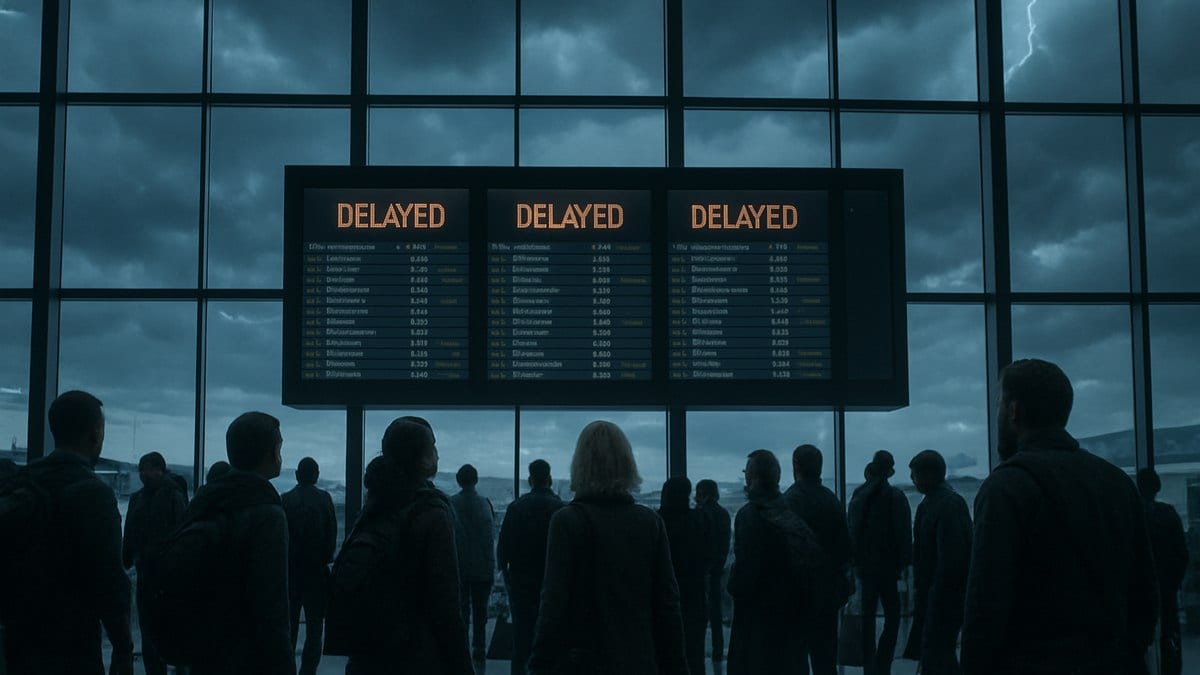
Storm Surge Hits at a Fragile Moment for Air Travel
The latest round of disruption comes on the heels of a month marked by severe winter hangovers and early spring thunderstorms, which have already knocked thousands of flights off schedule since March. Recent coverage describes powerful systems sweeping from the Plains through the Midwest and into the Northeast, bringing a mix of heavy rain, high winds and lingering snow that repeatedly constrains air traffic capacity at key choke points.
In early April, reports indicate that storms around Chicago and across the central United States triggered ground delay programs, while a separate weather system over the New York region on April 6 disrupted more than 500 flights and affected tens of thousands of passengers. Those interruptions rippled outward as aircraft and crews struggled to get back in place, leaving airlines with little margin just as another storm wave builds.
Forecast discussions for the second week of April point to renewed severe weather potential from the central Plains to the Great Lakes, with forecasters highlighting the risk of damaging winds, large hail and isolated tornadoes. For aviation, that combination often means temporary airspace holds, runway flow restrictions and slower arrival rates, all of which compound into multi-hour delays once traffic banks stack up at major hubs.
Travel industry observers note that these April storms are intersecting with elevated passenger volumes, as airlines continue to carry around 2.8 million travelers per day through the spring period. With schedules already dense and turnaround times tight, even brief closures or reductions in airport capacity can quickly cascade across the national network.
Six Major Hubs Bear the Brunt
Publicly available tracking data and recent disruption reports show that the current storm surge is squeezing operations most acutely at six large hub airports often cited as bellwethers for the broader system: New York’s major airports, Chicago O’Hare, Atlanta, Dallas-Fort Worth, Denver and Los Angeles International. Each plays a critical connecting role, so localized weather at any one of them can strand travelers far beyond the storm zone itself.
In the Northeast, April’s first major system forced ground delays and cancellations across the New York region, with hundreds of flights disrupted in a single day and knock-on impacts reported as far away as Europe and Asia. Airlines moving aircraft through the area have faced a rolling backlog, and the prospect of more low clouds, gusty winds and storms this week is expected to keep schedule resilience low.
Chicago has been another recurring pinch point. Late winter and early spring storms in the Midwest have already produced blizzard conditions and strong crosswinds, slowing departures and arrivals at O’Hare and complicating operations for carriers that rely on tightly timed banked schedules. Travel advisories related to April thunderstorms around Chicago suggest that airlines are once again bracing for capacity cuts and possible travel waivers as the new system approaches.
Farther south and west, Atlanta and Dallas-Fort Worth have dealt with repeated thunderstorm clusters sweeping along major flight corridors. These storms often produce lightning and wind shears that temporarily halt ground handling and takeoffs, backing up lines of aircraft waiting for safe windows to depart. In Denver, recent coverage of heavy snow and blustery conditions highlighted how quickly mountain weather can force large numbers of delays and cancellations, while Los Angeles has seen intermittent impacts as Pacific systems move ashore and low ceilings slow already congested traffic flows.
Holiday Demand and Structural Strains Amplify Delays
While the immediate trigger for the latest wave of disruption is severe weather, analysts point out that underlying structural pressures in the aviation system are helping to turn short-lived storms into multi-day snarls. The early April period overlaps with Easter and spring break travel, and multiple outlets have reported that U.S. airlines are transporting near-record numbers of passengers through March and April.
At the same time, airports and carriers are still grappling with staffing gaps, particularly in security screening, ground handling and some air traffic control roles. Reporting around the ongoing partial government shutdown notes that the Transportation Security Administration has lost hundreds of workers, adding strain at checkpoints just as throughput needs to remain high to keep flights on schedule.
Operational data from recent winters also underline how fragile the system can be once flights start running late. Studies of delay patterns by route and airport show that hubs such as New York, Chicago, Dallas, Denver, Atlanta and Los Angeles already carry relatively high shares of weather-related and knock-on delays in normal seasons. When storms repeatedly target these same nodes, missed connections, aircraft rotations and crew duty limits quickly become limiting factors.
As a result, what might once have been a localized storm day now more often translates into a nationwide reset, with airlines proactively trimming schedules, implementing weather waivers and repositioning fleets ahead of the worst conditions. For travelers moving through the six highlighted hubs, this can mean last-minute rebookings, overnight stays and significant changes to planned itineraries.
Travelers Confront Day-of Disruptions and Limited Options
For passengers caught in the middle of the April storm surge, the experience on the ground has ranged from multi-hour tarmac waits to sudden cancellations with limited same-day alternatives. Coverage of recent disruptions at major hubs such as Atlanta and New York describes travelers facing long check-in lines, crowded gate areas and rebooking queues stretching across terminal concourses.
As delays mount, available seats on later flights quickly disappear, particularly on popular trunk routes linking the major hubs to each other and to coastal destinations. Travel reports from early April note that some passengers have been pushed to flights a day or more later, or rerouted through secondary hubs in an effort to keep trips from being abandoned entirely.
Consumer advocates observing the situation emphasize that compensation for weather-driven disruption is often limited, especially in the United States where airlines are not generally required to provide cash payments when storms are the primary cause. Instead, assistance tends to focus on rebooking, meal vouchers and, in some cases, hotel accommodations when delays or cancellations stretch overnight.
At the same time, an array of tools give travelers more visibility than in past years. Airline mobile apps, flight-tracking platforms and airport operations dashboards allow passengers to monitor delay patterns in real time and spot emerging bottlenecks at hubs. Those who act early when a storm is forecast often have better odds of securing alternative routings before seats vanish.
More April Weather Ahead Keeps Outlook Uncertain
Looking beyond the current disruption, outlooks for mid-April suggest that the pattern of repeated storm systems crossing the central United States is likely to continue, with an elevated risk of severe thunderstorms and heavy rain on several upcoming days. Meteorological briefings highlight the potential for additional rounds of damaging winds and localized flooding, conditions that tend to prompt new sets of airspace and airport restrictions.
For the six major hubs already under pressure, that forecast implies that the window for full recovery may remain narrow. Airlines will be attempting to restore regular operations, reposition aircraft and reset crew schedules even as they prepare contingency plans for the next wave of storms. Any new capacity reductions at New York, Chicago, Atlanta, Dallas-Fort Worth, Denver or Los Angeles could once again ripple rapidly through domestic and international networks.
Travel planners and corporate travel managers are watching the situation closely as they evaluate itineraries that rely on tight connections through these airports in the coming days. Some are encouraging travelers to build in additional buffer time, consider early morning departures less susceptible to compounding delays, or, when possible, route through hubs with more favorable weather outlooks.
With April only just underway and severe weather season ramping up, the experience of this latest storm surge underscores how sensitive U.S. air travel remains to a combination of meteorology, demand and operational constraint. For now, passengers heading through the nation’s busiest hubs are likely to face an unsettled mix of blue-sky departures and sudden, storm-induced standstills.