

More news on this day
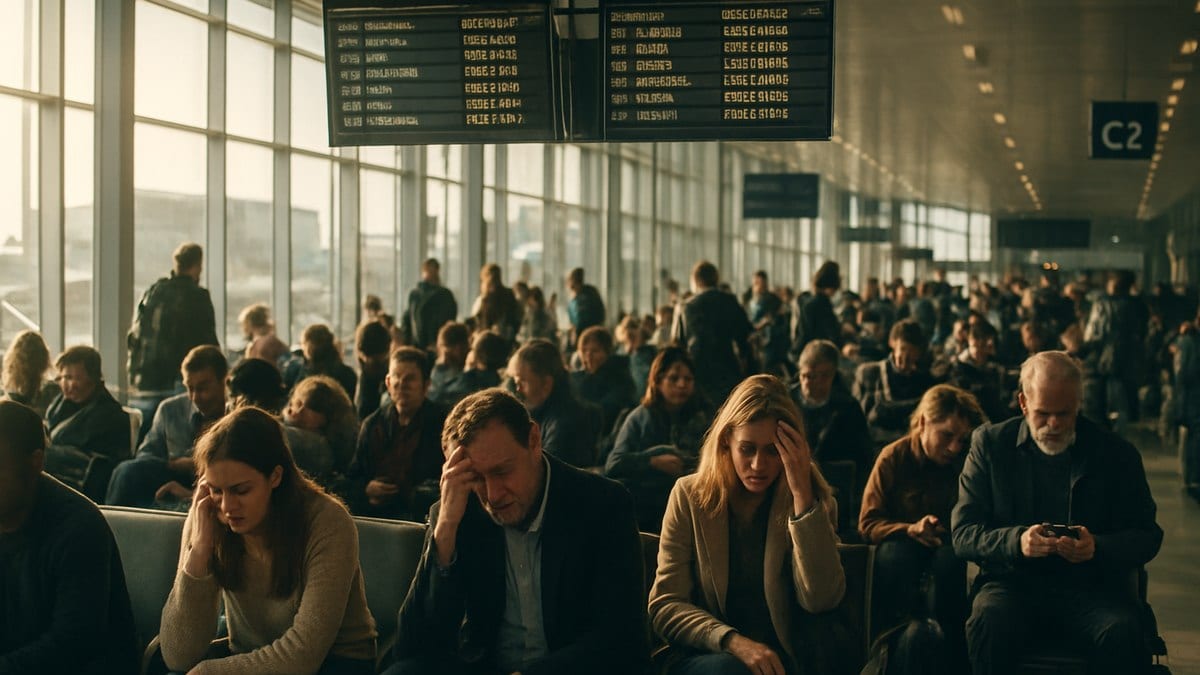
Thousands of travelers have been left sleeping in terminals, scrambling for rebookings and abandoning trips altogether as a fresh wave of weather and staffing disruptions in early April 2026 snarls flight operations at major United States hubs.
Get the latest news straight to your inbox!
Storm Systems and Holiday Crowds Collide
Publicly available tracking data and industry coverage indicate that the first week of April has delivered another punishing test for the US aviation system. Severe thunderstorms over Texas and the Midwest, lingering low clouds in the West and residual turbulence from March’s historic storms have all converged just as Easter and spring break traffic filled aircraft to capacity.
Reports from travel and aviation outlets show that on April 4 and April 5 alone, several hundred flights were canceled and thousands more delayed nationwide, with ripple effects stretching across the network well into subsequent days. The elevated disruption followed a March period in which tens of thousands of flights were already delayed or canceled across North and Central America, leaving airlines with little margin to absorb new shocks.
Data cited in recent coverage points to a pattern of high delay volumes outpacing outright cancellations. This approach keeps aircraft and crews in circulation but often results in rolling hold times and missed connections that strand travelers far from home late into the evening.
Storm-driven bottlenecks have been especially acute at large connecting hubs, where single‑airport disruptions can quickly cascade across dozens of domestic and international routes. As a result, the impact has extended well beyond the cities directly under severe-weather alerts, affecting passengers on both coasts and in secondary markets across the interior.
Major Hubs Bear the Brunt
Recent reports highlight Chicago O’Hare and Dallas Fort Worth as focal points of the April disruption, with thunderstorms, strong crosswinds and temporary ground-delay programs triggering long queues of aircraft and extensive schedule reshuffles. Coverage from travel trade publications indicates that storms around Chicago at the turn of the month contributed to more than one hundred cancellations and over a thousand delays in a single day, affecting flights across the Midwest and into Canada.
Dallas, a central hub for both domestic and international traffic, has faced similar strain. Severe weather and associated air traffic management measures have forced airlines to trim schedules, re-route flights and hold departures on the tarmac, contributing to nearly 400 cancellations and several thousand delays across multiple carriers during a recent weekend period.
Other hubs including Atlanta, Orlando, Phoenix, Detroit and Boston have recorded elevated disruption, particularly across the Easter weekend when holiday demand reached one of its highest peaks of the year so far. One compilation of flight-tracking figures described more than 300 cancellations and over 3,000 delays affecting these airports on a single busy day, leaving terminals crowded with passengers waiting for scarce open seats.
On the West Coast, constraints at San Francisco and Denver have added to the national picture, with low ceilings, ongoing runway works and earlier winter storms limiting runway capacity and forcing schedule adjustments. Though not always experiencing the highest cancellation counts, these airports have contributed to the broader pattern of rolling delays and missed connections that strand travelers at downline hubs.
Airlines Struggle With Capacity and Crews
According to published coverage summarizing airline and investor updates, major US carriers entered April with strong demand, high load factors and relatively lean spare capacity. When weather disruptions hit, that combination left little room to re-accommodate affected passengers. Even modest cancellation percentages translated into thousands of travelers with no immediate alternative flights.
Regional operators have been particularly exposed. Reports name SkyWest, Envoy Air, Republic Airways and other contract carriers as accounting for a disproportionate share of cancellations on some of the worst days, especially at Chicago O’Hare and Dallas Fort Worth. Because many of these flights serve smaller cities with limited daily frequencies, a single cancellation can leave passengers waiting many hours, or even an extra day, for the next available departure.
Crew availability has also emerged as a critical pressure point. Industry analysts quoted in financial and travel media note that airlines increasingly prioritize delaying flights instead of canceling them outright so that aircraft and crews remain roughly in position. However, extended weather holds and long taxi queues can push crews against legally mandated duty-time limits, forcing last-minute cancellations in the evening and compounding the number of stranded travelers overnight.
Airports and carriers have responded by urging passengers to use mobile apps, self-service kiosks and digital communication channels to rebook, but reports describe long in-person lines at customer service desks at several hubs. With many flights departing nearly full, same-day solutions are often limited even when alternative itineraries exist on paper.
From March Chaos to April Gridlock
The April disruptions follow what TheTraveler.org and other outlets have described as a rolling aviation crisis in March 2026. Tracking services cited in that coverage point to more than 31,000 combined delays and cancellations across the Americas in March, with one mid-month storm day in the United States alone affecting over 12,000 flights.
Those March events included a major blizzard in the Upper Midwest, a severe weather outbreak across the South and Mid-Atlantic, and high-impact storms around key hubs serving New York, Washington, Atlanta and Houston. By the end of the month, airlines were already operating with stretched crews, repositioned aircraft and a backlog of travelers rebooked from earlier disruptions.
As the calendar turned to April and Easter travel peaked, the system had little opportunity to reset. A fresh series of thunderstorms and low-visibility conditions across Texas, the Midwest and parts of the East triggered new waves of ground holds and traffic-management initiatives, interacting with the still-fragile schedules built in March.
Analysts writing for travel and investment outlets suggest that this transition from winter weather to spring storm season is becoming an increasingly volatile period for US aviation. Airlines are adding capacity to meet leisure demand, but any misalignment between staffing, maintenance windows and weather patterns can quickly turn forecast headwinds into cascading disruptions spanning multiple days.
Travelers Face Long Lines and Limited Options
For passengers on the ground, the statistical picture has translated into crowded terminals, stretched amenities and often confusing communication about options. Social media posts and travel‑desk reporting from the first week of April describe families camped out on terminal floors in Chicago and Dallas, long queues for food and restrooms, and uncertainty about whether flights listed as delayed will ultimately depart.
With many flights operating near full capacity, rebooking can be particularly difficult for groups or travelers with fixed schedules. Some published reports note that travelers have opted to rent cars and drive overnight between cities such as Chicago and Detroit or Dallas and Houston rather than wait for limited standby seats on later flights.
Consumer advocates quoted in recent coverage have renewed calls for clearer compensation and care standards when large numbers of passengers are stranded for reasons described as within airline control. At the same time, airline representatives and industry commentators continue to point to severe weather and air traffic constraints as key triggers of the latest disruption wave, arguing that operational recovery is dependent on more stable conditions in the days ahead.
Forecasts indicate that additional storm corridors are possible across the central United States in mid-April, raising the possibility of further interruptions just as travelers look ahead to the busy summer season. For now, the experience of thousands stranded at major hubs this month underscores how quickly a tightly tuned aviation network can seize up when weather, staffing and surging demand converge.