

More news on this day
Powerful spring storms sweeping across Europe in early April 2026 have triggered widespread flight cancellations, diversions and long delays, disrupting travel at major hubs from London and Frankfurt to Athens and Heraklion.
Get the latest news straight to your inbox!
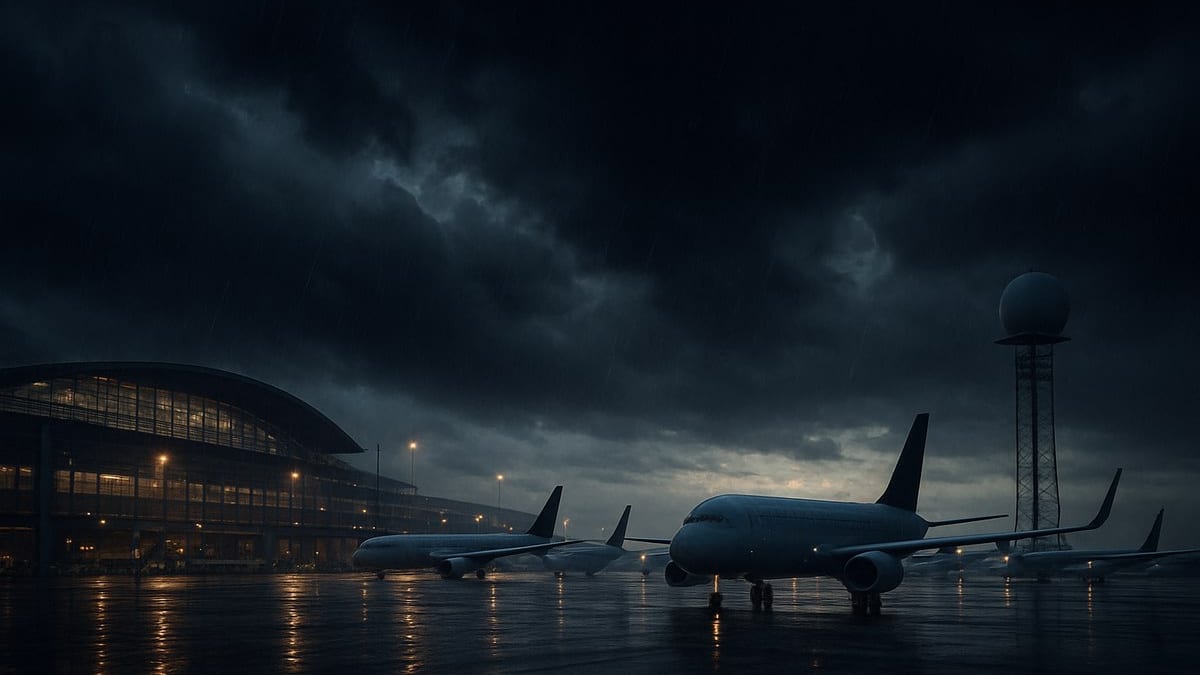
Storm systems slam key European hubs
Publicly available flight data for the opening week of April shows a sharp spike in disruption at several of Europe’s busiest airports, as bands of heavy rain, strong winds and low cloud repeatedly crossed the continent. The instability followed a winter of already frequent weather-related delays and arrived just as airlines ramped up schedules for spring.
In the United Kingdom, aviation industry coverage on April 1 highlighted 20 cancellations and more than 400 delays across London Heathrow, Gatwick, Manchester, Liverpool and Newquay. Heathrow alone recorded nine cancellations and 171 delayed departures and arrivals in a single day, while Gatwick logged four cancellations and more than 120 delays.
Reports from April 6 indicated that disruption persisted as further squally showers and gusty conditions moved through England. Heathrow again saw double-digit cancellations alongside more than 100 delays, with Gatwick, Manchester, Stansted, Birmingham and Liverpool also posting significant knock-on effects as tight turnarounds were hit by weather-related ground handling and air-traffic restrictions.
On the continent, northern France, Germany and the Low Countries continued dealing with the aftermath of storm systems identified in meteorological reporting as part of the active 2025–26 European windstorm season. Coverage of Storm Goretti in early April noted that strong winds had already brought power cuts and travel disruption, including cancelled flights in France, Britain, Germany and the Netherlands, contributing to the wider pattern of April chaos.
Greece hit by red-sky storm and airspace disruption
The most dramatic aviation impacts have been reported in Greece, where a multi-day system known locally as Storm Erminio combined severe thunderstorms with dense Saharan dust. According to Greek and international media reports from April 2 onward, the storm produced apocalyptic red skies over parts of the country and forced large-scale changes to flight operations.
Heraklion International Airport on Crete was among the hardest hit. Travel industry coverage described the airport as effectively shut for periods, with visibility reduced by airborne dust and crosswinds making safe landings and departures difficult. Several international flights bound for Heraklion from cities including Brussels, London, Munich, Frankfurt and Hamburg were diverted to Athens, Corfu and other regional airports.
In Athens, published accounts indicated waves of delays and diversions as controllers rerouted traffic around storm cells and periods of reduced visibility. Greek island airports saw schedules repeatedly redrawn as airlines repositioned aircraft and crews around the evolving weather pattern, leaving passengers stranded or facing long waits in crowded terminals.
The dust-laden storm continued to track east across the eastern Mediterranean, prolonging disruption to southern European airspace. Travel advisories noted that the combination of thunderstorms, strong winds and suspended dust increased the likelihood of last-minute cancellations, even on routes that initially appeared to be operating normally.
Knock-on delays ripple through airline networks
Operational reports indicate that the April weather volatility has amplified existing pressures on European carriers, many of which entered the spring season with tight schedules and limited spare aircraft and crew capacity. When storms forced short-notice ground stops or runway closures, delayed departures quickly cascaded across interconnected networks.
Analysis of Europe-wide data for late March and the opening days of April pointed to dozens of cancellations and more than a thousand delays in a single day across London, Paris, Istanbul, Frankfurt and other major hubs. Airlines such as Austrian Airlines, Finnair, KLM, Vueling, Wizz Air and Scandinavian carriers all reported elevated disruption as rotations fell out of sync and crews reached duty-time limits.
This pattern has been mirrored in the United Kingdom, where back-to-back days of unsettled weather meant that aircraft starting the day late often remained behind schedule into the evening. Budget and network airlines alike faced circumstances where one storm-affected sector led to multiple late departures and missed connections for passengers on onward flights.
Travel analysts note that, while headline numbers of outright cancellations have remained relatively contained at many hubs, the sheer volume of multi-hour delays has created a perception of larger-scale chaos for travellers, particularly at congested transfer airports where missed connections can trigger overnight stays and rebookings onto already full services.
What the chaos means for travellers in April 2026
The timing of the storms is particularly challenging for holidaymakers and business travellers, arriving just as spring and early summer demand builds. Forecasts from aviation industry groups suggest record passenger numbers across March and April, leaving little slack in the system when severe weather hits.
Consumer-facing travel advisories are urging passengers flying to or within Europe this month to monitor forecasts and flight status closely, particularly for connections involving weather-prone hubs in the UK, France, Germany and Greece. Travellers with tight layovers are being encouraged to allow extra buffer time or consider earlier departures where possible, given the elevated risk of rolling delays.
Under European Union rules, passengers on flights departing from EU airports retain extensive rights when their journeys are severely disrupted. Legal and travel guidance explains that, while extraordinary weather events can limit eligibility for cash compensation, airlines are still expected to provide care in the form of meals, refreshments and hotel accommodation when passengers are stranded for long periods.
Advisory articles also point out that disruption linked to spring storms can have lasting effects, with aircraft and crew often out of position for several days after the worst weather clears. Travellers booked later in April may therefore continue to encounter isolated delays and residual schedule adjustments, even if conditions on the day of travel seem benign.
Outlook for the rest of the month
Meteorological briefings for Europe suggest that further episodes of unsettled weather are likely through mid-April, although the exact timing and intensity of storm systems remain uncertain. Forecasters expect continued contrasts between lingering cool air in the northwest and warmer, moisture-laden air masses over southern Europe, a pattern that can fuel thunderstorms and strong frontal systems.
Aviation risk assessments indicate that coastal and island airports in southern Europe, including parts of Greece and the western Mediterranean, may face further sand and dust intrusions when winds align to draw air from North Africa. In northern and western Europe, gusty Atlantic low-pressure systems remain capable of bringing crosswinds and low visibility to major hubs at short notice.
Airports and airlines across the region are keeping enhanced adverse-weather plans in effect, with ground operations teams prepared for sudden changes to runway configurations, de-icing requirements where needed and reduced arrival rates in periods of poor visibility or strong wind. Travellers heading to Europe in the coming weeks are being advised to stay flexible, keep digital notifications enabled and build contingency time into itineraries as the stormy start to April continues to reverberate through the continent’s skies.