

More news on this day
Spring 2026 is rapidly turning into a stress test for global aviation, as storms, late-winter snow and looming climate patterns disrupt thousands of flights while many travelers still treat severe weather as a remote or short-lived risk.
Get the latest news straight to your inbox!
April’s Storms Turn a “Shoulder Season” Into a Stress Test
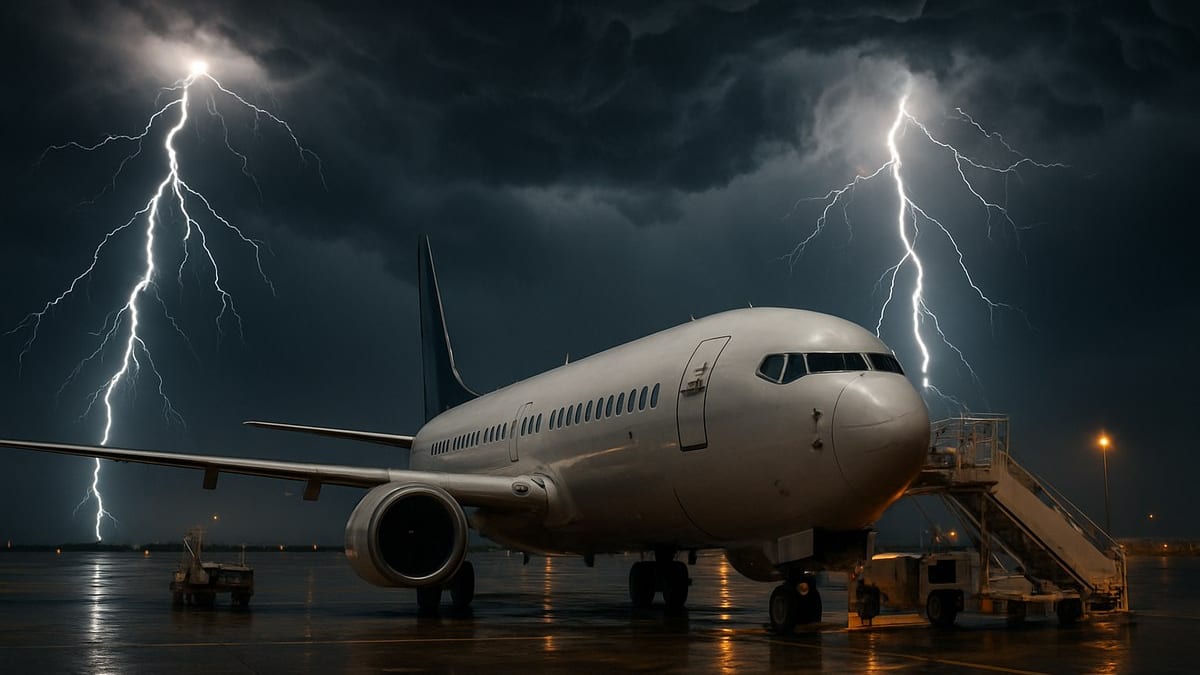
Across North America and Europe, the first weeks of April 2026 have delivered a series of weather shocks that undercut the idea of spring as a relatively safe window for air travel. A severe storm system over the northeastern United States on 6 April disrupted more than 500 flights and affected tens of thousands of passengers as delays rippled from New York to London and Tokyo. Similar late-season conditions days earlier forced airlines in Canada to contend with snow, freezing rain and icy runways, contributing to hundreds of delays and cancellations at Toronto and Montreal.
In Europe, severe weather at the turn of March and April pushed operations at major hubs including Frankfurt, Munich, Madrid, London Heathrow and Oslo toward capacity, with several hundred flights disrupted in a single wave. Additional storms and airspace constraints in early April affected airports across the continent, leaving travelers facing missed connections and overnight rebookings during what many assumed would be a relatively calm travel month.
The pattern has been echoed further south and west. Easter weekend in the United States saw thunderstorms and unstable atmospheric conditions slow traffic through Chicago O’Hare and other Midwestern and Southern hubs, while Florida’s major gateways, including Miami International Airport, reported heavy delays and cancellations tied to storms and congestion elsewhere in the national network. For passengers who planned April trips expecting only routine spring showers, the scale of cascading disruption has been a surprise.
Industry coverage shows that these events are not isolated. They form part of a broader 2026 weather backdrop that has already included multiple severe winter storms in North America and intense windstorms across Europe, reinforcing that the traditional notion of a predictable “off-peak” for weather trouble is increasingly at odds with operational reality.
Travelers Still Assume Delays Are Local, Short and Easy to Fix
Despite repeated episodes this year, surveys and booking behavior suggest many travelers still underestimate how far and how long a weather disruption can spread. Consumer-facing reports on recent U.S. delays highlight expectations that problems are confined to a single airline or airport, even as tracking data shows thunderstorms over one region creating knock-on delays across the country.
When storms halted or slowed departures around New York and Chicago in early April, the resulting backlog radiated outward as aircraft and crews were left out of position. Coverage of the Easter period shows that disruption originating in North American hubs quickly affected flights to Europe and Asia, with passengers experiencing missed connections far from the original weather event.
Data-driven analyses from aviation and travel-risk specialists emphasize that much of the impact comes from this network effect rather than from the initial storm cell itself. Reduced runway capacity, temporary ground stops and tight aircraft rotations mean even brief windows of severe weather can turn into multi-day schedule recovery efforts. This runs counter to the common belief among passengers that once a thunderstorm passes or snow eases, operations return to normal within hours.
Travel behavior also reflects persistent optimism. Many April leisure travelers still book tight connections, last flights of the day or separate tickets across carriers, betting that a forecast shower will not turn into a systemwide snarling of departures. Experience from the first weeks of April 2026 suggests that bet is increasingly risky.
Climate Signals Raise the Stakes for Summer and Beyond
While immediate attention is focused on Easter-season travel chaos, climate signals for the rest of 2026 point to a potentially more volatile year ahead. Scientific forecasts and climate discussion forums highlight rising probabilities that El Niño conditions will develop later in 2026, increasing the chances of extreme weather events in several regions. Climate researchers note that shifts in the El Niño Southern Oscillation can amplify both heat and precipitation extremes, influencing storm tracks and the frequency of disruptive weather systems.
In parallel, compilations of 2026 weather events already tell a story of higher-impact storms. North America has experienced multiple major winter systems since January, including blizzards and ice storms that triggered travel bans, wide power outages and extensive aviation disruption. Europe has faced damaging windstorms and heavy snow episodes that have affected both ground transport and aviation.
For the travel sector, these patterns translate into greater uncertainty. Risk forecasts for business travel in the Asia-Pacific region in early April describe a “moderate to elevated” environment, citing knock-on delays from regional aviation disruption and broader infrastructure and regulatory risks. Global infrastructure situation reports also point to emerging vulnerabilities, such as uneven jet fuel availability and airport saturation, that could magnify the consequences of future weather shocks.
Publicly available information on climate and aviation suggests that travelers planning for the coming northern summer may need to rethink assumptions that disruption will be confined to winter or to rare, headline-making storms. If El Niño strengthens as projected and passenger volumes stay high, weather-related delays may become more frequent and harder to avoid.
Passenger Rights Knowledge Lags Behind the Disruption Curve
Even as delays mount, travelers often arrive at airports with limited understanding of what weather disruption actually means for their rights and options. Consumer advocacy portals tracking recent events in North America and Europe report thousands of affected passengers seeking guidance on rebooking, refunds and compensation after storms or snow closed runways and triggered mass cancellations.
Information from passenger-rights organizations shows a persistent gap between what travelers expect and what regulations or airline policies provide during weather events. In many jurisdictions, “extraordinary circumstances” such as severe weather limit mandatory compensation, even when airlines offer meal vouchers or hotel rooms on a voluntary basis to preserve customer goodwill. In other regions, notably parts of Europe, statutory rules provide clearer entitlements but still distinguish sharply between controllable airline disruptions and those primarily caused by weather.
Recent advisories from consumer-focused platforms emphasize the importance of basics that many travelers overlook, including keeping written confirmation of the cause of a delay, requesting rerouting when connections are missed and understanding when a refund is more practical than waiting for the next available seat. The early 2026 disruption wave suggests that passengers who understand these frameworks in advance recover faster than those who treat each delay as an unexpected, one-off event.
However, knowledge remains uneven. Reports from storm-hit hubs in April indicate that many passengers still arrive without backup plans, relying on airport agents at already strained counters to explain complex rules. As weather-related disruption becomes more common, that information gap risks translating directly into longer queues, higher stress and slower recovery for everyone in the system.
April Quiz: Are Travelers Ready for a New Weather Reality?
The pattern emerging in 2026 raises a simple question for April travelers: how well do their expectations match the realities of weather risk? Aviation analytics show that storms, strong winds, fog, snow and heat have become major contributors to delay statistics over recent years. Yet trip-planning habits still suggest many passengers view severe weather as something that happens occasionally to other people.
Informal checklists shared by travel publications and risk forecasters for this spring focus on practical steps, from monitoring inbound aircraft and accepting proactive rebooking text messages to building longer layovers into itineraries at known chokepoints. The guidance reflects an industry view that weather risk is now structural rather than exceptional, and that individual decisions can reduce, but not eliminate, exposure to disruption.
For travel providers, April’s storms have become an unplanned education campaign. Publicly available data on Easter and early April operations shows how quickly a combination of high demand and unstable weather can overwhelm already tight schedules. The lesson for passengers is that planning for 2026 and beyond may require a mindset closer to risk management than to simple ticket purchase.
As airlines, airports and regulators adjust to a climate-influenced future, this season’s turbulence suggests that understanding weather disruption is no longer a specialist topic. For anyone booking a flight in 2026, it is becoming a basic part of travel literacy, and April’s quiz on expectations versus reality is already underway.